From the Inbox e-mail newsletter:
Reading the Gallery for Teen Read Week
On October 20, 2009, right in the middle of Teen Read Week, the National Gallery of Writing will open and teens will be able to join readers of all ages to enjoy the selections each of the gallery writers (3,822 as of today) has chosen to submit. The gallery will remain open until June, so if you haven't submitted yet, or if you know others who would like to participate, there is still time to submit your favorite compositions for display.
Next week, why not encourage your students to submit some writing about the books they're reading during Teen Read Week? Several of the 1,392 galleries live at this writing invite just such submissions: SASSY: Sequential Art Stories Submitted by Youths!, A Lifetime of Reading, International Reading Association, and Memories about Libraries and Bookjoy.
Stickermule

A Public Service Announcement! ;)

Wednesday, October 07, 2009


Tuesday, October 06, 2009
Get "SASSY" With Your Bad Self!
Comics Gallery Now Available through NCTE's National Gallery of Writing!
I herein formally announce the creation of the "SASSY: Sequential Art Stories Submitted by Youths!" virtual gallery.
SASSY is one of the online galleries associated with NCTE's National Gallery of Writing, but SASSY is unique in that it features graphic narratives (comic strips, comic books, and graphic novels) exclusively!
Here's the formal description:Gallery Description: Sequential art narratives -- comic strips, comic books, and graphic novels -- involve advanced writing and composing skills too! This gallery features works of comics art submitted by young people and by those young at heart.
Anyone can submit a work of sequential art to the gallery, but, as curator, I am especially interested in works from students and from classes or programs where comics composing is being taught.Please spread the word about this gallery.
Tell local teachers; share it with your students; encourage talented comics creators in your classrooms to submit. They might just see their work published for the world to admire!
I herein formally announce the creation of the "SASSY: Sequential Art Stories Submitted by Youths!" virtual gallery.
SASSY is one of the online galleries associated with NCTE's National Gallery of Writing, but SASSY is unique in that it features graphic narratives (comic strips, comic books, and graphic novels) exclusively!
Here's the formal description:Gallery Description: Sequential art narratives -- comic strips, comic books, and graphic novels -- involve advanced writing and composing skills too! This gallery features works of comics art submitted by young people and by those young at heart.
Anyone can submit a work of sequential art to the gallery, but, as curator, I am especially interested in works from students and from classes or programs where comics composing is being taught.Please spread the word about this gallery.
Tell local teachers; share it with your students; encourage talented comics creators in your classrooms to submit. They might just see their work published for the world to admire!
Monday, October 05, 2009
Buzzati's _Poem Strip_ Gains Critical Attention
 Thanks to several readers for sending along this link about Dino Buzatti's book Poem Strip: An Explanation of the Afterlife, which has been translated from the Italian by Marina Harss.
Get Your Graphic Novel Degree at Napier University
"Edinburgh’s Napier University will become the first university in Britain to include comic books and graphic novels on a Masters level Creative Writing course," reports Emma Towers of The Journal.
Dundee University has also added a comics course to their English degree, according to the story.
So, comics studies programs are building steam overseas. Maybe information like this can help those of us who want to see CSP's here in the states as well. I just had a student e-mail asking about comics-related coursework at UTEP and had to tell him that we were working on it but that it may or may not ever happen. I recently read a book on academic life that quoted a Cornell professor as saying the academy's mantra is "never be the first to do anything." That's probably going hold true for folks like myself in the states who would like to see CSP's, but I'm happy to let our European brothers and sisters take the lead, because another line of old school thinking is "If Europe is doing it, we should too." So, we may see some "trickle down" effect from this. :)
Dundee University has also added a comics course to their English degree, according to the story.
So, comics studies programs are building steam overseas. Maybe information like this can help those of us who want to see CSP's here in the states as well. I just had a student e-mail asking about comics-related coursework at UTEP and had to tell him that we were working on it but that it may or may not ever happen. I recently read a book on academic life that quoted a Cornell professor as saying the academy's mantra is "never be the first to do anything." That's probably going hold true for folks like myself in the states who would like to see CSP's, but I'm happy to let our European brothers and sisters take the lead, because another line of old school thinking is "If Europe is doing it, we should too." So, we may see some "trickle down" effect from this. :)
Sunday, October 04, 2009
Thank You, ICTE!
Thanks to Jonelle, Blas, Brandon and everyone in Boise for having me as a keynote and for helping me feel like part of the crowd. Not only did I see several great sessions on graphic novels, but I once again got to spend time with some very dedicated English teachers. And I even got to see the Smurf Turf at Boise State!:)
Thursday, October 01, 2009
"Comic Book Literacy" Documentary/Website
This looks AWESOME! My only question: Why wasn't I interviewed for the documentary? Looks like most folks are comics creators rather than scholars, and it has been years since my script writing days at Outcast Studios.com (not that I'm not currently scripting on interesting projects, hint, hint, wink, wink)
The website, available through clicking this post's title, offers more information about who is involved in the project, who is interviewed, etc. Here's some info from the FAQ section: "Comic Book Literacy is an independent documentary film that showcases the utilization of comic books to promote literacy and education. Throughout the film educators, researchers, writers and artists give commentary in both an historic and contemporary context on a variety of subjects related to the topic."
Also according to the FAQs, the film is in post production and will be screened at film festivals in 2010.
The website, available through clicking this post's title, offers more information about who is involved in the project, who is interviewed, etc. Here's some info from the FAQ section: "Comic Book Literacy is an independent documentary film that showcases the utilization of comic books to promote literacy and education. Throughout the film educators, researchers, writers and artists give commentary in both an historic and contemporary context on a variety of subjects related to the topic."
Also according to the FAQs, the film is in post production and will be screened at film festivals in 2010.
Tuesday, September 29, 2009
I'll See Ya in Boise!

Wednesday sees me leaving for Boise, Idaho, where I'll give a keynote address to the Idaho Council of Teachers of English. It's gonna be meaty, gooey graphic novel goodness, like butter n' bacon on an Idaho 'tater!
Monday, September 28, 2009
Coming Soon!: _MLA's Teaching The Graphic Novel_
As advertised in the recent PMLA, Teaching the Graphic Novel will be available in late 2009. I'm happy to have a chapter on teaching Watchmen in the collection, which has been in production for some time and will include some great work by some excellent comics scholars.

Borderland Zombie Violence!: Announcing _Infestacion_
Here's a press release from some local comics creators whom I beleive will be joining me February 23, 2010 as part of the "El Paso in the Comics II: The Southwest in the Comics" event. :) As you'll see, these local folks are creating interesting comics and engaging in social commentary.


This area is very conducive to this type of story because it plays on all the fears that we as a people have living in this part of the country. The borders, the different races, the traditions, the growing threat of violence, the land itself, we’re in the middle of a desert here where all we have is each other, but how can we trust one another if we fail to accept the differences we all have?
Of course, its all there, the racial tension, the problems that Chicanos, and Hispanics, and Mexican Americans have fitting in. we also have the social commentary in the form of how we are all separated by these silly social classes that make no sense, how we choose to separate our selves and subjugate our own people, because of our own fear of each other. We don’t know our neighbor, so we’ll keep him at arms length, but as soon as he turns into a zombie, you know who we’ll be putting a bullet into their heads at a moments notice!
IN THE LAND OF THE LIVING THE UN-DEAD RULE!!!!!
This has never been done before where a series has been collected in this manner- two different publishers working together on one tale. INFESTACIÓN or INFESTACIÓN: THE MYTHOLOGY, as it is now referred to, is a 372 page graphic novel that collects the highly sought after first 6 issues of INFESTACIÓN, the first 4 issues of HELL’S PASS and the one-shot ROAD TO NOWHERE along with extra stories, the origins of the INFESTACIÓN, pinups, series covers, and commentary by all the creators involved.
THE SOUTHWEST IS ENGULFED IN AN APOCALYPTIC EPIDEMIC AS THE DEAD WALK! EL PASO AND JUAREZ IN RUINS! ZOMBIE PLAGUE RUNS RAMPANT ACROSS THE BORDERLAND!
WHEN THERE’S NO MORE ROOM IN HELL PASO, THE DEAD WILL WALK THE EARTH!
INFESTACIÓN: THE MYTHOLOGY is a 372 page graphic novel that collects the highly sought after first 6 issues of INFESTACIÓN, the first 4 issues of HELL’S PASS and the one-shot ROAD TO NOWHERE along with extra stories, the origins of the INFESTACIÓN, pinups, series covers, and commentary by all the creators involved.
WHEN THERE’S NO MORE ROOM IN HELL PASO, THE DEAD WILL WALK THE EARTH!
INFESTACIÓN: THE MYTHOLOGY is a 372 page graphic novel that collects the highly sought after first 6 issues of INFESTACIÓN, the first 4 issues of HELL’S PASS and the one-shot ROAD TO NOWHERE along with extra stories, the origins of the INFESTACIÓN, pinups, series covers, and commentary by all the creators involved.
Adversary Comix is proud to announce the premiere of El Paso/Juarez’s newest comic book horror series: INFESTACION: HELL’S PASS!
We are using “the Border” and the “undead” as social commentary canon to showcase the problems we as Fronterizos are faced with. The divide between ethnicities, the divide between social classes, the growing violence and fears that it may spill unto our streets in the US, and ultimately, using zombies as the biggest divide of all, the segregation between life and death, or un-death as the situation presents itself.
INFESTACION: THE MYTHOLOGY will arrive in comic book stores on Halloween, October 31st having its premiere at Asylum Comics.
But it doesn’t end there; the originators of the story and direct from Juarez, México, 656 Comics will also be on hand at the singing to relate their tales of zombies on the border land!
Book Specs:
INFESTACION: THE MYTHOLOGY will arrive in comic book stores on Halloween, October 31st having its premiere at Asylum Comics.
But it doesn’t end there; the originators of the story and direct from Juarez, México, 656 Comics will also be on hand at the singing to relate their tales of zombies on the border land!
Book Specs:
Hard cover with dust jacket, 6x9 (digest size), 372 pages, black and white.Pre-order price: $35 ONLY AT ASYLUM COMICS located at 5360 N Mesa St El Paso, TX 79912-5872, PH (915) 875-8600. Shipping of the books will begin late October. In addition to the graphic novel, we’ll be giving away a free 6x9 original sketch from one of the artists featured in the book!
ABOUT THE GRAPHIC NOVEL
INFESTACIÓN: THE MYTHOLOGY is a ground breaking graphic novel set on the border between Mexico (Ciudad Juárez, Chihuahua) and the United States (El Paso, Texas), where a zombie plague has taken over both cities and all they have to survive is each other. A border that has now become one between life and death, or un-death.
INFESTACIÓN: THE MYTHOLOGY is a ground breaking graphic novel set on the border between Mexico (Ciudad Juárez, Chihuahua) and the United States (El Paso, Texas), where a zombie plague has taken over both cities and all they have to survive is each other. A border that has now become one between life and death, or un-death.
This area is very conducive to this type of story because it plays on all the fears that we as a people have living in this part of the country. The borders, the different races, the traditions, the growing threat of violence, the land itself, we’re in the middle of a desert here where all we have is each other, but how can we trust one another if we fail to accept the differences we all have?
Of course, its all there, the racial tension, the problems that Chicanos, and Hispanics, and Mexican Americans have fitting in. we also have the social commentary in the form of how we are all separated by these silly social classes that make no sense, how we choose to separate our selves and subjugate our own people, because of our own fear of each other. We don’t know our neighbor, so we’ll keep him at arms length, but as soon as he turns into a zombie, you know who we’ll be putting a bullet into their heads at a moments notice!
IN THE LAND OF THE LIVING THE UN-DEAD RULE!!!!!
This has never been done before where a series has been collected in this manner- two different publishers working together on one tale. INFESTACIÓN or INFESTACIÓN: THE MYTHOLOGY, as it is now referred to, is a 372 page graphic novel that collects the highly sought after first 6 issues of INFESTACIÓN, the first 4 issues of HELL’S PASS and the one-shot ROAD TO NOWHERE along with extra stories, the origins of the INFESTACIÓN, pinups, series covers, and commentary by all the creators involved.
The border has always been considered a no mans land, where the rest of the country turns a blind eye on its problems; INFESTATION takes this premise to the extreme and shows us exactly how people can adapt and grow even in the most adverse situation and in some cases even find happiness.
This is what Jimmy Palmiotti of DC’s Jonah Hex fame thought of our book “filled with more guts and heartbreak than a butcher-shop in a vegan neighborhood. this is a prime example of a lot of different creators having a blast and making some truly horrific comics that make me smile. its worth it for the energy alone. "
About Adversary Comix
Adversary Comix is a local comic book publishing venture that has been around for years but under different names. In fact, Adversary was the FIRST El Paso based comic book company to set its sights on delivering the best story and sequential art in the form of comic books. Adversary Comix strives to bring to the forefront the best local talent has to offer. With books such as EL VALIENTE and BATTERY ACID, Adversary Comix has a stable of talent that can hold its own in the competitive business of the comic book industry both amateur and professional.
This is what Jimmy Palmiotti of DC’s Jonah Hex fame thought of our book “filled with more guts and heartbreak than a butcher-shop in a vegan neighborhood. this is a prime example of a lot of different creators having a blast and making some truly horrific comics that make me smile. its worth it for the energy alone. "
About Adversary Comix
Adversary Comix is a local comic book publishing venture that has been around for years but under different names. In fact, Adversary was the FIRST El Paso based comic book company to set its sights on delivering the best story and sequential art in the form of comic books. Adversary Comix strives to bring to the forefront the best local talent has to offer. With books such as EL VALIENTE and BATTERY ACID, Adversary Comix has a stable of talent that can hold its own in the competitive business of the comic book industry both amateur and professional.
More information about Adversary Comix and its products can be found at http://www.myspace.com/adversarycomix
Copyright 2007-2009, Adversary Comix. All Rights Reserved. All trademarks and titles are the property of their respective owners. The statements contained within this document are considered "forward-looking statements" and may not reflect upon the actual future performance of Adversary Comix.
About 656 Comics
656 Comics, el comic hecho en Cd. Juárez, which literally translates to ‘comics made in Cd. Juárez’. This comic collective have been active since forming in 2003. Composed by writers, illustrators, graphic designers, urban artists and lit majors, who have been trailblazing and filling the borderland with stories of mature characters and unpublished themes about the local scene.
656 Comics have independently published over 20 comics in the past few years and worked with various local newspapers, film makers and musicians. Their two main projects; Infestacion: The Mythology a zombie outbreak on the borderland and Karmesi, an ex cop turned vigilante who tries to clean up the corruption and injustices’ of Cd. Juárez.
656 Comics, el comic hecho en Cd. Juárez, which literally translates to ‘comics made in Cd. Juárez’. This comic collective have been active since forming in 2003. Composed by writers, illustrators, graphic designers, urban artists and lit majors, who have been trailblazing and filling the borderland with stories of mature characters and unpublished themes about the local scene.
656 Comics have independently published over 20 comics in the past few years and worked with various local newspapers, film makers and musicians. Their two main projects; Infestacion: The Mythology a zombie outbreak on the borderland and Karmesi, an ex cop turned vigilante who tries to clean up the corruption and injustices’ of Cd. Juárez.
656 Comics has been accredited countless times with grants and assistance by various national institutions and organizations (Ichicult, Conaculta, Fechac, Conacyt, Fortes, Tec de Monterrey, UACH, UAM) to help spread comic awareness and workshops to help aspiring writers/artists publish their work in a series of anthologies. Some of those anthologies are: El Comiquero, Feminizando la Historieta and Leyendas: una ventana hacia lo desconocido en la frontera.
For more informationon 656:
Myspace.com/656comics
656comics.deviantart.com
656comics@gmail.com
656comics@gmail.com
Friday, September 25, 2009
Two New GN's Focusing on WWII/The Holocaust!
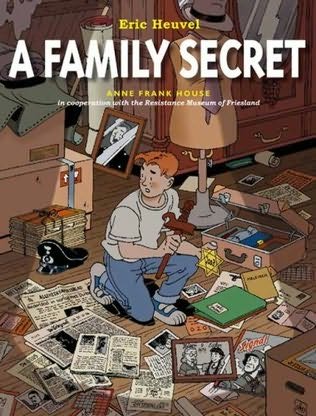 A Family Secret (Eric Huevel) and The Search (Huevel, Ruud van der Rol, & Lies Schippers) are two more graphic novels exploring the Holocaust and WWII.
Jereon is looking for yard sale items in his grandmother's attic as A Family Secret begins, only to find a cache of WWII era letters, clothing, and newspapers. He learns that the life he knows in the Netherlands is vastly different than that of the one known by his grandmother. Helena lived through the German occupation, lost one brother to the war, and, for many years, assumed that she would never see her childhood best friend Esther, a Jewish person, again because Helena's own Nazi-sympathizing father ratted her out. As so often characterizes the WWII era, though, things were not what they seemed, and a happy reunion awaits Helena after Jereon departs her house and just happens to hear a certain guest speaker at an open-air memorial service.

It is revealed that Helena's father wasn't as cruel as Helena might have thought. Instead of giving Esther to the authorities, he helped her escape. The Search is her story.
These books are published with help from the Anne Frank House, the Jewish Historical Museum of Amsterdam, and the Resistance Museum of Friesland. They are marketed as "stories told from the perspective of modern-day children." There definitely seems to be a desire through these books to craft texts that are accessible to younger children, to expand their options for learning about this era in comics form beyond the weighty Maus.
The full-color art appears inspired by Archie and TinTin, and the young people who learn their ancestors' stories seem realistic enough. While the storytelling is simple, it is informative, and what I like most about these books is that they cover the necessary historical information that most of us "know" while also examining countries and situations that we don't think about so much in regards to the war and genocide but that were just as much a part of the era's exigencies. Reading scenes from the Pacific and learning about how neutral countries such as the Netherlands were affected gave me a fresh and broader perspective. Seeing how the South Pacific evolved from a place of sanctuary to a danger zone deepened my sypathies for a people who, for a while, seemed to find no good place that would allow them to live in peace.
I won't say that these texts are as relevant to the comics form as Maus, but I will say that they offer younger readers -- upper-elementary and middle schoolers -- access to information they need to know and offer all readers perspectives that are often glossed over while studying this dark period of human history.
Each can expand a study of the modern world (1900-1950s) for virtually any class engaging in study thereof, so anything the books lose in stuffy, simplified storytelling they gain in relevance.
A Family Secret is available now. The Search will be available in October 2009. I recommend reading them both, especially if you work with elementary and middle schoolers or with high school students who need highly accessible texts.
_Teaching New Literacies_ Books Forthcoming!
 Teaching New Literacies in Grades 4-6 will be published by Guilford Press in December of 2009. While my buddy Chris Wilson covers comics for this edited collection, I was asked to cover editorial/political cartoons. My chapter is co-authored with my wife and is entitled "No Stripping Allowed," though I promise there's no sort of connection between the first fact and the latter. ;)
Here's what the PR from Guilford says about the text:
DESCRIPTION
Upper-elementary students encounter a sometimes dizzying array of traditional and nontraditional texts both in and outside of the classroom. This practical handbook helps teachers in grades 4–6 harness the instructional potential of fiction, poetry, and plays; informational texts; graphic novels; digital storytelling; Web-based and multimodal texts; hip-hop; advertisements; math problems; and many other types of texts. Twenty-four complete lessons promote critical literacy skills such as comprehending, analyzing, and synthesizing information and using writing to communicate new ideas and pose questions. Snapshots of diverse classrooms are accompanied by clear explanations of the research base for instruction in each genre. Ready-to-use reproducibles are included.
Upper-elementary students encounter a sometimes dizzying array of traditional and nontraditional texts both in and outside of the classroom. This practical handbook helps teachers in grades 4–6 harness the instructional potential of fiction, poetry, and plays; informational texts; graphic novels; digital storytelling; Web-based and multimodal texts; hip-hop; advertisements; math problems; and many other types of texts. Twenty-four complete lessons promote critical literacy skills such as comprehending, analyzing, and synthesizing information and using writing to communicate new ideas and pose questions. Snapshots of diverse classrooms are accompanied by clear explanations of the research base for instruction in each genre. Ready-to-use reproducibles are included.
KEY POINTS
> Highly practical: provides 23 complete, classroom-tested lesson plans.
> Timely: states require students to read a growing variety of text types.
> Unique: lessons expose students to a broader range of genres than competing titles.
> Genres covered include biography, newspapers, political cartoons, hip-hop, graphic novels, poetry, and plays.
> Highly practical: provides 23 complete, classroom-tested lesson plans.
> Timely: states require students to read a growing variety of text types.
> Unique: lessons expose students to a broader range of genres than competing titles.
> Genres covered include biography, newspapers, political cartoons, hip-hop, graphic novels, poetry, and plays.
CRITICAL ACCLAIM
“The book moves beyond the basic curricular model of language arts, embracing authentic, purposeful, relevant areas of literacy that are typically overlooked. Classroom teachers, literacy coaches, and university professors alike will be able to find a place for this well laid-out text and the resources and expertise it provides. Examples of innovative and dynamic lessons will make it easy for classroom teachers to apply their new learning with ease. I was so energized that I immediately began sharing information from the book with my intermediate teachers.”
“The book moves beyond the basic curricular model of language arts, embracing authentic, purposeful, relevant areas of literacy that are typically overlooked. Classroom teachers, literacy coaches, and university professors alike will be able to find a place for this well laid-out text and the resources and expertise it provides. Examples of innovative and dynamic lessons will make it easy for classroom teachers to apply their new learning with ease. I was so energized that I immediately began sharing information from the book with my intermediate teachers.”
—Cate Stallmeyer-Gerard, MEd, CAS, Literacy Coach, Barkstall Elementary School, Champaign, Illinois
“A valuable resource for upper-elementary and intermediate teachers. The book provides a wealth of useful, research-based information and lessons that will assist educators in their quest of improving student comprehension and learning in the ever-changing world of literacy. This is a resource teachers can pick up, trust, and utilize immediately.”
“A valuable resource for upper-elementary and intermediate teachers. The book provides a wealth of useful, research-based information and lessons that will assist educators in their quest of improving student comprehension and learning in the ever-changing world of literacy. This is a resource teachers can pick up, trust, and utilize immediately.”
—Carrie Wessman, MS, fourth-grade teacher, Bruce, Wisconsin
“Very timely. Inservice and preservice teachers need to know how to help students engage meaningfully and critically with multiple forms of text. Moss and Lapp offer a rich and accessible blend of instructional practices and curriculum integration that will enable teachers and students to expand their understanding of new literacies and connect with current technologies. This book is a comprehensive companion to turn to time and again.”
“Very timely. Inservice and preservice teachers need to know how to help students engage meaningfully and critically with multiple forms of text. Moss and Lapp offer a rich and accessible blend of instructional practices and curriculum integration that will enable teachers and students to expand their understanding of new literacies and connect with current technologies. This book is a comprehensive companion to turn to time and again.”
—Gustave Weltsek, PhD, Department of Literacy, Culture, and Language Education, Indiana University
“A fabulous book! So many upper-elementary teachers have a difficult time engaging students in literacy because they only use trade books and textbooks for instruction. But this book shows that a variety of texts, from comics to hip-hop lyrics to advertisements, can be used effectively for literacy instruction. Teachers will find the lessons in this book easy to use and supported by a strong research base. What is very exciting about the book is its emphasis on content literacy. Any teacher who has wondered how to thoughtfully integrate literacy into math, science, and social studies lessons, and make connections with students’ interests and lives, should buy this book! As a teacher educator, I see this volume as a wonderful resource for the new and experienced teachers in my courses, as well as for professional development workshops in schools. The lessons are very solid and would be useful both for students who need to ‘see’ the inner workings of good literacy instruction and for veteran teachers looking for fresh ideas and texts.”
—Jennifer D. Turner, PhD, Department of Curriculum and Instruction, University of Maryland
Also debuting is Teaching New Literacies in Grades K-3, which will also have a chapter on comics from Chris Wilson and will be worth checking out for those who teach younger students.
Thursday, September 24, 2009
Comics Gallery Now Available through NCTE's National Gallery of Writing!
I herein formally announce the creation of the "SASSY: Sequential Art Stories Submitted by Youths!" virtual gallery. SASSY is one of the online galleries associated with NCTE's National Gallery of Writing, but SASSY is unique in that it features graphic narratives (comic strips, comic books, and graphic novels) exclusively! Here's the formal description:
Gallery Description: Sequential art narratives -- comic strips, comic books, and graphic novels -- involve advanced writing and composing skills too! This gallery features works of comics art submitted by young people and by those young at heart.
Anyone can submit a work of sequential art to the gallery, but, as curator, I am especially interested in works from students and from classes or programs where comics composing is being taught.
Please spread the word about this gallery. Tell local teachers; share it with your students; encourage talented comics creators in your classrooms to submit. They might just see their work published for the world to admire!
Gallery Description: Sequential art narratives -- comic strips, comic books, and graphic novels -- involve advanced writing and composing skills too! This gallery features works of comics art submitted by young people and by those young at heart.
Anyone can submit a work of sequential art to the gallery, but, as curator, I am especially interested in works from students and from classes or programs where comics composing is being taught.
Please spread the word about this gallery. Tell local teachers; share it with your students; encourage talented comics creators in your classrooms to submit. They might just see their work published for the world to admire!
Wednesday, September 23, 2009
"Literacy Accountability in a New-Media Age"
Paul Barnwell writes, "The federal No Child Left Behind Act and standardized state curricula and assessments are stuck on a notion of literacy that does not reflect the reality of our time. Schools are accountable to report how well students read, but we’re testing them on print media only. It’s time for the accountability movement to demand that schools teach and foster responsible student use of new literacy forms."
Good on ya, Paul! It is heartening to know that NCTE/IRA standards do get at multiple texts and types of texts beyond print-based ones. There is actually a lot of talk about media study in the ELA TEAKS, the Texas state standards for ELA. Even early drafts of the new "National" standards get at media literacy to some degree by not rigidly defining "text." Yet, those new standards, or their drafts, anyway, only define ELA as reading, writing, listening and speaking, leaving out visualizing and visually representing. That's a major mistake, but due to wriggle room in the language, one easily remedied by smart teachers. The drafts do mention "multimedia sources," "multimedia comprehension," and "visual elements" and an entire section on media. So, there is evidence that people are listening to people like Paul.
Good on ya, Paul! It is heartening to know that NCTE/IRA standards do get at multiple texts and types of texts beyond print-based ones. There is actually a lot of talk about media study in the ELA TEAKS, the Texas state standards for ELA. Even early drafts of the new "National" standards get at media literacy to some degree by not rigidly defining "text." Yet, those new standards, or their drafts, anyway, only define ELA as reading, writing, listening and speaking, leaving out visualizing and visually representing. That's a major mistake, but due to wriggle room in the language, one easily remedied by smart teachers. The drafts do mention "multimedia sources," "multimedia comprehension," and "visual elements" and an entire section on media. So, there is evidence that people are listening to people like Paul.
Tuesday, September 22, 2009
MoCCA Announces Education Director, Adult Education Program
Press releases:
DANNY FINGEROTH NAMED SENIOR VICE-PRESIDENT OF EDUCATION AT MUSEUM OF COMIC AND CARTOON ART NEW YORK
(Sept. 16 2009) - As part of its mission of furthering the study and appreciation of comics and graphic novels, the Museum of Comics and Cartoon Art - MoCCA - announces the formation of its education department, headed by longtime comics writer, editor, and educator, DANNY FINGEROTH, who will serve as MoCCA's Senior Vice-President of Education.
MoCCA's first educational offerings will be “How to Write Comics and Graphic Novels,” an 8-session weekly course (Tuesdays, Oct. 13 - Dec. 8) taught by Fingeroth and “Storytelling for Comics Artists,” a three-session weekly course (Wednesdays Dec. 2 - 16), taught by legendary comics creator KLAUS JANSON.
Danny Fingeroth was the longtime group editor of Marvel's Spider-Man line and the writer of comics including Darkhawk and Deadly Foes of Spider-Man. He has taught comics writing at NYU, The New School, and Media Bistro. Danny created and edited Write Now magazine, the only how-to publication dedicated to comics writing and writers. He is the author of The Rough Guide to Graphic Novels and co-author (with artist Mike Manley) of How to Create Comics from Script to Print. Danny serves on MoCCA's board of advisors and on the board of directors of the Institute for Comics Studies.
“It's my honor to be involved with making MoCCA the go-to place for all things relating to learning how to create comics and graphic novels,” Fingeroth says. “Its the most natural fit in the world for MoCCA to be not just where people go to see incredible exhibits and presentations about the art, craft and history of the sequential art medium, but where they can also learn the elements of the artform and how to practice them. Our rollout roster of courses aims to give aspiring creators the tools to express themselves in comics form, whether their interests are in superheroes or in idiosyncratic, personal storytelling.”
MoCCA Chairman Ellen Abramowitz says: “We're thrilled to continue a focused comic and cartoon art education program and excited to have Danny Fingeroth on board to lead it. Danny's unique background as comics creator, critic, and teacher make him the perfect person to take MoCCA_s educational efforts to the next level.”
MoCCA Director Karl Erickson says: “MoCCA continues to evolve and our new adult education programs led by Danny Fingeroth are a key part of this growth. MoCCA_s programming continues to serve the cultural community of New York and promote the understanding of comics everywhere.”
For more details, go to www.moccany.org or call 212-254-3511. The Museum of Comic and Cartoon Art (MoCCA) is a 501(c)(3) nonprofit arts education organization dedicated to the preservation, study and display of all forms of comic and cartoon art. The museum promotes greater understanding and appreciation of the artistic, cultural and historical significance of comic and cartoon art through a variety of events, exhibitions, and educational programs. The museum is located at 594 Broadway (between Houston and Prince Streets) in New York City. MoCCA is open to the public Tuesdays through Sundays from 12:00-5:00 pm. Suggested donation to the museum is $5 but free for MoCCA Members as well as for children 12 and under (when accompanied by a paying adult). For more information about the museum and MoCCA events, exhibitions and programs, visit the museum's Website (www.moccany.org).
______________
MoCCA ADULT EDUCATION PROGRAM BEGINS IN OCTOBER WITH JANSON AND FINGEROTH NEW YORK
(Sept 16 2009) - The Museum of Comic and Cartoon Art - MoCCA - is proud to announce the new offerings from its Education Department. Organized and headed by Senior Vice-President of Education, DANNY FINGEROTH, the department's initial offerings will consist of two incredible courses:
HOW TO WRITE COMICS & GRAPHIC NOVELS: 8 sessions, Tuesdays Oct. 13 - Dec. 8; no class Nov. 24 $495 tuition $445 for MoCCA members DANNY FINGEROTH will lead a hands-on workshop in writing comics and graphic novels. This is an eight-week class whose aim is to teach students, in a supportive atmosphere, how to structure and write comics and graphic novel stories of professional caliber. Combining lectures, assignments in class and at home, and roundtable critiquing, the class will cover writing for all kinds of comics, including
autobiographical, historical, “indy” and superheroes. [No drawing skill is required for this class.]
DANNY FINGEROTH was the longtime group editor of Marvel's Spider-Man line and the writer of comics including Darkhawk and Deadly Foes of Spider-Man. He has taught comics writing at NYU, The New School, and Media Bistro. Danny created and edited Write Now magazine, the only how-to publication dedicated to comics writing and writers. He is the author of The Rough Guide to Graphic Novels and co-author (with artist Mike Manley) of How to Create Comics from Script to Print. Danny serves on MoCCA's board of advisors and on the board of directors of the Institute for Comics Studies.
STORYTELLING FOR COMICS ARTISTS: 3 weekly sessions, Wednesdays, Dec. 2, 9, and 16 $150 tuition $125 for MoCCA members KLAUS JANSON will lead this information-packed three-session lecture and workshop class that will focus on the theory and mechanics of comics storytelling. The lectures start with the philosophy and responsibility of the storyteller, and proceed through the essential topics of page layout and design, the importance of composition, the need for clarity, the benefits of contrast, the creation of a believable environment, and end with a discussion on the merits of the various styles available to the storyteller. The classes will combine lectures, class and at-home assignments, and on-the-spot critiques. Student participation and questions are encouraged. A rare opportunity to discuss and learn from a master of the art and craft of comics.
After a short stint as assistant to Dick Giordano in the early 1970's, KLAUS JANSON went freelance, working for several comics publishers as writer, penciler, inker and colorist. He's worked on projects with John Romita Jr., Grant Morrison, Frank Miller, Alan Moore, Gil Kane, John Buscema and many more. Klaus's current projects include: inking several Romita Jr. projects at Marvel; penciling a five-part Daredevil limited series written by Brian Michael Bendis and David Mack (to be inked by Bill Sinekiewicz); and penciling and inking a two-part Spider-Man story written by David Morrel. But Klaus is most proud of the course on storytelling that he teaches at The School of Visual Arts and the annual seminars that he holds at Marvel for the editorial staff and their up-and- coming artists.
If you've ever wanted to take your ideas for comics and learn to focus them to create actual stories, then these courses are the perfect place to explore and expand your skills! And wait'll you see what courses and instructors we have coming up!
For more information and to register, call 212-254-3511 or go to www.moccany.org.
DANNY FINGEROTH NAMED SENIOR VICE-PRESIDENT OF EDUCATION AT MUSEUM OF COMIC AND CARTOON ART NEW YORK
(Sept. 16 2009) - As part of its mission of furthering the study and appreciation of comics and graphic novels, the Museum of Comics and Cartoon Art - MoCCA - announces the formation of its education department, headed by longtime comics writer, editor, and educator, DANNY FINGEROTH, who will serve as MoCCA's Senior Vice-President of Education.
MoCCA's first educational offerings will be “How to Write Comics and Graphic Novels,” an 8-session weekly course (Tuesdays, Oct. 13 - Dec. 8) taught by Fingeroth and “Storytelling for Comics Artists,” a three-session weekly course (Wednesdays Dec. 2 - 16), taught by legendary comics creator KLAUS JANSON.
Danny Fingeroth was the longtime group editor of Marvel's Spider-Man line and the writer of comics including Darkhawk and Deadly Foes of Spider-Man. He has taught comics writing at NYU, The New School, and Media Bistro. Danny created and edited Write Now magazine, the only how-to publication dedicated to comics writing and writers. He is the author of The Rough Guide to Graphic Novels and co-author (with artist Mike Manley) of How to Create Comics from Script to Print. Danny serves on MoCCA's board of advisors and on the board of directors of the Institute for Comics Studies.
“It's my honor to be involved with making MoCCA the go-to place for all things relating to learning how to create comics and graphic novels,” Fingeroth says. “Its the most natural fit in the world for MoCCA to be not just where people go to see incredible exhibits and presentations about the art, craft and history of the sequential art medium, but where they can also learn the elements of the artform and how to practice them. Our rollout roster of courses aims to give aspiring creators the tools to express themselves in comics form, whether their interests are in superheroes or in idiosyncratic, personal storytelling.”
MoCCA Chairman Ellen Abramowitz says: “We're thrilled to continue a focused comic and cartoon art education program and excited to have Danny Fingeroth on board to lead it. Danny's unique background as comics creator, critic, and teacher make him the perfect person to take MoCCA_s educational efforts to the next level.”
MoCCA Director Karl Erickson says: “MoCCA continues to evolve and our new adult education programs led by Danny Fingeroth are a key part of this growth. MoCCA_s programming continues to serve the cultural community of New York and promote the understanding of comics everywhere.”
For more details, go to www.moccany.org or call 212-254-3511. The Museum of Comic and Cartoon Art (MoCCA) is a 501(c)(3) nonprofit arts education organization dedicated to the preservation, study and display of all forms of comic and cartoon art. The museum promotes greater understanding and appreciation of the artistic, cultural and historical significance of comic and cartoon art through a variety of events, exhibitions, and educational programs. The museum is located at 594 Broadway (between Houston and Prince Streets) in New York City. MoCCA is open to the public Tuesdays through Sundays from 12:00-5:00 pm. Suggested donation to the museum is $5 but free for MoCCA Members as well as for children 12 and under (when accompanied by a paying adult). For more information about the museum and MoCCA events, exhibitions and programs, visit the museum's Website (www.moccany.org).
______________
MoCCA ADULT EDUCATION PROGRAM BEGINS IN OCTOBER WITH JANSON AND FINGEROTH NEW YORK
(Sept 16 2009) - The Museum of Comic and Cartoon Art - MoCCA - is proud to announce the new offerings from its Education Department. Organized and headed by Senior Vice-President of Education, DANNY FINGEROTH, the department's initial offerings will consist of two incredible courses:
HOW TO WRITE COMICS & GRAPHIC NOVELS: 8 sessions, Tuesdays Oct. 13 - Dec. 8; no class Nov. 24 $495 tuition $445 for MoCCA members DANNY FINGEROTH will lead a hands-on workshop in writing comics and graphic novels. This is an eight-week class whose aim is to teach students, in a supportive atmosphere, how to structure and write comics and graphic novel stories of professional caliber. Combining lectures, assignments in class and at home, and roundtable critiquing, the class will cover writing for all kinds of comics, including
autobiographical, historical, “indy” and superheroes. [No drawing skill is required for this class.]
DANNY FINGEROTH was the longtime group editor of Marvel's Spider-Man line and the writer of comics including Darkhawk and Deadly Foes of Spider-Man. He has taught comics writing at NYU, The New School, and Media Bistro. Danny created and edited Write Now magazine, the only how-to publication dedicated to comics writing and writers. He is the author of The Rough Guide to Graphic Novels and co-author (with artist Mike Manley) of How to Create Comics from Script to Print. Danny serves on MoCCA's board of advisors and on the board of directors of the Institute for Comics Studies.
STORYTELLING FOR COMICS ARTISTS: 3 weekly sessions, Wednesdays, Dec. 2, 9, and 16 $150 tuition $125 for MoCCA members KLAUS JANSON will lead this information-packed three-session lecture and workshop class that will focus on the theory and mechanics of comics storytelling. The lectures start with the philosophy and responsibility of the storyteller, and proceed through the essential topics of page layout and design, the importance of composition, the need for clarity, the benefits of contrast, the creation of a believable environment, and end with a discussion on the merits of the various styles available to the storyteller. The classes will combine lectures, class and at-home assignments, and on-the-spot critiques. Student participation and questions are encouraged. A rare opportunity to discuss and learn from a master of the art and craft of comics.
After a short stint as assistant to Dick Giordano in the early 1970's, KLAUS JANSON went freelance, working for several comics publishers as writer, penciler, inker and colorist. He's worked on projects with John Romita Jr., Grant Morrison, Frank Miller, Alan Moore, Gil Kane, John Buscema and many more. Klaus's current projects include: inking several Romita Jr. projects at Marvel; penciling a five-part Daredevil limited series written by Brian Michael Bendis and David Mack (to be inked by Bill Sinekiewicz); and penciling and inking a two-part Spider-Man story written by David Morrel. But Klaus is most proud of the course on storytelling that he teaches at The School of Visual Arts and the annual seminars that he holds at Marvel for the editorial staff and their up-and- coming artists.
If you've ever wanted to take your ideas for comics and learn to focus them to create actual stories, then these courses are the perfect place to explore and expand your skills! And wait'll you see what courses and instructors we have coming up!
For more information and to register, call 212-254-3511 or go to www.moccany.org.
Friday, September 18, 2009
Lisi Harrison's _The Clique_ YA Novels to get GN Treatment
Yen Press to adapt multimillion dollar-maker.
Wednesday, September 16, 2009
Fun List of Pop Songs Referencing Super-Heroes
Fun, though not exhaustive. Where's Five for Fighting's "Superman/Even Heroes Have the Right to Bleed," after all? "Jimmy Olsen's Blues" from the Spin Doctors? "Where Have All the Cowboys Gone?" by Paula Cole? Supes is pretty popular among rockers, but the Lone Ranger gets a nod in Cole's song. There's another song that mentions Jimmy Olsen that I just can't think of for anything right now........ It has a lyric like "where are you Jimmy Olsen" or "help us Jimmy Olsen" or something like that. Anyway, "yay music!"
Friday, September 11, 2009
Graphic Novel Reporter Updates!
My well-respected colleague Michael Bitz is profiled in an article you won't want to miss! Also, what's this about Shakespeare's heroes fighting Shakespeare's villains?
Online Comic on Schizophrenia
From the soon-to-be-released Psychiatric Tales (Blank Slate Press) by Darryl Cunningham.
The Beat Announces Peter Kuper's Tour for Diario De Oaxaca GN

Looks like I've got another must-read. Wonder if this book will actually make it to El Paso. The GN selection in this city is very bad, but maybe there's an audience for this one. Also, for those of you who are mangling the title, It's pronounces Wa-HA-Ca, as best I can tell. My students tell me it is a beautiful part of Mexico.
Thursday, September 10, 2009
Charles Hatfield on the State of Comics Studies
My favorite part? Where he says we spend too much time reinventing the wheel. Amen to that!
Wednesday, September 09, 2009
ASCD to Host 21st Century Teaching and Learning Conference
Part of the programming will be a showcase of 21st Century learning skills.
Tuesday, September 08, 2009
Friday, September 04, 2009
Latino Comics Scholar, Author of _Your Brain on Latino Comics_ Profiled
Thanks to M.R. for sharing this article from the SF Gate/ San Francisco Chronicle. Maybe I'll think about getting Dr. Aldama on campus soon.....
Thursday, September 03, 2009
Alan David Doane's New E-Book of Comics Interviews
Conversations with ADD makes available in one place almost 300 pages worth of interviews with the likes of Peter Bagge, Tom Beland, Charles Burns, Chester Brown, Colleen Coover, Renee French, Roberta Gregory, Paul Hornschemeier, James Kochalka, Jason Marcy, L. Nichols, Ted Rall, Johnny Ryan, Seth, Dave Sim, James Sturm, Walter Simonson, Ty Templeton, and Josie Whitmore; writers, artists, publishers and editors, including Brian Michael Bendis, Ed Brubaker, Kurt Busiek, Howard Chaykin, Steven Grant, Tony Isabella, Barbara Kesel, Ron Marz, Erik Larsen, Mark Millar, Denny O'Neil, Harvey Pekar, Sean Phillips, Joe Quesada and Jimmy Palmiotti, Greg Rucka, Rob Vollmar, Mark Waid, Mike Wieringo, Brett Warnock, Barry Windsor-Smith and more.
What a great resource!
What a great resource!
Wednesday, September 02, 2009
Well-Balanced Times Article on Choice vs. Single Text
For a well-written and balanced look at how English teachers are engaging choice vs. single text considerations, you can't beat Motoko Rich's recent article in The New York Times. Everyone will find something they agree with and something they can ponder. I especially enjoyed this quote from a Harvard GSE professor:
“If what we’re trying to get to is, everybody has read ‘Ethan Frome’ and Henry James and Shakespeare, then the challenge for the teacher is how do you make that stuff accessible and interesting enough that kids will stick with it,” said Catherine E. Snow, a professor at the Harvard University Graduate School of Education. “But if the goal is, how do you make kids lifelong readers, then it seems to me that there’s a lot to be said for the choice approach. As adults, as good readers, we don’t all read the same thing, and we revel in our idiosyncrasies as adult readers, so kids should have some of the same freedom.”
“If what we’re trying to get to is, everybody has read ‘Ethan Frome’ and Henry James and Shakespeare, then the challenge for the teacher is how do you make that stuff accessible and interesting enough that kids will stick with it,” said Catherine E. Snow, a professor at the Harvard University Graduate School of Education. “But if the goal is, how do you make kids lifelong readers, then it seems to me that there’s a lot to be said for the choice approach. As adults, as good readers, we don’t all read the same thing, and we revel in our idiosyncrasies as adult readers, so kids should have some of the same freedom.”
Monday, August 31, 2009
New Academic Journal for Comics Scholarship
Studies in Comics will debut this winter! Thanks to P.C. for the info!
Mickey Mouse Owns Spider-Man!: Disney Buys Marvel
 Does this mean super-hero titles will slip back into telling sappy saccharine tales where everyone adheres to the same conservative moral code? How long before Iron Man sports Duck Tales stickers on his armor? Is this a good move or not?
At least we've got a new joke out of it: Spider-Man is divorcing Mary Jane. The judge is asking him why he wants a divorce but is unsure if the reason he just gave has to do with her psychological state or adultery. He asks for clarification, "Mr. Spider-Man, what exactly did you mean when you said, 'She's f****ng Goofy!'?"
Ah, a new take on an old classic. And inherent in that value judgement may be all the tensions that fanboys and fangirls will feel about this move.
Friday, August 28, 2009
Tons of Iphone Comics News This Week
As if Marvel's Spider-Woman web comic being the #1 app download in iTunes this week wasn't impressive enough news, more stories keep coming about companies trying to get a piece of this pie. OK, perhaps that's bad phrasing considering the "lets see how boobs look when a woman in a skin-tight costume who can fly is upside down, sideways, etc." inspired thinking behind the Spider-Woman story (a critique, but not exactly a complaint). But, you get the picture.....
A story from Te Beat is embedded in this post's title. Here's a link to ICV2's coverage of the fast-spreading phenomenon.
A story from Te Beat is embedded in this post's title. Here's a link to ICV2's coverage of the fast-spreading phenomenon.
Wednesday, August 26, 2009
Graphic Novel Reporter Updates; Yours Truly Profiled
More graphic novel goodness at Graphic Novel Reporter, and John Hogan asks me some questions and puts the answers on the site -- along with a photo of me! Will my ugly mug prove to be the death of GNR? I hope not! ;)
Tuesday, August 25, 2009
2009 Ignatz Award Nominees Info Released
The only comics award that comes at you like a brick to the head has announced nominees for the year.
More on ACTA Jackassery
You know I couldn't just take Dr. Fish's word for it. I had to find the reference to graphic novels in the the ACTA report. It comes in the Appendix:
Below we explain, as applicable, why we did not count as core subjects certain courses that might appear, at first glance, to meet core requirements. Where possible, we also take note of institutions that set a high standard or off er am noteworthy curricular model. The colleges are listed in alphabetical order
[several colleges are mentioned, then...]
Dartmouth College: No credit given for Literature as the Literature requirement
may be fulfilled with niche courses such as “Bob Dylan” or “The Graphic
Novel”—a course about comic books. No credit given for Mathematics because
courses in linguistics may satisfy the Quantitative and Deductive Sciences
requirement.
Davidson College: No credit given for Composition because required writing
seminars are topic courses in a range of disciplines. No credit given for Literature
because students may use such courses as “Young Adult Literature” to fulfill the
Literature distribution requirement. No credit given for U.S. Government or
History because the History requirement may be satisfied by courses narrow in
scope.
[then several other schools are mentioned]
As someone who teaches courses on graphic novels and courses in young adult literature -- and who has actually taught a course on the graphic novel as young adult literature -- I can't help but remember a line from my father: "there's no kind of idiot like an educated idiot." Get a large enough group of them together, and well, I guess you have a Washington, D.C. special interest group like the ACTA.
Below we explain, as applicable, why we did not count as core subjects certain courses that might appear, at first glance, to meet core requirements. Where possible, we also take note of institutions that set a high standard or off er am noteworthy curricular model. The colleges are listed in alphabetical order
[several colleges are mentioned, then...]
Dartmouth College: No credit given for Literature as the Literature requirement
may be fulfilled with niche courses such as “Bob Dylan” or “The Graphic
Novel”—a course about comic books. No credit given for Mathematics because
courses in linguistics may satisfy the Quantitative and Deductive Sciences
requirement.
Davidson College: No credit given for Composition because required writing
seminars are topic courses in a range of disciplines. No credit given for Literature
because students may use such courses as “Young Adult Literature” to fulfill the
Literature distribution requirement. No credit given for U.S. Government or
History because the History requirement may be satisfied by courses narrow in
scope.
[then several other schools are mentioned]
As someone who teaches courses on graphic novels and courses in young adult literature -- and who has actually taught a course on the graphic novel as young adult literature -- I can't help but remember a line from my father: "there's no kind of idiot like an educated idiot." Get a large enough group of them together, and well, I guess you have a Washington, D.C. special interest group like the ACTA.
Stanley Fish on Graphic Novels and the College Curriculum
On his NY Times blog, Stanley Fish has recently written about his frustration with college composition classes that do not focus on grammar and rhetoric, the field's negative reaction to his critique, and the subsequent indirect support for some of his ideas from the American Council of Trustees and Alumni, a political group that appears to want to influence the college curriculum because college professors can't be trusted to safeguard it. In a recent report, “What Will They Learn? A Report on General Education Requirements at 100 of the Nation’s Leading Colleges and Universities,” ACTA made some suggestions on what should and shouldn't be taught.
While finding some of ACTA's ideas to his liking, Fish is worried about some of this organization's ideas. For example, when considering literature requirements, he writes:
"Things are not so clear when it comes to literature and history. Why should the literature requirement be fulfilled only by “a comprehensive literary survey” and not by single-author courses (aren’t Shakespeare and Milton “comprehensive” enough), or by a course in the theater or the graphic novel or the lyrics of Bob Dylan (all rejected in the report)? "
So a "yay!" to Stanley Fish, and a big ol' "bite it!" to ACTA.
(thanks to C for sharing this info!)
While finding some of ACTA's ideas to his liking, Fish is worried about some of this organization's ideas. For example, when considering literature requirements, he writes:
"Things are not so clear when it comes to literature and history. Why should the literature requirement be fulfilled only by “a comprehensive literary survey” and not by single-author courses (aren’t Shakespeare and Milton “comprehensive” enough), or by a course in the theater or the graphic novel or the lyrics of Bob Dylan (all rejected in the report)? "
So a "yay!" to Stanley Fish, and a big ol' "bite it!" to ACTA.
(thanks to C for sharing this info!)
Monday, August 24, 2009
Saturday, August 22, 2009
This makes me wish I was back in North Carolina

The first comic shop I ever visited was the Heroes Aren't Hard to Find store in Winston-Salem. That one closed down years ago, but the main store has always been in Charlotte, which is only about an hour from where I grew up. If I were back in North Cakalacka and knew about this, I'd be there! Thanks, Comics Reporter, for the info!
What? You haven't read Mazzucchelli's Asterios Polyp yet? Put it on your to-do list! How else will you ever learn to spell Mazzucchelli except by writing about his work? ;)
Brooklyn Library Places Viewing Restrictions on Tin Tin
Dated and distasteful representations of Africans to blame for the move. The Comics Reporter also mentions that Borders moved Tin Tin books out of their kids section and into the adult section a while ago.
Friday, August 21, 2009
"Comics Enriched Their Lives #13-1" from Comics Comics
The Comics Comics blog has a nice collection of information on famous figures and literary luminaries who have claimed comics as an influence. Here's hoping they keep up the good work!
Wednesday, August 19, 2009
Lesson Plan Online for TOON Book's _Little Mouse Gets Ready_
Peter Gutierrez has crafted a lesson plan to go along with the new book Little Mouse Gets Ready. It's geared for kindergarten and is worth checking out.
The Graphic Classroom Talks about New Education-Based Comics Research Initiative
This story details a little about something called Reading with Pictures, which I may just have to learn more about. Apparently it is a research initiative geared towards giving teachers quantitative data about comics and learning.
Pandering, one could call it, the skeptic in me says, but, then again, I've also called for this sort of data, so I won't be critical at this point.
What is really needed is for teachers not to enjoy playing "administrator" when someone is talking to them about the research we do have that suggests comics can be good for kids. This research is mostly qualitative in nature, but teachers often want "data" as they have come to narrowly define it/as their leaders narrowly define it for them: as numbers and correlations. Qualitative data is still data. And focusing only on quantitative measures alone is always dangerous business. There are always too many unexplored variables.
I welcome and embrace efforts to establish quantitative data, but I think we need to work the "qualitative is important too" angle more as well. Teachers inherently know of its importance as they continually make the case for other assessment measures to be valued rather than only seeing student growth in end-of-year, multiple choice tests, and comics-and-literacy advocates need to play up this fact. It's a way to break down an "us vs. them" (comics advocates vs. educators) model while establishing another (those who understand what teachers go through and want vs. those who have power over them but don't seem to care about what they want or what they know) that we could work to our advantage.
Here's an experiment for you: Choose any work of traditional text that is currently taught in high school English classes, and do a database search for any quantitative evidence that is improves students' lives or literacy skills. Find anything? At least when you search for "cartoons" and "quantitative research" you get back a nice bunch of articles. Yet, despite an absence of quantitative-based studies that prove Shakespeare increases knowledge, you're not about to toss the Bard out on his ass, are you? Even if you wanted to, you might not be able to due to curricular constraints.
The bigger issue here is that it is the teacher and the strategy that makes the major difference, not so much the text as text, but the text as well-examined text.
If the organization has some good experiment ideas, I'd love to be involved. I think they're working with a professor from Northwestern, so that's exciting. As I learn more, I'll post more. Hopefully I will have the chance to learn more.
If you're involved with the project and you're reading this, gimme a shout at my UTEP e-mail address, will ya? Salivate at the potential of study sites in a high-poverty, high minority urban setting away from Chicago. Eschew deep dish pizza for some data sessions over chile rellenos. I know you want to! ;)
Pandering, one could call it, the skeptic in me says, but, then again, I've also called for this sort of data, so I won't be critical at this point.
What is really needed is for teachers not to enjoy playing "administrator" when someone is talking to them about the research we do have that suggests comics can be good for kids. This research is mostly qualitative in nature, but teachers often want "data" as they have come to narrowly define it/as their leaders narrowly define it for them: as numbers and correlations. Qualitative data is still data. And focusing only on quantitative measures alone is always dangerous business. There are always too many unexplored variables.
I welcome and embrace efforts to establish quantitative data, but I think we need to work the "qualitative is important too" angle more as well. Teachers inherently know of its importance as they continually make the case for other assessment measures to be valued rather than only seeing student growth in end-of-year, multiple choice tests, and comics-and-literacy advocates need to play up this fact. It's a way to break down an "us vs. them" (comics advocates vs. educators) model while establishing another (those who understand what teachers go through and want vs. those who have power over them but don't seem to care about what they want or what they know) that we could work to our advantage.
Here's an experiment for you: Choose any work of traditional text that is currently taught in high school English classes, and do a database search for any quantitative evidence that is improves students' lives or literacy skills. Find anything? At least when you search for "cartoons" and "quantitative research" you get back a nice bunch of articles. Yet, despite an absence of quantitative-based studies that prove Shakespeare increases knowledge, you're not about to toss the Bard out on his ass, are you? Even if you wanted to, you might not be able to due to curricular constraints.
The bigger issue here is that it is the teacher and the strategy that makes the major difference, not so much the text as text, but the text as well-examined text.
If the organization has some good experiment ideas, I'd love to be involved. I think they're working with a professor from Northwestern, so that's exciting. As I learn more, I'll post more. Hopefully I will have the chance to learn more.
If you're involved with the project and you're reading this, gimme a shout at my UTEP e-mail address, will ya? Salivate at the potential of study sites in a high-poverty, high minority urban setting away from Chicago. Eschew deep dish pizza for some data sessions over chile rellenos. I know you want to! ;)
Comics Professionals Discuss "GN" as Term
As evidence that not just newcomers find the term "graphic novel" problematic. I've "come to terms with the term," though I prefer "sequential art narrative." (Both are phrases popularized by comics master Will Eisner). MLA has recently referred to them as "graphic narrative." Last year, "graphica" had a nice run of a couple of months before "graphia" debuted. Perhaps "graphein" would be the best term, since it has the clout of being ancient and by definition reminds us that all scratches, whether evolving into pictures or letters, have traits in common.
But, I'm cool with "graphic novel" except when people just assume that it applies to any work of sequential art, including pamphlet-style single issues of a comics series. Spider-Man #600 was not a graphic novel, but a trade paperback collecting Spider-Man #600-612 could be. All graphic novels are comics, but not all comics are graphic novels.
And please don't tell me that "comics" is a problematic term as well. I know this, and I see the entire conversation as wheel reinventing, but others think it is important, and I don't want to be caught off guard when the next hip terminology gives it a go at some staying power. ;)
So, "Drawn or painted or computer-crafted images with no real space or temporal relation on their own except when the reader infers them in conjunction with adequate suspension of disbelief that life can be disjointed into frames and language can be represented as a seemingly tangible object that take up lots of space within the narrative yet is not really supposed to exist except as heard speech or other sound within the diegeses of the narrative -- which is always linear but often misconstrued as non-linear; bound not by staples puncturing thin filmed paper but rather by various types of card stock and with a spine of some girth," you're on the batter's deck, and I'm ready for you!
But, I'm cool with "graphic novel" except when people just assume that it applies to any work of sequential art, including pamphlet-style single issues of a comics series. Spider-Man #600 was not a graphic novel, but a trade paperback collecting Spider-Man #600-612 could be. All graphic novels are comics, but not all comics are graphic novels.
And please don't tell me that "comics" is a problematic term as well. I know this, and I see the entire conversation as wheel reinventing, but others think it is important, and I don't want to be caught off guard when the next hip terminology gives it a go at some staying power. ;)
So, "Drawn or painted or computer-crafted images with no real space or temporal relation on their own except when the reader infers them in conjunction with adequate suspension of disbelief that life can be disjointed into frames and language can be represented as a seemingly tangible object that take up lots of space within the narrative yet is not really supposed to exist except as heard speech or other sound within the diegeses of the narrative -- which is always linear but often misconstrued as non-linear; bound not by staples puncturing thin filmed paper but rather by various types of card stock and with a spine of some girth," you're on the batter's deck, and I'm ready for you!
Monday, August 17, 2009
Saturday, August 15, 2009
Online Comics Databases
Director of the Institute for Comics Studies Peter Coogan has a blog about online comics databases, which he sees as the future major resource for comics classes at the collegiate level.
I'll definitely be using the Underground and Independent Comics, Comix, and Graphic Novels site once it is up!
I'll definitely be using the Underground and Independent Comics, Comix, and Graphic Novels site once it is up!
Thursday, August 13, 2009
Graphic Novel Reporter Updates!
Too much great stuff to mention, including some awesome creator interviews! Visit now! :)
Wednesday, August 05, 2009
Two New Must-Reads: A "Quick-Hits" Review
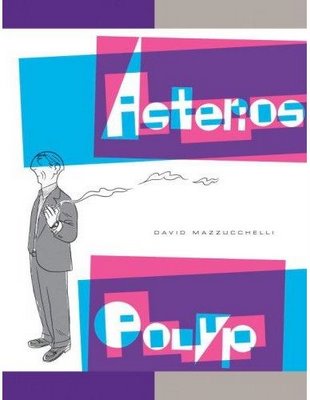 I've just completed two new graphic novels, Asterios Polyp by David Mazzucchelli and Bayou Volume 1 by Jeremy Love. The former is about a professor of architecture who must move beyond his binary ways of thinking to become a whole person, which means reconnecting with the common folk and with his former lover. The latter is being described as a Southern fairy tale.
Both are great reads that are garnering great reviews, and they're both titles that I highly recommend. Asterios Polyp is for mature audiences and is intellectually heady, while high schoolers and onwards should enjoy Bayou, which started out (and continues) as a web comic through DC's Zuda line.
Bayou has won several Glyph awards for excellence in comics among black creators, and Asterios Polyp is a sure award-winner in the making. While I loved Bayou and will read subsequent volumes of the story as they are released in trade form (though I may not follow the strip in its web comic form at zudacomics.com), Asterios Polyp may just be one the best graphic novels ever published.

Tuesday, August 04, 2009
Old Story about Teacher using Mickey Mouse as Part of Evolution Debate
Thanks to R. Petersen for bringing this to my atention. Very cool science lesson explained here.
Ipod Comics and Cell Comics News
ICV2 reports that the new comics browser from Comixology is the #1 app at the iTunes store. ICV2 also reports that Manga delivered to cell phones accounts for almost $350 million dollars in sales in Japan.
Monday, August 03, 2009
Op-Ed on Girls and Super-Heroines
A mother ruminates on her daughter's desire to connect with super-powered women.
Comics in the College-Level Intensive Writing Course
As part of its most recent updates, Graphic Novel Reporter features an op-ed from a college lecturer at CSU-East Bay who uses comics in her intensive writing course, what some might remember as "remedial writing." Comics as composition? A great idea, of course!
Sunday, July 26, 2009
Friday, July 24, 2009
San Diego Comic Con Now Underway....
....which means there should be tons of news pouring out soon. There's an academic conference on comics held at the convention during the event, and I think there are some education panels as well. But, Comic Con is essentially a trade show, an awesome, awesome trade show. I've been once but want to get back someday soon. Anyway, hopefully the comic-and-education-related stories will pick up along with the rest. And, maybe this year will be another record-breaker for attendance.
Thursday, July 23, 2009
Soon You Can Experience New Bone

Jeff Smith is going to continue his relationship with Scholastic and keep the Bone goodness coming. The Beat reports some previously-published material will be collected and new stories are on their way as well.
Wednesday, July 22, 2009
Nelson Mandela: The Authorized Comic
Though getting some poor reviews, this book is significant because it exists. Here is another review of the same book, I think. Details seem sketchy, but certainly Mandela deserves the graphic novel treatment for his life and work. Thanks to MH for sharing the links!
Monday, July 20, 2009
Western Mass Writing Project and Kids Create Comics over the Summer
Maybe we'll get something like this started up in EP one day.
Friday, July 17, 2009
Progress on Artist's Mental Illness Comic
Working with the notion that people with mental illness have enhanced our lives, the artist shares some pages from what looks like a great comics project.
Having reading the pages, I hope he titles the work something like Petting the Black Dog Under the Chin or even just The Black Dog.
Having reading the pages, I hope he titles the work something like Petting the Black Dog Under the Chin or even just The Black Dog.
Wednesday, July 15, 2009
TWILIGHT Series to Become Graphic Novels
Why there isn't an on-going Harry Potter comic book is beyond me. It'd rake in the dough. My guess is this will be pretty lucrative as well.
Friday, July 10, 2009
Vietnam Journal to be a Series of Graphic Novels...
....joining series like 'NAM and graphic novels like Will Eisner's Last Day in Vietnam.
Thursday, July 09, 2009
More Movie Goodness
Quaint but entertaining short film here. Makes me think of how we all need "hero" moments in our life and how few of us probably get them, take them successfully, and get recognized for them by someone who really matters to us.
Wednesday, July 08, 2009
A Cross-Over for the 21st Century
ICV2 reports that Batman will team up with Islamic heroes The 99. Talk about comics bringing cultures together! This is a smart move and will hopefully be a good read too.
Summer Teachin'
I'm teaching a summer session YA Lit class right now, which is why the posts are further apart. We're reading three graphic novels: The Complete Persepolis, American Born Chinese, and Deogratias: A Tale of Rwanda. We'll also look at web comic Persepolis 2.0 since it is somewhat current.
Saturday, July 04, 2009
Happy 4th from Cap and Bucky!
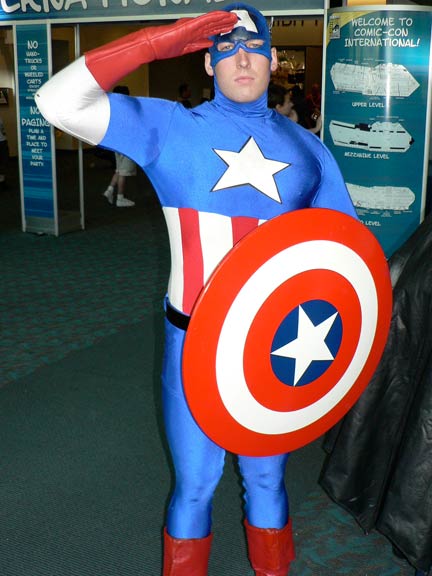 No, that's not me in the Cap suite. I would have filled it out more, everywhere, especially in the ass and legs, lol.
Tuesday, June 30, 2009
On My To-Read List: New Book on Latino Comics from UT Press

Visit this link to learn more about this title from a professor at The Ohio State University. Books like this, which features scholarship on and interviews with Latino comics figures, are important to my work and to helping the UTEP community see the value in comics scholarship. A text like this should help me as I work to establish both a special collections library of Hispanic Comics Art and as I try to make the case for a Comics Studies Program. And that our flagship institution's press published the book doesn't hurt either. :)
New _For Beginners_ Book Available! Ayn Rand
 Press Release:
Ayn Rand, author of the best-selling novels, The Fountainhead and Atlas Shrugged, is beloved by millions of readers, and equally despised by a significant number of detractors. Her novels and her revolutionary philosophy of Objectivism have acquired a world-wide following. They have also created legions of readers who are hungry for a deeper understanding of her writings.
Despite her undeniably significant contributions to the literary canon and the progression of philosophy, there has been no simple, comprehensive introduction to Rand’s books and ideas, until now. Ayn Rand For Beginners sheds new light on Rand’s monumental works and robust philosophy. In clear, down-to-earth language, it explains Rand to a new generation of readers in a manner that is entertaining, and easy to read and comprehend.
Andrew Bernstein, Ph.D. has published on a wide variety of philosophical and literary issues based on Ayn Rand’s philosophies including Objectivism In One Lesson: An Introduction to the Philosophy Of Ayn Rand. His book, The Capitalist Manifesto: The Historic, Economic, and Philosophic Case for Laissez-Faire, was published in 2005. Dr. Bernstein is a Visiting Professor of Philosophy at Marist College; he also teaches at SUNY Purchase (which selected him Outstanding Teacher for 2004)--and formerly at Pace University, and Marymount College (which selected him Outstanding Teacher for 1995). He has taught at Hunter College, Long Island University, and many other New York-area colleges. He lectures frequently at philosophy conferences all over the United States; additionally in Canada, England, Belgium, Norway, Hong Kong and Bermuda.
Owen Brozman is an artist who lives and works in New York City. He has an MFA in Illustration from the School of Visual Arts and a BFA in Painting from Boston University. Publications and clients include 3x3 Illustration Annual, Creative Quarterly Journal, Paramount Vantage, Playboy Magazine, Scholastic, and Ninja Tune Records.
###
The book will be available in August of 2009 and can be ordered by visiting http://www.forbeginnersbooks.com. The title has ISBN # 978-1-934389-37-9 and retails for just under $15. I have several of the For Beginners books and absolutely love them! They're excellent graphic resources for those of us who like our theory as clear as it can be complex.
Persepolis Remix
If you haven't seen this cut and rearrange job on Marjane Satrapi's classic graphic novel, you gotta see it. Instead of focusing on the events of the Iranian Revolution, Persepolis 2.0 focuses on the ongoing turmoil regarding the recent Iran elections. No word on whether Satrapi approves of this.
BU Comics Scholar Earns Acquisitions Award
This press release warms the heart of someone like myself who has a longterm goal of establishing a comics-related special collection at his home university:
June 19, 2009 - Boston, MA. The Boston University Humanities Foundation has conferred Division of Religious and Theological Studies (DRTS) doctoral student and comics studies scholar A. David Lewis a Library Acquisitions Award by for a new Religion & Graphica Collection. Expanding on the publisher donations already accumulated by Lewis and the DRTS, this collection, to be house in the School of Theology Library, is exclusively dedicated to comics surrounding religion – either its advocacy, its criticism, its satire, or its consideration – the first of its kind in the U.S. despite enthusiasts and scholars' long-time encouragement.
"This is wonderfully encouraging,” said Lewis. “Following the success of last year’s ‘Graven Images: Religion in Comic Books and Graphic Novels’ conference, this collection will help further both student and faculty interest in these frequently intersecting fields.” The Religion & Graphica Collection will feature works including the seminal MAUS, Persepolis, Palestine, Promethea, and Sandman graphic novels, including scholarly works on comics and religion.
Purchasing for the collection has already begun in full and should be available beginning in the Fall semester of 2009. The project is being overseen by Head Librarian Jack Ammerman.
Lewis is also the author of award-winning Lone and Level Sands graphic novel and the upcoming Some New Kind of Slaughter hardcover collection with collaborator mpMann. Some New Kind of Slaughter, focused on Flood Myths from all across the world, arrives in July from Archaia Comics.
The Boston University Humanities Foundation was established in 1981 following the award of a $1 million National Endowment for the Humanities Challenge Grant to the College of Arts and Sciences and the Graduate School. Their mission is to promote and enhance the work of humanities scholars at Boston University. Learn more about the Foundation at https://www.webmail.utep.edu/exchweb/bin/redir.asp?URL=http://bu.edu/hf.
June 19, 2009 - Boston, MA. The Boston University Humanities Foundation has conferred Division of Religious and Theological Studies (DRTS) doctoral student and comics studies scholar A. David Lewis a Library Acquisitions Award by for a new Religion & Graphica Collection. Expanding on the publisher donations already accumulated by Lewis and the DRTS, this collection, to be house in the School of Theology Library, is exclusively dedicated to comics surrounding religion – either its advocacy, its criticism, its satire, or its consideration – the first of its kind in the U.S. despite enthusiasts and scholars' long-time encouragement.
"This is wonderfully encouraging,” said Lewis. “Following the success of last year’s ‘Graven Images: Religion in Comic Books and Graphic Novels’ conference, this collection will help further both student and faculty interest in these frequently intersecting fields.” The Religion & Graphica Collection will feature works including the seminal MAUS, Persepolis, Palestine, Promethea, and Sandman graphic novels, including scholarly works on comics and religion.
Purchasing for the collection has already begun in full and should be available beginning in the Fall semester of 2009. The project is being overseen by Head Librarian Jack Ammerman.
Lewis is also the author of award-winning Lone and Level Sands graphic novel and the upcoming Some New Kind of Slaughter hardcover collection with collaborator mpMann. Some New Kind of Slaughter, focused on Flood Myths from all across the world, arrives in July from Archaia Comics.
The Boston University Humanities Foundation was established in 1981 following the award of a $1 million National Endowment for the Humanities Challenge Grant to the College of Arts and Sciences and the Graduate School. Their mission is to promote and enhance the work of humanities scholars at Boston University. Learn more about the Foundation at https://www.webmail.utep.edu/exchweb/bin/redir.asp?URL=http://bu.edu/hf.
Monday, June 29, 2009
Review of _Little Mouse Gets Ready_ by Jeff Smith
I could talk about how delicious it is to see Jeff Smith writing a children's comic featuring a mouse for Art Spiegelman and Francois Mouly. I could delight in conjecturing that Little Mouse's nickname around the Toon Book office is "Artie," and I could wrack my brain over how to write a review of a book with less than 3oo total words.
Instead, I'm going to defer to my oldest son, James, 3. After gleefully guffawing over Little Mouse putting on a pair of underwear (complete with tail hole) as part of his preparation for a trip to the barn, only to be told by his mother that mice don't wear clothes, James requested urgently and loudly, "Can we read it again, Daddy?!?"
When a Graphic Novel is Just a Comic
Sweet little article from The Christian Science Monitor on a mom and son reading comics.
ICV2 Attempts to Catalogue Comics Available on Mobile Devices
Get a fix on the next wave of comics disitribution.
Friday, June 26, 2009
RIP Michael Jackson
Part of growing up is realizing that if you live the normal allotment of years designated for your demographic, your lifeline is overlapping many people's who have less time remaining on earth than you do. This means, of course, coming to the invariable recognition that you will live to see many of your heroes or favorite people die.
I think of Johnny Carson, for example, who, when I was very young and would sneak into our living room to turn on TV way past bedtime, I never thought would pass on, let alone retire. Stan Lee most likely doesn't have that many decades left in him either, and most-likely I'll read Chris Claremont's obituary one day. And, if nature takes its usual course, I'll weep at my parents' funerals sometime in the future.
Being a fan of cartoons and comics offers one some isolation from this phenomenon. It will take massive cultural changes for Superman to disappear completely. Same for Mickey Mouse or Spider-Man. In fact, they may be immortal, or at least able to sustain some sort of relevance and permanence so long as there are humans around.
There certainly seemed to be time when a lot of us thought Michael Jackson would live forever. Now, he's dead at 50, and it doesn't seem too shocking that he's passed or passed so young. Unfortunate, but not world-shaking. For what it is worth, I was a huge MJ fan in the 80s and 90s and have continued to love his music for the nostalgia factors and also for how innovative it was, especially when it integrated visual aspects via music videos, for its time. So often it was electric, exciting, cutting-edge. For around two decades, when Michael reinvented himself, he took the rest of pop music with him.
Perhaps as we come to grips with the realities of his passing, we'll see that he has a comic booky type of permanence as well. His legacy certainly seems epic in scale, larger than life, much like a super-hero book. He did survive getting caught on fire. He was amazingly amorphous. He moved and dressed in fantastic ways few people could attempt. He always seemed a little beyond us, if not super-human in our eyes, something extra than ordinary.
Maybe we'll remember what made him great and special to the point of dampening all that made him strange to us. Time seems to treat fame more ephemerally than ever, especially for the truly talented, paradoxically, but perhaps Michael's best attributes will give him a reprieve from fading fast from our collective consciousness. He did appear in that Captain EO promotional comic, after all, as an intergalactic spaceship leader set on saving the universe one song and dance at a time.
I think of Johnny Carson, for example, who, when I was very young and would sneak into our living room to turn on TV way past bedtime, I never thought would pass on, let alone retire. Stan Lee most likely doesn't have that many decades left in him either, and most-likely I'll read Chris Claremont's obituary one day. And, if nature takes its usual course, I'll weep at my parents' funerals sometime in the future.
Being a fan of cartoons and comics offers one some isolation from this phenomenon. It will take massive cultural changes for Superman to disappear completely. Same for Mickey Mouse or Spider-Man. In fact, they may be immortal, or at least able to sustain some sort of relevance and permanence so long as there are humans around.
There certainly seemed to be time when a lot of us thought Michael Jackson would live forever. Now, he's dead at 50, and it doesn't seem too shocking that he's passed or passed so young. Unfortunate, but not world-shaking. For what it is worth, I was a huge MJ fan in the 80s and 90s and have continued to love his music for the nostalgia factors and also for how innovative it was, especially when it integrated visual aspects via music videos, for its time. So often it was electric, exciting, cutting-edge. For around two decades, when Michael reinvented himself, he took the rest of pop music with him.
Perhaps as we come to grips with the realities of his passing, we'll see that he has a comic booky type of permanence as well. His legacy certainly seems epic in scale, larger than life, much like a super-hero book. He did survive getting caught on fire. He was amazingly amorphous. He moved and dressed in fantastic ways few people could attempt. He always seemed a little beyond us, if not super-human in our eyes, something extra than ordinary.
Maybe we'll remember what made him great and special to the point of dampening all that made him strange to us. Time seems to treat fame more ephemerally than ever, especially for the truly talented, paradoxically, but perhaps Michael's best attributes will give him a reprieve from fading fast from our collective consciousness. He did appear in that Captain EO promotional comic, after all, as an intergalactic spaceship leader set on saving the universe one song and dance at a time.
More on Crumb's Genesis
Thanks to colleague and friend DM, I've procured a copy of The New Yorker with a substantial preview of R. Crumb's adaptation of Genesis. It is an impressive work, and the excerpt certainly compels me to want to purchase the complete text once it is available.
The art is unmistakably typical crumb. Adam could be one of his healthier male figures plucked straight from Haight-Ashbury; Eve is young, cute, sometimes gap-toothed, and round in all Crumb's favorite places. God looks like, well, a stereotypical version of god -- white, long beard, robe --- but considering the look of Crumb's early character of Mr. Natural, it is hard not to consider some sort of kinship between the two.
The best part about Crumb's style matched with this text is how his loose hatching, a sort of stylized stippling, works to make Adam and Eve look both beautiful, and, at times, a little dirty, almost depraved, as if the accumulation of rough, small hashes to fill out their features foreshadows their eventual fall from pristine ignorance.
The second-best part, of course, is thinking about this text in relation to the rest of Crumb's life, career, and legacy. He's critiqued Genesis as a propaganda text aimed at suppressing matriarchy. Is he intentionally playing Genesis off of his earlier work, much of which -- whether it is meant as self-critique or not -- many folks still find particularly offensive to women and misogynistic? Is he seeking to show maturity or redemption for creating texts that he might now regret? Will this text be appropriated into religion-based classrooms across the country? Perhaps that's the biggest and most enjoyable question to ponder. Will the man responsible for Devil Girl and page upon page of explicit sex fantasies in which women are debased to metonymic devices find this latest text meeting with the approval of nuns?
Now, to know that question's answer in advance -- for that I'd eat of the Tree of Knowledge!
The art is unmistakably typical crumb. Adam could be one of his healthier male figures plucked straight from Haight-Ashbury; Eve is young, cute, sometimes gap-toothed, and round in all Crumb's favorite places. God looks like, well, a stereotypical version of god -- white, long beard, robe --- but considering the look of Crumb's early character of Mr. Natural, it is hard not to consider some sort of kinship between the two.
The best part about Crumb's style matched with this text is how his loose hatching, a sort of stylized stippling, works to make Adam and Eve look both beautiful, and, at times, a little dirty, almost depraved, as if the accumulation of rough, small hashes to fill out their features foreshadows their eventual fall from pristine ignorance.
The second-best part, of course, is thinking about this text in relation to the rest of Crumb's life, career, and legacy. He's critiqued Genesis as a propaganda text aimed at suppressing matriarchy. Is he intentionally playing Genesis off of his earlier work, much of which -- whether it is meant as self-critique or not -- many folks still find particularly offensive to women and misogynistic? Is he seeking to show maturity or redemption for creating texts that he might now regret? Will this text be appropriated into religion-based classrooms across the country? Perhaps that's the biggest and most enjoyable question to ponder. Will the man responsible for Devil Girl and page upon page of explicit sex fantasies in which women are debased to metonymic devices find this latest text meeting with the approval of nuns?
Now, to know that question's answer in advance -- for that I'd eat of the Tree of Knowledge!
Tuesday, June 23, 2009
Art Spiegelman's Comic on the St. Louis in the Washington Post
A comic about a ship of Jewish refugees that was denied entry by the US in 1939.
Monday, June 22, 2009
Back from Chicago!
I'm back in El Paso after spending several days at a Conference of English Education event in Elmhurst, IL. It was an interesting event. I found it intriguing to see how people viewed my work and my reputation. Based on comments and deep reading, I think there are some definite generational differences in how established leaders in the field of English Education view my interest in graphic novels and how younger, newer folks view it. Now, I'll be just fine if all the right people die off or retire and split the scene at the right times over the next decade or so, and the right up-and-comers take their places, Lol. I kid, I kid ..... ahem .... cough ... sigh.....
These generational differences also seem to be evident in how folks view graphic novels in general. I've gleaned from more than one source that many think that the emphasis on graphic novels in education represents a flash in the pan fad. Hipper sources seem to understand that there's a 70 year history of comics and education intersection in the U.S. and that there is actually a thing called comics scholarship that has been growing since the 1960s as well.
My biggest worry is how those who might truly be waiting for the "fad that isn't a fad" to fade and for basking in "We were right all along. All hail the traditional print text!" glory might be influencing the next generation of CEE leaders, who might be all-too-eager to ride coat tails via adapting stolid ideologies if it means getting ahead. But, I would be remiss if I didn't mention that there also seem to be many mature and established members of my field that appear to see the longevity and future potentialities of the sequential art form. So, we'll see how it all plays out over the next....twenty or thirty years, I guess. Sheesh! There's a lot of my career left, lol.
But, it was very nice to meet new people, to put faces with names, to scope out nuances in conversations and "friend patterns" and -- most importantly -- to get together with some folks on some project ideas that might actually see the light of day! :) More on those as it is appropriate to talk about them, of course! :)
These generational differences also seem to be evident in how folks view graphic novels in general. I've gleaned from more than one source that many think that the emphasis on graphic novels in education represents a flash in the pan fad. Hipper sources seem to understand that there's a 70 year history of comics and education intersection in the U.S. and that there is actually a thing called comics scholarship that has been growing since the 1960s as well.
My biggest worry is how those who might truly be waiting for the "fad that isn't a fad" to fade and for basking in "We were right all along. All hail the traditional print text!" glory might be influencing the next generation of CEE leaders, who might be all-too-eager to ride coat tails via adapting stolid ideologies if it means getting ahead. But, I would be remiss if I didn't mention that there also seem to be many mature and established members of my field that appear to see the longevity and future potentialities of the sequential art form. So, we'll see how it all plays out over the next....twenty or thirty years, I guess. Sheesh! There's a lot of my career left, lol.
But, it was very nice to meet new people, to put faces with names, to scope out nuances in conversations and "friend patterns" and -- most importantly -- to get together with some folks on some project ideas that might actually see the light of day! :) More on those as it is appropriate to talk about them, of course! :)
Wednesday, June 17, 2009
Chicago-Bound and Top 50+ List
On the 18th I'll be leaving for Chicago to be a part of the Conference on English Education Summer conference. I'll be part of a 21st century literacies strand -- not on the program, but part of the discussions, etc.
I'll be advocating for and talking about graphic novels and comics in education with anyone who wants to listen. I'll probably also see the person who wrote the review that doomed my last edited collection project, but I'll need to put that behind me. I'm looking forward to seeing some folks again and many folks for the first time.
I've been reading up so that I'm current on comics scholarship, and I've been hitting some of the standards of multimodal/new literacies, so I feel pretty excited about the trip.
I'll be missing my birthday and Father's day away from the family, but we can catch up when I return Sunday.
Anyway, if you've got anything you think the CEE strand should know about comics and literacy, feel free to leave a comment. Otherwise, I'll be back at the blog early next week, earlier if the facility has Internet access.
Also, check back in later to see if I update this post with a "Bucky's Top 50 Graphic Novels" list, something I put together in case the folks at the CEE conference requested it......
~~~~~~~~~~~~~~~~~~~~~~~~~~~~~~~~~~~~~~~~~~~~
As more and more publishers try to capitalize on the graphic novel trend and on teachers' growing interest in using them in the classroom (remember that the New London Group warned us about the consumerization of new -- or in this case "(re)new(ed)" mediums as we reconsider education in the 21st century), more and more crappy graphic novels are released.
Why do I often recommend the same titles over and over again in my publications? Because I want teachers to consider good graphic novels, great ones even, not just any graphic novel.
With that being said, here's a list of my top 50 recommended graphic novels, with some extras thrown in. If a book comes along to unseed any of these titles, I'll let you know.
The titles from below represent stand-alone graphic narratives, trade paper backs collecting multiple issues from on-going series, anthologies, and Manga. They are not ranked per se, but I did try to include representatives from multiple genres and to be representative of authors whom I think are among the most important graphic novelists of our current age.
I've tried to include titles that would be appropriate for grades 6-12 or titles which are so salient that their "graphic" nature is overshadowed by their importance.
1. The Complete Maus (Spiegelman)
2. The Complete Persepolis (Satrapi)
3. In the Shadow of No Towers (Spiegelman)
4. Chicken and Plums (Satrapi)
5. King (Anderson)
6. The Amazing True Story of a Single Teenage Mom (Arnoldi)
7. La Perdida (Abel)
8. Ultimate Spider-Man Volume 1 (Bendis, et al)
9. Ghost World (Clowes)
10. A Contract With God and Other Tenement Stories (Eisner)
11. New York: Life in the Big City (Eisner)
12. Fagin the Jew (Eisner)
13. American Born Chinese (Yang)
14. Last Day in Vietnam (Eisner)
15. Protocols of Zion (Eisner)
16. Planetary volumes 1-4 (Ellis, et al)
17. Locas (J.Hernandez)
18. Palomar Stories (G.Hernandez)
19. The 9/11 Report Graphic Adaptation (Colon and Jacobson)
20. Fax From Sarejevo (Kubert)
21. Palestine (Sacco)
22. Dark Knight Returns (Miller)
23. V for Vendetta (Moore)
24. Watchmen (Moore)
25. Swamp Thing (Moore)
26. League of Extraordinary Gentlemen volumes 1-2 (Moore, et al)
27. Captain Britain ( Moore & Davis)
28. From Hell (Moore & Campbell)
29. Promethia (Moore)
30. Buddha (Tezuka)
31. Barefoot Gen (Nakazawa)
32. Truth: Red, White and Black (Morales & Baker)
33. American Splendor (Pekar)
34. The Quiter (Pekar)
35. Safe Area Gorazde (Sacco)
36. Bone (Smith)
37. Jimmmy Corrigan, Smartest Kid in the Universe (Ware)
38. 100 Demons (or anything by Lynda Barry)
39. Fun Home (Bechdel)
40. Deogratias: A Tale of Rwanda (Stassen)
41. Big Fat Little Lit (Spiegelman and Mouly, eds.)
42. Unstable Molecules (Sturm)
43. The Golem's Mighty Swing (Sturm)
44. The Tale of One Bad Rat (Talbot)
45. Blankets (Thompson)
46. Pedro and Me (Winnick)
47. Fables (Buckingham et al)
48. Y the Last Man (Vaugh, et al)
49. Runaways (Vaught, et al)
50. Pride of Baghdad (Vaughn and Henrichon)
6 More:
Embrodieries (Satrapi)
American Widow (Torres)
JSA: The Golden Age (Robinson)
Incognegro (Johnson & Pleece)
Best American Comics 2008 (Linda Berry, ed.)
Rose (Smith)
Titles that I feel will make my list of faves after reading:
Alan's War (Guibert)
The Photographer (Guibert)
Flight (Kibuishi)
A.D.: New Orleans After the Deluge (Neufeld; print version)
I'll be advocating for and talking about graphic novels and comics in education with anyone who wants to listen. I'll probably also see the person who wrote the review that doomed my last edited collection project, but I'll need to put that behind me. I'm looking forward to seeing some folks again and many folks for the first time.
I've been reading up so that I'm current on comics scholarship, and I've been hitting some of the standards of multimodal/new literacies, so I feel pretty excited about the trip.
I'll be missing my birthday and Father's day away from the family, but we can catch up when I return Sunday.
Anyway, if you've got anything you think the CEE strand should know about comics and literacy, feel free to leave a comment. Otherwise, I'll be back at the blog early next week, earlier if the facility has Internet access.
Also, check back in later to see if I update this post with a "Bucky's Top 50 Graphic Novels" list, something I put together in case the folks at the CEE conference requested it......
~~~~~~~~~~~~~~~~~~~~~~~~~~~~~~~~~~~~~~~~~~~~
As more and more publishers try to capitalize on the graphic novel trend and on teachers' growing interest in using them in the classroom (remember that the New London Group warned us about the consumerization of new -- or in this case "(re)new(ed)" mediums as we reconsider education in the 21st century), more and more crappy graphic novels are released.
Why do I often recommend the same titles over and over again in my publications? Because I want teachers to consider good graphic novels, great ones even, not just any graphic novel.
With that being said, here's a list of my top 50 recommended graphic novels, with some extras thrown in. If a book comes along to unseed any of these titles, I'll let you know.
The titles from below represent stand-alone graphic narratives, trade paper backs collecting multiple issues from on-going series, anthologies, and Manga. They are not ranked per se, but I did try to include representatives from multiple genres and to be representative of authors whom I think are among the most important graphic novelists of our current age.
I've tried to include titles that would be appropriate for grades 6-12 or titles which are so salient that their "graphic" nature is overshadowed by their importance.
1. The Complete Maus (Spiegelman)
2. The Complete Persepolis (Satrapi)
3. In the Shadow of No Towers (Spiegelman)
4. Chicken and Plums (Satrapi)
5. King (Anderson)
6. The Amazing True Story of a Single Teenage Mom (Arnoldi)
7. La Perdida (Abel)
8. Ultimate Spider-Man Volume 1 (Bendis, et al)
9. Ghost World (Clowes)
10. A Contract With God and Other Tenement Stories (Eisner)
11. New York: Life in the Big City (Eisner)
12. Fagin the Jew (Eisner)
13. American Born Chinese (Yang)
14. Last Day in Vietnam (Eisner)
15. Protocols of Zion (Eisner)
16. Planetary volumes 1-4 (Ellis, et al)
17. Locas (J.Hernandez)
18. Palomar Stories (G.Hernandez)
19. The 9/11 Report Graphic Adaptation (Colon and Jacobson)
20. Fax From Sarejevo (Kubert)
21. Palestine (Sacco)
22. Dark Knight Returns (Miller)
23. V for Vendetta (Moore)
24. Watchmen (Moore)
25. Swamp Thing (Moore)
26. League of Extraordinary Gentlemen volumes 1-2 (Moore, et al)
27. Captain Britain ( Moore & Davis)
28. From Hell (Moore & Campbell)
29. Promethia (Moore)
30. Buddha (Tezuka)
31. Barefoot Gen (Nakazawa)
32. Truth: Red, White and Black (Morales & Baker)
33. American Splendor (Pekar)
34. The Quiter (Pekar)
35. Safe Area Gorazde (Sacco)
36. Bone (Smith)
37. Jimmmy Corrigan, Smartest Kid in the Universe (Ware)
38. 100 Demons (or anything by Lynda Barry)
39. Fun Home (Bechdel)
40. Deogratias: A Tale of Rwanda (Stassen)
41. Big Fat Little Lit (Spiegelman and Mouly, eds.)
42. Unstable Molecules (Sturm)
43. The Golem's Mighty Swing (Sturm)
44. The Tale of One Bad Rat (Talbot)
45. Blankets (Thompson)
46. Pedro and Me (Winnick)
47. Fables (Buckingham et al)
48. Y the Last Man (Vaugh, et al)
49. Runaways (Vaught, et al)
50. Pride of Baghdad (Vaughn and Henrichon)
6 More:
Embrodieries (Satrapi)
American Widow (Torres)
JSA: The Golden Age (Robinson)
Incognegro (Johnson & Pleece)
Best American Comics 2008 (Linda Berry, ed.)
Rose (Smith)
Titles that I feel will make my list of faves after reading:
Alan's War (Guibert)
The Photographer (Guibert)
Flight (Kibuishi)
A.D.: New Orleans After the Deluge (Neufeld; print version)
Tuesday, June 16, 2009
Cap is Back

Have you heard? Steve Rogers is back. People keep saying "Cap is Back!" which must really hurt Bucky Barnes' feelings, since he's been doing his best to be Captain America in Steve's absence. Actually, if the character holds true to form, he'll be more thrilled than anyone. I'm just worried about what Marvel will do with James Bucky Barnes now that Steve is back on the scene. It would be easy to make him a throw-away character, or another "Bad Cap." I hope they'll let him continue to develop as a redemption-style character, though, and that he'll still have a prominent place in the books.
This means, of course, that he is probably already dead, and I am paying the price for not getting my comics last week....
Cap is dead! All hail Cap! All hail Bucky Barnes ! Bucky is ???
May 09 a Bad Month For Comics and GN's
Sales fell sharply from April to May of this year, but that could be for any number of reasons. I'm sure the comics industry -- with a focus primarily on money, just like any other industry -- will start gnashing teeth and what not, but let's see what several months' sales look like before we worry too much.
Monday, June 15, 2009
National Yiddish Book Center's List of Graphic Novels
Thanks to M.H. for sharing this link to a list of graphic novels and academic books about, by, or featuring Jewish people and issues. Pekar, Eisner, Sturm, Spiegelman, Modan and Sfar are on the list, but there are several other authors and resources of which I had never heard. This is definitely a link you'll want to click. I know I'll be revisiting it as I look for more graphic novels to read.
Sunday, June 14, 2009
A Great Idea for a Graphic Novel
The Socorro Bulldogs baseball team just won the Texas state high school championship today, with members of El Paso's only other state champions, the 1949 Bowie High Bears, looking on and giving support and approval.
One former Bowie player, 78 year-old Carlos Macias, said, "Ours will be different because the times were different -- sleeping on cots underneath the stadium bleachers instead of in a hotel, seeing those signs in the windows that said 'no dogs or Mexicans allowed', and we went in the back of restaurants and ate in a room at the side of the kitchen. But we were a team and we did it as a team, and we have so many great memories now. And now these Socorro kids will have their own memories."
Can you imagine a graphic novel that would simultaneously tell the stories of both these championship teams, one from 2009, the other from 50 years earlier? James Sturm has proven that baseball and graphic novels mesh well, and the racial/class under currents would make for interesting talk about about progress in the US. I think it'd be an awesome undertaking.
Anyone?
One former Bowie player, 78 year-old Carlos Macias, said, "Ours will be different because the times were different -- sleeping on cots underneath the stadium bleachers instead of in a hotel, seeing those signs in the windows that said 'no dogs or Mexicans allowed', and we went in the back of restaurants and ate in a room at the side of the kitchen. But we were a team and we did it as a team, and we have so many great memories now. And now these Socorro kids will have their own memories."
Can you imagine a graphic novel that would simultaneously tell the stories of both these championship teams, one from 2009, the other from 50 years earlier? James Sturm has proven that baseball and graphic novels mesh well, and the racial/class under currents would make for interesting talk about about progress in the US. I think it'd be an awesome undertaking.
Anyone?
Interesting Post on The Lack of Black Super Villains
Recently a discussion on a comics list serve talked about how minorities were often villains in the early super-hero comics, and someone even mentioned that African Americans were frequently villains. I then spent quite a bit of time trying to think of black super baddies and could think of none.
Funny how things come up: The link embedded in the title of this post will take you to a blogger's thoughts on why there are so few black super villains.
Funny how things come up: The link embedded in the title of this post will take you to a blogger's thoughts on why there are so few black super villains.
Saturday, June 13, 2009
Reviews of _Life Sucks_ and _Incognegro_
 I have managed to read two graphic novels so far this summer, as most of my time away from the family has been spent catching up on New Literacies and Comics Theory readings.
Jessica Abel’s Life Sucks, a story about a convenience store night clerk who eschews his vampire nature until forced to make a choice between his often compromised-by-necessity lifestyle choices and his desire to see a young woman freed from similar bonds, is a fun, light read. If Twilight hasn’t already covered the same ground, I can see teen girls liking this one. It has a nice blend of slice-of-life mixed with 1990s and 21st century soft counter culture. And it has vampires. Vampires are cool. Even ones who could star in the Diary of a Wimpy Kid series, as could the aforementioned store employee.
Mat Johnson’s Incognegro, with art by Warren Pleece, is another story about passing, but while Life Sucks is a fun romp into adolescent malaise, blood sucking, and puppy love, Johnson’s story has much greater resonance and relevance.
"Incognegro" is the pen name of a famous black journalist, an octoroon who passes for white in the American South of the 1920s and 30s. He goes undercover to investigate lynchings, gathering as much personal information as he can about each one’s participants – including photographs of them – on the scene. His journalism is nationally syndicated in black-owned and predominantly white-staffed papers, so his work is important in showing the nation its true colors even as he, a man of color, passes as one “without.”
But Incognegro, whose home base is in Harlem, NY, longs for recognition of his skills under his real name, wishing to enjoy his part of the burgeoning Harlem Renaissance. He is just about to give up his successful beat when news comes that his brother is being held for murder in Tupelo, Mississippi.
Reluctantly taking along with him a friend who can also pass, the reporter, with some intervention from a duplicitous white woman, unravels a murder mystery at the eleventh hour. There are many twists and multiple manners of passing in the novel, and how passing becomes intertwined with agency in race and also beyond it is quite fascinating, startling, and, at times, even a little satisfying.
 I won’t give away any more than that. I will say, however, if I was still teaching my “Contemporary Trends and Issues in Graphic Novels” course at the university in Hattiesburg, Mississippi (about 4 hours from Tupelo), this graphic novel would be on the reading list for oh-so-many reasons.
I don't think I'd be able to convince any pre-service teaching majors in the class to actually teach the book, though I think it could be done and ought to be considered. There are some tantalizing Shakespeare and Great Chain of Being connections waiting to be explored in the graphic novel's themes, to only touch on the text's curricular possibilities.
Take or leave Life Sucks, which is fun but not ambitious, nor seemingly trying to come off as such. But I strongly suggest reading Incognegro, which is skillfully written and, though a work of fiction based in multiple truths and realities, as telling as it is playful.
Take or leave Life Sucks, which is fun but not ambitious, nor seemingly trying to come off as such. But I strongly suggest reading Incognegro, which is skillfully written and, though a work of fiction based in multiple truths and realities, as telling as it is playful.
Wednesday, June 10, 2009
What Will National Education Standards Mean for Teaching Graphic Novels?
According to the Washington Post, 46 states and D.C. are on board with plans to craft national standards of learning for each grade in k-12 education. The experts working on the plan are currently doing so clandestinely, which is worrisome to me, but the idea of common reading and math standards for each grade across states and districts seems practical and, if administered correctly, smart.
So long as the standards represent a bare minimum of what to do and do not get too directive in how to do it, I think I can support the notion. As I tell my students, the problem with "standards" is that we ought to think of them like we think of a standard automobile, not like we think of a gold standard. In other words, standards should represent the bare minimum of what teachers and students should be doing. The problem is that the bare minimum has become the gold standard in public education, so we have schools and teachers over-hyped about students passing annual standardized tests when the students' doing so should represent only the base level of the growth they've attained over the year/s.
According to the Post article, "There will be no prescription for how teachers get there, avoiding nettlesome discussions about whether phonics or whole language is a better method of teaching reading; whether students should be drilled in math facts; or whether eighth-graders should read The Great Gatsby or To Kill a Mockingbird."
What does this mean for those who want to use comics in the classroom? Assuming the above quote is accurate, doing so should be just fine. It seems the national benchmarks will help inform teachers of what they need to teach but leave them the freedom -- or as much "freedom" as their individual school districts will allow them -- to get there as they wish and as they deem effective.
Comics-and-literacy proponents will want to keep an eye on this. Here's a link to the Post article.
So long as the standards represent a bare minimum of what to do and do not get too directive in how to do it, I think I can support the notion. As I tell my students, the problem with "standards" is that we ought to think of them like we think of a standard automobile, not like we think of a gold standard. In other words, standards should represent the bare minimum of what teachers and students should be doing. The problem is that the bare minimum has become the gold standard in public education, so we have schools and teachers over-hyped about students passing annual standardized tests when the students' doing so should represent only the base level of the growth they've attained over the year/s.
According to the Post article, "There will be no prescription for how teachers get there, avoiding nettlesome discussions about whether phonics or whole language is a better method of teaching reading; whether students should be drilled in math facts; or whether eighth-graders should read The Great Gatsby or To Kill a Mockingbird."
What does this mean for those who want to use comics in the classroom? Assuming the above quote is accurate, doing so should be just fine. It seems the national benchmarks will help inform teachers of what they need to teach but leave them the freedom -- or as much "freedom" as their individual school districts will allow them -- to get there as they wish and as they deem effective.
Comics-and-literacy proponents will want to keep an eye on this. Here's a link to the Post article.
Diamond Bookshelf Interviews Katie Monnin
Dr. Katie Monnin from the University of North Florida will soon be publishing a book on teaching graphic novels. Diamond Bookshelf chatted with her about comics and teaching. Click this title's post to see the interview!
Graphic Novel Sales Up Again in 08, According to ICV2
From the story: "In spite of the horrendous contraction in the U.S. economy in fourth quarter of 2008, sales of traditional graphic novels grew by 5% to $395 million up from $375 million in 2007..."
Monday, June 08, 2009
Another Real-Life Teacher Talks About Using GN's in Her Classroom
This time it is Leigh Brodsky from Watchung Hills Regional High School, Warren, New Jersey, sharing how she does it! Check out her thoughts by clicking the title to this post, which will take you to Mrs. Brodsky's op-ed at Graphic Novel Reporter.com.
Friday, June 05, 2009
Good to Know I'm Not Alone on this "Crash!" Thing
Just happened upon some folks' responses to the recent Carol Jago white sheet over at Noise-In-Formation. The conversation was pretty intelligent and compelling, so I've posted a link to it in the title to this here post.
Thursday, June 04, 2009
Real-Life Costumed Heroes Roaming America's Streets
I had seen the stories from smaller media outlets, but when CNN reported on the growing number of costumed vigilantes taking to the streets of America, I knew it was time to post something. There is a hero-tracking website called Superheroes Anonymous, even, where one can learn more about local lads and ladies patrolling the 'hood.
I'm sure this is a sign of the times somehow. CNN has it's take,which you can read by clicking the title to this post. Mine? I'm still up in the air on it, but that's because my super hero persona, the chubby guy who protects a few city blocks of West El Paso, can fly. ;)
I'm sure this is a sign of the times somehow. CNN has it's take,which you can read by clicking the title to this post. Mine? I'm still up in the air on it, but that's because my super hero persona, the chubby guy who protects a few city blocks of West El Paso, can fly. ;)
Wednesday, June 03, 2009
Textus/Praxis Revisted!!
I was thrilled today to find, after doing some web surfing, that an interactive project that I created back when I was a doc student has been revived/archived and is accessible again to the general public.
The project was created in a class under Dr. Margo Figgins, to whom I'm eternally grateful for putting the pages back up after an absence.
The project is entitled Textus/Praxis and details my early thoughts on textuality, reading, literacy, and how they can all intersect -- through graphic novels and via a revisioning (or, as the New London Group might call it, a "redesigning" -- though I might suggest that textus/praxis is both a deconstruction of familiar sign systems and discourses as well as a revisioning of them, making it a re-de-signing) of how we view students' literacy skills.
It's also where I discuss my three-pronged definition of textuality, and was an early and primary source for the students in my comics as literature courses (and it will be again, assuming its address sticks this time!). It has its rough edges, but I'm proud of it to this day. Recently, I was thinking about updating it and recreating it via old files I've got saved somewhere, but I like the option of clicking it in the above post title much better.
Check it out! Be awed at my sense of critical literacy and critical thought! And -- as you read -- consider that this was crafted before I had read a shred of multimodal/new literacies materials!
The project was created in a class under Dr. Margo Figgins, to whom I'm eternally grateful for putting the pages back up after an absence.
The project is entitled Textus/Praxis and details my early thoughts on textuality, reading, literacy, and how they can all intersect -- through graphic novels and via a revisioning (or, as the New London Group might call it, a "redesigning" -- though I might suggest that textus/praxis is both a deconstruction of familiar sign systems and discourses as well as a revisioning of them, making it a re-de-signing) of how we view students' literacy skills.
It's also where I discuss my three-pronged definition of textuality, and was an early and primary source for the students in my comics as literature courses (and it will be again, assuming its address sticks this time!). It has its rough edges, but I'm proud of it to this day. Recently, I was thinking about updating it and recreating it via old files I've got saved somewhere, but I like the option of clicking it in the above post title much better.
Check it out! Be awed at my sense of critical literacy and critical thought! And -- as you read -- consider that this was crafted before I had read a shred of multimodal/new literacies materials!
LOC's Sara W. Duke Interviewed on Acquisition of Amazing Fantasy #15 Original Art
The Library of Congress has a huge cartoons and comics repository. In this video, Sara W. Duke, the LOC's curator for the Popular & Applied Graphic Art Prints & Photographs Division, talks about getting the original art to Spider-Man's first appearance. Click the post's title to find the video, and enjoy.
Tuesday, June 02, 2009
Joyful Stories Press to Publish 50 Biographical Manhwa
From ICV2:
"The Korean publisher Dasan Books has set up a U.S. subsidiary, Joyful Stories Press, to publish English versions of more than 50 biographical Manhwa starting with The Obama Story: The Boy With the Biggest Dream, a 200-page full color biography targeting kids from 8-12 that is available now."
"Manhwa," for the uninitiated (like I was until just a few seconds ago) is the Korean terms for comics, single-panel cartoons, and even animated cartoons. Manhwa is therefore distinctive from Japan's Manga in that Anime and Manga are not synonymous terms, though there may be Manga based on anime series and anime series based on Mangas. They're read, when they are in print form, like American comics. also distinguishing them from their Japanese counterparts, though the success of Manga in America does seem to be what is fueling the growing Manhwa presence in the States.
I've also seen the term spelled "Manwha," as in "Man, What?!?" which is what someone might say when they realize here is yet another form of sequential art about which they can learn. :)
Assuming "Manhwa" is the proper spelling, I'll probably be phonetically pronouncing it "man-hah-wa" to help me from getting confused.
"The Korean publisher Dasan Books has set up a U.S. subsidiary, Joyful Stories Press, to publish English versions of more than 50 biographical Manhwa starting with The Obama Story: The Boy With the Biggest Dream, a 200-page full color biography targeting kids from 8-12 that is available now."
"Manhwa," for the uninitiated (like I was until just a few seconds ago) is the Korean terms for comics, single-panel cartoons, and even animated cartoons. Manhwa is therefore distinctive from Japan's Manga in that Anime and Manga are not synonymous terms, though there may be Manga based on anime series and anime series based on Mangas. They're read, when they are in print form, like American comics. also distinguishing them from their Japanese counterparts, though the success of Manga in America does seem to be what is fueling the growing Manhwa presence in the States.
I've also seen the term spelled "Manwha," as in "Man, What?!?" which is what someone might say when they realize here is yet another form of sequential art about which they can learn. :)
Assuming "Manhwa" is the proper spelling, I'll probably be phonetically pronouncing it "man-hah-wa" to help me from getting confused.
Monday, June 01, 2009
San Jose Library Holds Graphic Novel-Making Contest, Announces Winner
From Mark Clegg:
The Tully branch of the San Jose Public library system has concluded their system-wide “Graphic Novel Making Contest,” with the winners announced at a well-attended ceremony last Friday, May 29, 2009.
The contest was open to people between ages 12-19. They were to independently create their own “Graphic Novel” with a maximum length of 10 pages. First prize was a $100 gift certificate, second was $75,third was $50, and fourth was $25. There were 24 valid entries turned in by the submissions deadline of May 8.
.... As might be expected, 23 of the entries were strongly influenced by Manga, which is basically the only comics the entrants were familiar with. They showed much love and enthusiasm, with skills reasonable for their respective ages.One though was different. The winning entry can be seen in a PDF that can be downloaded at: http://tullybranch.googlepages.com/VitusbyJaneLiu.pdf
Great idea from the Tully branch! Good to see libraries taking readers' love of sequential art to the next level: not just getting the books on the shelves, but acknowledging young people's desire to create and compose in the form as well!
The Tully branch of the San Jose Public library system has concluded their system-wide “Graphic Novel Making Contest,” with the winners announced at a well-attended ceremony last Friday, May 29, 2009.
The contest was open to people between ages 12-19. They were to independently create their own “Graphic Novel” with a maximum length of 10 pages. First prize was a $100 gift certificate, second was $75,third was $50, and fourth was $25. There were 24 valid entries turned in by the submissions deadline of May 8.
.... As might be expected, 23 of the entries were strongly influenced by Manga, which is basically the only comics the entrants were familiar with. They showed much love and enthusiasm, with skills reasonable for their respective ages.One though was different. The winning entry can be seen in a PDF that can be downloaded at: http://tullybranch.googlepages.com/VitusbyJaneLiu.pdf
Great idea from the Tully branch! Good to see libraries taking readers' love of sequential art to the next level: not just getting the books on the shelves, but acknowledging young people's desire to create and compose in the form as well!
BEA News Starting to Trickle In
Most reviews of the latest Book Expo America are indeed reviews of the show rather than a discussion of sales numbers of books and their growth or decline over the last year. This article from ICV2 does mention that the market for all books was down 1.5 % this year, but there's not discussion on readership of graphic novels or Manga as far as percentages of increase or decrease over one year or the next. The last two years have seen significant growth in sales of sequential art while other books have struggled. If I get any hard data, I'll share it here ASAP.
Sunday, May 31, 2009
Friday, May 29, 2009
Mizzou Alley Oop!
The Missouri University Special Collections and Rare Books branch of the university library is hosting "Alley Opp: 75 Years of the Comic World of V.T. Hamlin." Thanks to S. Duke for letting me know about this great online exhibit. Missouri truly is the "show me" state.
Subscribe to:
Posts (Atom)