Stickermule

Custom Stickers, Die Cut Stickers, Bumper Stickers - Sticker Mule

A Public Service Announcement! ;)

A Public Service Announcement! ;)
Showing posts with label censorship. Show all posts

Tuesday, August 20, 2013

BAREFOOT GEN Pulled from Japanese Primary, Middle School System

The excellent manga Barefoot Gen has been removed from shelves in primary and middle schools in Matsue, Japan. While teachers can still teach the text, it appears students will no longer be able to find the book in library stacks. Read the CBLDF press release on the subject here.

I wrote the rationale for this graphic novel's use in classrooms for the Teaching Rationales for Graphic Novels ebook/CD-rom project published  through Maupin House. I feel strongly that Barefoot Gen is an important text worthy of study and which should be accessible to all readers. I hope the school officials reconsider their decision, which was based on the book's portrayal of Japanese troops, apparently.

I was approached by a Japanese public television show to do an interview on the importance of this text and using it in classes. I couldn't commit due to my move to Washington, but now I wish I could have found the time.


Tuesday, May 14, 2013

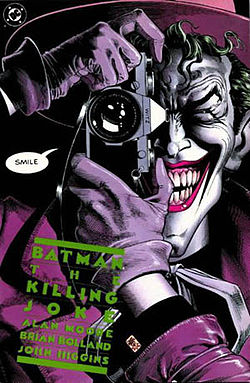
CBLDF Reports on Recent Attempt, Failure to Censure THE KILLING JOKE

Click here for information about a patron's attempt to have Alan Moore's The Killing Joke removed from a public library in Nebraska. The patron assumed the text "advocated" rape, apparently. Cooler heads prevailed, and the librarians did not remove the graphic novel.

According to the Comic Book Legal Defense Fund:

The book is currently shelved in the young adult section of the library with several other graphic novels. Ellyson notes that the review board consistently denies material challenges posed in the community, ensuring the availability of materials for patrons.

While this case is a victory for free speech, Batman: The Killing Joke can now be added to the list of Alan Moore’s books that have been challenged in libraries. Watchmen, The League of Extraordinary Gentlemen, and most recently Neonomicon have all been challenged.

Chalk up a win against censorship, and give the opus of Alan Moore another notoriety upgrade! 

Tuesday, April 16, 2013

ALA's Most Challenged/Banned YA Books for 2012 Surpisingly Comicsless

The Comic Book Legal Defense Fund reports that no comics or graphic novels made the 2012 list of most challenged books. The Absolutely True Diary of a Part-Time Indian was challenged in 2012 and is a regular on such lists now, according to CBLDF, and since the Sherman Alexie book has comics elements, let's consider it a prose/comics hybrid text just so the sequential art lovers among us don't feel too left out.

Click here for the story and links to ALA's lists of oft-challenged books.

Tuesday, April 09, 2013

Satrapi Weighs in on Persepolis Ban

The Comic Book Legal Defense Fund is keeping this ever-befuddling clusterflub from Chicago Public Schools fresh in our minds by helping share Marjane Satrapi's thoughts on the subject. I am excited to see her talk about the issue, and frustrated that CPS is requiring an ambiguous type of training to teachers before they teach the book. Pseudo-censorship at its finest, laced with half-baked stories and rumors and very little transparent truth from CPS beyond a "We'll do what we want" rhetoric.

Friday, March 15, 2013

Persepolis Being Banned from Chicago Schools?

 
Bleeding Cool News is reporting that Marjane Satrapi's graphic novel Persepolis may be experiencing a controversy. According to a post from the principal of Lane Tech College Prep High School, the book has caught the attention of someone who doesn't want the book available to students.

Read more about this possible censorship case here. You can access the principal's email address and send a letter of support for the book's continued inclusion in this and other Chicago-area schools, which is also a letter of support for students' ability to access it, read it, and learn from it.

Here's a copy of the email I just sent:

Dear Principal Dignam,

Hi there. I'm James Bucky Carter, an English Education professor and comics-and-literacy scholar. My work on comics and education has appeared in publications from MLA, NCTE, ALAN and ASCD. I have been a keynote or featured speaker on the subject at NCTE affiliates in NY, NH, OR, MO, NC, IO, and ID.

I'm writing in support of the graphic novel _Persepolis_, which, according to some media outlets, is being challenged in your schools?:
http://www.bleedingcool.com/2013/03/15/persepolis-banned-in-chicagos-schools/

Please trust me when I tell you that Marjane Satrapi's _Persepolis_ is an excellent graphic novel for inclusion in public schools and libraries. As well, my research indicates that it is one of three graphic novels with which teachers are most familiar at the national level (along with Maus and American Born Chinese). Lesson plans and articles have been written on how to teach it. You might see the Marla Harris chapter on teaching it in my book _Building Literacy Connections with Graphic Novels_, published by NCTE and a best-seller for them. You might see Susan Spangler's chapter on integrating Persepolis into the ELA classroom by visiting the online _Journal of Media Literacy Education_. There is also a rationale for teaching the first volume of Persepolis available on the CDrom/ebook _Rationales for Teaching Graphic Novels_. Alan Webb has some great articles and a book on exploring literature from the Middle East in the American ELA classroom.

Simply put, there is no lack of information regarding teacher's respect for this text or how to use it effectively in a secondary school classroom.

I have recommended _Persepolis_ for secondary audiences for many years. I have taught it in my YA lit classes for many years. While it is true that the book can be seen as controversial from any number of parties (I've had christian students express frustration with it as well as Muslim students), its potential to open dialogue and discourse at a time when our country and the Middle East need to find understandings.... Well, it might be unparallelled.

I encourage you to support this inclusion of _Persepolis_ in your school's classrooms and libraries, to encourage your teachers to support the text as well, and I hope you might share this support across Chicago.

Thank you for the work you do. If I can be of any help, do not hesitate to call upon me.

Sincerely,


JBC

Wednesday, April 11, 2012

The Color of Earth Makes ALA's "Frequently Challenged" Books List for 2012


Kim Dong Hwa's graphic novel trilogy is the only comics work on the list this year, which is not as strange to me as the fact that I never read any stories about this book being challenged, and I'm sort of on the lookout for those things.

To read the rest of the list, click here. It may have been posted in 2012, but it is based in information from 2011, of course.

Friday, February 10, 2012

Belgian Court Makes Weird Legal Decision; TinTin Not Banned

While I'm happy to know that a court has decided on the legal hubbub surrounding TinTin's place in its home country of Belgium (someone had filed a case against TinTin in the Congo to get it outlawed due to racist content), how the court has handled this seems a little strange.

The books will not be banned, as was the complainant's desire, but the court essentially ruled that the volumes could remain widely available because it, and Herge's intent, was not inherently racist.

Had the court felt otherwise, the decision might have not been the same, so while this is not exactly a victory for free speech, it is a victory for proponents of the notion that anyone should be able to read whatever they like from the past, when "historical context" regarding what is racist and what is not was different from what it is today.

Yeah, it's a muddied situation. Read more about it here.

Thursday, January 19, 2012

FOX News Worries About Comics and Kids

CBR has great coverage of a recent news short that ran on FOX stations regarding comics, sex, and kids. CBR says everything I would have said about it, plus offers video of the story, so click here to access the link. Hopefully this is an isolated story and we're not going to see another Seduction of the Innocent type of backlash against comics. Afterall, FOX does have a psychiatrist as an expert in this story....

On the other hand, as CBR notes, the comics in mention are bad and not good for kids to read or anyone to read due to being so crappy. Not that FOX really has a leg to stand on hen it comes to issues of morality. On the other hand, that's never stopped them before.

Wednesday, January 11, 2012

Stuck in the Middle Survives Censorship Scare, But Not Unscathed

Comics news sites like Comic Book Resources (CBR) are reporting that the comics anthology Stuck in the Middle has survived a challenge to be removed from middle school libraries in some of Maine's public schools. A parent had complained that the book, which is subtitles "Seventeen Comics from an Unpleasant Age" and does deal with some of the "dirty underbellies" of adolescent life and identity.

The Comic Book Legal Defense fund offered support for the books' continued inclusion, and I would have as well had I known of the story! How this one escaped my notice I have no idea. The book will remain on the shelves of schools like Buckfield Junior-Senior High, but a 2009 challenge in South Dakota had less fortunate results for the text and its potential readers. The Souix Falls, SD, school board voted to remove the book from shelves for "foul language, sexual references and depictions of teen smoking."


Still, a student will need special permission to read the book in Maine's Region 10. It's not a complete victory, but it's not a total defeat either. Kudos to CBLDF for its support of the text, and a "good enough" to the special committee formed to decide the fate of the book.

You can read more about the local coverage of the story here.

I can't help but remember the work that I and many other teacher educators and k-12 teachers did last year in creating the CD-ROM and E-book versions of Rationales for Teaching Graphic Novels, which offers statements of summary, use, reputation, and value for 108 different graphic novels. Stuck in the Middle wasn't one of them, but I wonder if troubles could have been avoided if a rationale for the text had been available. Of course, the challenge for this book regarded its place in a library rather than a classroom.


This case reminds us that comics need our help and our vigilance regarding their inclusion in schools and libraries and that we need to fight for students' rights to read them,


Tuesday, August 02, 2011

GNR Talks with our interview with the CBLDF’s Executive Director Charles Brownstein

That's "Comic Book Legal Defense Fund" for the uninitiated. For a great interview with the head of the censorship-fighting force, click here.

Wednesday, April 06, 2011

_Tin Tin_ Racism Case *CAN* Be Heard in Belgium

Thanks to Sturge for the update on the case that Mbuto Mondondo has brought against Tin Tin in the Congo. Apparently if an image offends, it can be deemed illegal and harmful in Belgium. While I may not support the racist images in the book, I do not support the book being banned in any way. But, I'm an old-fashioned American who likes freedom of speech, not one of those hyper-lefty liberals like Lindsey Graham.

Friday, February 11, 2011

What's Going on With Manga Right Now...

Tokyo has recently banned certain types of Manga that feature young girls doing sexual things. Or, another way of looking at it is that Japan is making it more difficult for minors to get their hands on this material.

The Beat has several links up with their own links, etc. See here and here and here.

I don't know enough about Manga or Japanese culture to make any informed statements, except to say that I'm not sure this legislation parallels directly the comics censorship efforts in the US from the 1940s and '50s. Yet. In terms of sex and nudity, these types of Manga texts at the center of this exigency are much more overt and graphic than any of those images in panels with supposedly subliminal vaginas that folks griped about back in the day.

"Subliminal Vaginas" -- that'd make a great name for a band, eh?

Friday, January 21, 2011

The Beat Calls DC's New Rating System Video Game-Like

DC will no longer use the comics code authority to rate its books as kid-safe, dropping the code in favor of a "multi-layer ratings system."

The system assigns either an E, a T, a T+, or an M to titles to indicate if they are for everyone, teens, teens and whatever "+" means, and mature.

I'm intrigued by the streamlining. Making ratings more consistent across media was part of the reason for the change.

Multimodality, censorship, and ratings just got more interesting.

How long before we see a complaint from a parent or teacher that a trade paperback with comics rated "M" was found in the "T" equivalent of the school library's stacks?

Thursday, January 20, 2011

Ninja, Please! : Ruben Bolling's Comic on the Huck Finn Controversy

Yes, I think the n-word should stay in all editions of Adventures of Huckleberry Finn. Erasing history only helps us to repeat it, and not facing uncomfortable feelings and conversations doesn't do anything to make anything better.

On the other hand, as a ninja, I know how hurtful it can be to hear someone use an n-word in a derogatory manner. And, I know how hurtful it is to have your particular n-word appropriated in the place of another hurtful n-Word. "Ninja, What?" "Where my ninjas at?" "What up, my ninja?" When will the pain cease?
When these kids realize that real ninjas bring real pain, that's when! Hye-yah!

Forgive me for my crass spin on "Ask a Ninja," but do give thanks to Ruben Bolling for offering some comics commentary on this latest flapdoodle and hoo-hah.

Wednesday, December 01, 2010

Comic Book Legal Defense Fund Wins Intellectual Freedom Award, Yo!

The award, which you can learn more about by clicking the link in this post's title, is given to offer attention to “individuals or groups who have furthered the cause of intellectual freedom, particularly as it impacts libraries and information centers and the dissemination of ideas.” It’s “granted to those who have resisted censorship or efforts to abridge the freedom of individuals to read or view materials of their choice….”

Wednesday, September 29, 2010

6 of 10 Most Challenges Graphic Novels Covered in *Rationales for Teaching Graphic Novels*

According to ICV2 and The Huffington Post, the ALA has released a list of graphic novels most often challenged (defined as an effort to remove the book from a certain location and audience). I'm unsure what period of time the ALA is covering in this list.

Click the title of this post to see the list, but also know that 6 of the 10 titles have rationales in the upcoming Maupin House release Rationales for Teaching Graphic Novels.


Hopefully these rationales -- statements of the content, possible concerns, and pedagogical potentials of specific texts -- will help people keep apparently oft-challenged graphic novels Blankets, Fun Home, Maus, Bone, Pride of Baghdad, and Watchmen on shelves and in readers' hands.


Another title mentioned is Absolute Sandman, and while R4TGN doesn't cover that edition, it does feature a rationale for one of the smaller Sandman graphic novels. So, that's sort of 7 of ten, if you think about it.

Monday, September 27, 2010

Banned Books, Bone and Bayou

This week is Banned Books Week, a celebration of the freedom to read for all people of all ages.

This year it comes at a pertinent time, as Missouri State University professor W. Scoggins has recently called Laurie Halse Anderson's important YA novel Speak soft-core porn because of its depiction of rape and disapproves of the book being read and even sold.

Luckily, the YA community has responded loudly in favor of the book, though, who can say for sure if their efforts will help keep Speak on bookshelves?


Recent efforts by teachers, teacher educators, and organizations like NCTE, the National Coalition Against Censorship, the ALA, and the American Booksellers Foundation for Free Expression weren't enough to keep Sherman Alexie's The Absolutely True Diary of a Part-Time Indian from being banned in Stockton, Missouri, just a little ways up the road from Springfield and MSU, after all.


I'll be discussing censorship with my YA Lit class this week, which will read Last Night I Sang to the Monster for Wednesday and will read Speak in a few weeks as well, and I've joined Speakloudly.org, but I am ashamed to say I did little to help the cause of Part-Time Indian, which contains some sections of comics art.
However, for 108 other graphic novels, I can say I and a crew of dedicated teachers and professors have done something to help teachers keep graphica from suffering a similar fate:

Enter Rationales for Teaching Graphic Novels, a CD-Rom packed with statements on the content and teaching value of over 100 graphic novels. Each rationale also includes teaching ideas for each text.

While this most recent spate of censorship has glossed over 100% comics art texts (so far), comics have had some pretty high-profile censorship cases lately as well. A district in Minnesota considered having a volume of Jeff Smith's Bone removed after a parent complained. The text had advocates on site and used letters from me and Jeff Smith himself to come to a 10-1 decision to keep the book. Even lovable Spider-Man has been censored lately, based on a Nebraska-based parent complaint that the book was too sexy for her elementary school student.


Further, comics and graphic novels that are facing bans or censorship don't always make it onto NCTE or ALA's radar like traditional print texts do. So, they're often on their own unless a busy-body professor (like me) or a conscientious creator like Smith reaches out.

I hope that Rationales for Teaching Graphic Novels remedies that to some degree. Each rationale offers not only summary information and teaching resources and ideas, but is very explicit about anything that may be considered objectionable while also explaining why those elements might be in the text. The rationales can be used to help assuage the anxieties of other teachers, administrators or parents and can even be used as contracts that parents and students can sign off on to offer evidence of being OK with a specific graphic novel's use.
Titles covered include classics like Maus, Persepolis, and American Born Chinese as well as just-released books. A variety of genres are covered, from superhero to memoir, and contributors include teacher educators who have previously published on comics and literacy connections and practicing k-12 teachers.

In celebration of the right to read and Rationales for Teaching Graphic Novel's deep connection to issues of readers' choice and anti-censorship agenda, I am pleased to share with you two sample rationales:
Click here for a rationale of Jeff Smith's Bone series and for a rationale for the first installment of one of my favorite contemporary comics sagas, Jeremy Love's Southern Gothic Bayou.
Rationales for Teaching Graphic Novels is available for pre-order from Maupin House now.

Thursday, July 08, 2010

Crazy New Censorship Case: Kid Loses Mind Over Manga!

And to think, my files for the upcoming Rationales for 100 + Graphic Novels reached the copy editor at our publisher yesterday, the same day as this story broke. Certainly, if I need to add or revise the introduction, this tale will make it.

Did you read the inks? That's right, Manga can make you crazy. Surely you don't have to have any emotional distress at all before reading a manga and going completely insane. Me? I'm just surprised the book in question is Psychic Academy and not Twilight: The Graphic Novel.