EN/SANE World is James Bucky Carter's enclave of English Education (EN) resources as well as a haven for those looking for information on Sequential Art Narratives in Education (SANE).
A Public Service Announcement! ;)
Showing posts with label awards. Show all posts
Saturday, July 11, 2015
2015 Eisner Awards Winners Announced!
Click *here* to see which creators and titles won. Though, while awards are nice, these accolades do not mean the other nominees and many others not nominated aren't doing equally awesome work.

Tuesday, February 03, 2015
Review of Tamaki & Tamaki's *This One Summer*
Nothing nestles one out of their plans to review a book like learning it just won a Caldecott and a Printz, but that's what happened with me and This One Summer, a 2014 release from Jillian Tamaki and Mariko Tamaki, who some may remember from their 2008 graphic novel Skim.
I started reading This One Summer months ago. The book details a particularly eventful -- in a subdued sort of way -- family vacation to Awago Beach for young Rose, a teenager teetering between liking girlish joys and being thrilled and titillatingly confused by the provocativeness of dabbling in more adult realities, some of which feel like confronting an adulterated abyss and others which feel like the pangs of pubescence. Rose is a domestic detective eager to place together clues about her family life and the lives she might want, and Awago Beach is her beat to canvas.
As she grows weary of her parents' bickering and emotional isolation from each other, Rose finds some comfort (and some vexing too) in her younger friend Windy, who provides a vehicle for reflecting on the word of girlhood versus a new, more aware existence where sex is real, boys are...?, mother nature's a bitch (and named as such), and just getting by alive, much less well, can seem like the greatest of successes.
But as much as I enjoyed the story and worried alongside Rose about what exactly was up with her despondent mother, the thing that kept me from finishing the book for so long, kept me hoarding it to myself, is its mastery of the comics form. I wanted to keep it to myself.
This One Summer offers a low-key, domestic plot which manages to tap into the universals of living and growing, so it is never boring even though its topics are mundane, but ohmygoodnesstheART!
The Tamakis know their comics craft, and they offer us a mastery of panel work and emanata as not just story framing but story telling like few graphic novelists I've seen. They are in complete control of what comics making affords them and utilize unique elements of sequential art so adeptly I'm not surprised the honors have rolled in. I couldn't keep this book to myself if I tried. Someone was bound to recognize its brilliance. What gets me as someone who has metacognitive awareness of comics' affordances and applies it to readings, though, is that the plot and those elements so impressively used are never at odds. I never felt so impressed by the artistry that it took me out of the story. The story is the artistry.
Panel work can seem banal, for example. Comics are always framed -- by readers, by pages, and by cells or panels within the page. Even open panels with full bleed still reside within the space of the page. But the Tamakis show even the basic elements of comics can be art, not just artifice.
In one panel, for example, Rose holds up a jellied candy, peering through it and noting the distorted image of reality it offers, a chaotic frame within the frame which creates for the reader the experience of seeing the physical real as it is, as it could be, and as it is comprehended in Rose's mind.
A series of panels in which Rose looks through the slits of a high wooden fence into the yard of local, working-class teens offer another amazing bit of formal mastery. Again, the scene works to give Rose a glimpse of another lifestyle or realism, one more grown-up than she's used to. The vertical, rectangular slits in the fence are already bordered by traditional comics panels but also become comics panels, and the angle work -- another strength of the book -- creates a dual perspective and multi-framing effect which draws the reader into Rose's psyche while also helping us experience her angst, excitement and nervousness about noting worlds beyond her own lived experiences. It's not just the plot, but the form which snags the audience.
As well, the creators spin onomatopoeia and diegetic and nondiegetic sound into high art. In one panel, the word "slut" weighs heavily on Rose's mind and intermingles with her physical surroundings to replace the sound of walking on crunching leaves. When Windy practices inhaling and exhaling, her breath has body.
When Windy and Rose listen to tunes, the music, visually represented as notes in the air -- not a new trick, but never one so accomplished as it is herein (seriously, Schroeder, if you saw how well music was expressed in this comic, you'd feel the full weight of working for Peanuts!) -- seem tangible, movable, customizable, even, as if the air itself becomes a workshop for creation and expression. When Rose swims and we need to feel the depth of the water, we are placed half-submerged behind treading Rose, and the panels are long and horizontal. When space itself becomes daunting or dangerous, splash pages full of ink help readers see when space itself can become daunting or dangerous, and every single element, from line work to angling to panel work to use of emanata and onomatopoeia, seems essential.
And so they are.
The Printz and the Caldecott and whatever other awards are coming don't make This One Summer a masterpiece, of course, and I do wonder if folks have gotten so keen to the comics scene that they are aware of all the artistic work going on in the book or just sort of "felt" its specialness without being able to note the formal command at work. The book would be a magnum opus of comics art regardless. I am sure it will be studied and explicated for years to come. It's a true exemplar. I suppose the book is a credit to the success of comics as a medium which has full respect among many within the literati now. But award recognition alone doesn't adequately describe how rare and special is This One Summer.
Labels:
awards,
Caldecott,
magnum opus,
Printz,
Skim,
Tamaki,
This One Summer
Friday, April 25, 2014
Want to be Teacher of the Year Someday? Get Ready to Shill for the Common Core.
Click this link to see the connection between being a TOC and a CCSS-stoker. Recoil in horror if you assumed this was one process not yet tinged by corporate/political influence. All education is political, yo.
Labels:
2014,
awards,
ccss,
common core,
politics,
teacher of the year
Wednesday, September 18, 2013
Gilbert Hernandez Wins PEN Center Award!
Click here for all the awesome details! Well-deserved, Beto! In other news, brother Jaime was honored with another PENny Century award. ;)
Seriously, though, it's great to see this American Maestro get the attention he deserves.
Labels:
2013,
awards,
Gilbert Hernandez,
Los Bros Hernandez,
PEN Center USA
Tuesday, April 16, 2013
2013 Eisner Awards Noms Made Public!
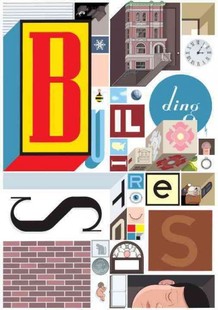
2012 Lynd Ward Award Goes to Chris Ware's Building Stories
Awarded by the Pennsylvania State University's Pennsylvania Center for the Book, the Lind Ward Award goes to an exemplar of comics narrative each year. Chris Ware's Building Stories is a fine, fine choice. Other comics were honored as well. Click here to learn more, and congrats to Chris Ware! I'm a big fan!
Labels:
awards,
Building Stories,
Chris Ware,
library,
Lynd Ward,
Penn State
Monday, April 16, 2012
Big Questions wins 2012 Lynd Ward GN Prize
"Sponsored by Penn State University Libraries and administered by the Pennsylvania Center for the Book, an affiliate of the Center for the Book at the Library of Congress, the Lynd Ward Graphic Novel Prize is presented annually to the best graphic novel, fiction or non-fiction, published in the previous calendar year by a living U.S. citizen or resident."
Click the link embedded in this post's title for more information and more honorees.
Labels:
2012,
Anders Nilson,
awards,
Big Questions,
Lynd Ward,
Penn State
Monday, September 12, 2011
Like a Brick to The Head!
Sunday, August 21, 2011
Thursday, August 18, 2011
Wednesday, August 10, 2011
Pacific Northwest College of Art Creates Cartooning Award
for more info on PNCA, click here.
Tuesday, August 02, 2011
2011 Eisner Winners Announced at SDCC
Raina Telgemeier won the Eisner for Best Book for Teens for Smile, the first book I asked my summer Ya Lit class to read (just days before it was honored in San Diego!).
Tuesday, July 05, 2011
2011 Harvey Noms are Public!
Josh Elder and the Reading With Pictures anthology are up for several awards. Great to see a comics-and-literacy text get some props!
Labels:
2011,
awards,
Harvey,
josh elder,
Reading with Pictures
Tuesday, May 31, 2011
Thursday, May 19, 2011
Proof I Ain't Just Spoutin' Off @ the Mouth!
Super-Powered Word Study is a finalist for the 2011 Next Generation Indie book Awards. I'm going to blog about this more once I know what I can and can't say (and when). In the meantime, feast your eyes on this nice certificate for verification that I ain't no liar!
Labels:
awards,
finalist,
honors,
nominations,
Super-Powered Word Study
Monday, May 02, 2011
Adam Hines Wins Another for _Duncan the Wonder Dog_
This time the graphic novel takes home the LA Times Book Prize for best GN.
Labels:
2011,
Adam Hines,
awards,
Duncan the Wonder Dog,
LA Times
Wednesday, April 27, 2011
"Hamburgers for One," 2011 Eisner Nom for Best Short Story, Now Online for Free
Heidi MacDonald calls it "the almost painful story of an awkward teen boy and his attempts to interact with his world."
Labels:
2011,
awards,
Eisner,
Frank Stockton,
Hamburger for One,
nominations,
YA lit,
young adult
Monday, April 25, 2011
2011 Hugo Awards Noms Released!
There's the graphic novel category, of course, but several other comics are featured too.
Thursday, April 21, 2011
Another Eisner Nom 2011 Puts Work Online for Free
This time it's AdHouse's Afrodisiac that one can read gratis, following in the footsteps of Dave Kellett, who recently posted his book Literature: Unsuccessfully Competing with TV Since 1953 for free-of-charge online viewing as well.
Both titles are Eisner nominees for best humor production.
Labels:
2011,
AdHouse,
Afrodisiac,
awards,
Dave Kellett,
Eisner,
humor,
parody
Thursday, April 07, 2011
Subscribe to:
Posts (Atom)