
Stickermule

Custom Stickers, Die Cut Stickers, Bumper Stickers - Sticker Mule

A Public Service Announcement! ;)

A Public Service Announcement! ;)
Showing posts with label MLA. Show all posts

Wednesday, April 23, 2014

MLA Commons K16 Education Committee Taking Up the Common Core State Standards. Time to Help Them Know Where to Stand


A K16 Education Committee associated with the Modern Language Association (MLA), "Inspired by Michael Holquist’s challenge to the MLA to dialogue about the CCSI, what it means for us, and our relationship to secondary education," has created what they term "a space for discussion of standards, assessment, and our role in this process."

Only a few comments have been posted so far, but one poster seeks to brainstorm ideas about how to help teachers implement CCSS. I pray the comment is not the start of a slippery slope.

Folks, if you are against privatization of K12 education and do not want to see MLA infiltrated by Big $-, Big Business- and Big Politics-CCSS support, like some of our other educational organizations may have been (not to say MLA hasn't been influenced by these forces regarding other topics already. I wouldn't know), I encourage you to contact this committee or speak to whomever you know who is a member of MLA and can get your concerns about the CCSS heard. Especially the ELA CCSS.


Do not assume the MLA membership is as informed on the CCSS like the Network for Public Education might be, or Susan Ohanian, Stephen Krashen, or the Badass Teachers might be.

Further, please note  it is entirely possible many professors of literature and rhetoric & composition look at the ELA CCSS and see a dream come true.

You see, the CCSS's focus on rhetorical modes of writing help reify the "importance" of rhetoric and composition and obscure the different philosophies on K12 student writing found in the larger English Education, Literacy, and Ed Studies communities.

As someone who has seen rhetoric and composition faculty take over English Departments or at least exert unduly influence on English Education matters at two different universities -- I'm looking at you, UTEP and Washington State --  sometimes with the support of the rest of the department and sometimes at the chagrin of it, I've seen how easy it is for folks who are college-level humanities educators -- especially rhetoric and composition professors --  to assume that means they also know best for K12 English teaching and assume what so many others are assuming/politically working to their advantage right now: That K12 teachers aren't smart or capable enough to handle pedagogical and curricular matters on their own anyway.

 The ELA CCSS's call for focus on argumentative modes of expression could be music to the ears of these same folks. Now they're doubly important. The K12 teachers didn't know what they were doing before, and now their specific areas of expertise align to K12 curricula, especially high school English curricula.

As well, there is a rationale to be made that the main exemplar texts suggested by the CCSS ELA documents actually represent a curriculum, one which is very narrow and prescribed. Some proponents and opponents of the CCSS ELA will say that's not the case, that the exemplars are just that: Really good examples of texts teachers might use but not the only ones. Regardless, the ELA CCSS focus on American literature and Shakespeare at the expense of global and multicultural literatures, and, sadly, many college  English Departments are still so conservative they still see the resident Shakespearean as king or queen.

 Do you think Shakespeareans -- especially Shakespeareans who are also department chairs,  the leaders of English Departments -- will look at the CCSS ELA, see their preferred literature is also its preferred literature, and be willing to critique it? Fight against it?

I'm telling you there is a very real possibility that the college-level Literature and Rhetoric & Composition faculties across America are salivating over what the CCSS means to them:

Its language suggests a new level of import and necessity -- a rationale for continued relevance and existence -- for which they've been searching for decades. 


We've seen college exert control over K12 curriculum before, especially at the high school level. Indeed, in 1911 NCTE was founded on the radical belief that K12 teachers understood best what K12 students needed, not the college professors crafting hegemonic reading lists to help secondary teachers make sure some students were "college ready." We can't count on NCTE to be that radical this time, not as an entire organization, anyway, especially not since CCCC is one of its most powerful sub-organizations and its members may stand more to gain from the CCSS than anyone other than corporations and privateers.


 My hope is this MLA committee will thoroughly research the many arguments for and against the CCSS and will look to the history of how they came to be and how undemocratic that process was. My hope is their communal sense of equity and social justice will lead them to join other organizations opposing the Common Core State Standards and what they truly represent.

But I'm jaded. Working under two English Department chairs who ran their departments into forms of receivership will do that, as will seeing the cut-throat tactics of rhetoric and composition faculty who seem exceptionally eager to claim their ground, stake their claims, and expand their empires. (Thanks a lot, dismissive Literature faculty, for all those generations of looking on those r&c folks as second-class citizens. You've created a group of folks who may see opportunities like this as justifications, revenge, retributions, and absolutely acceptable, the proper evolution and changing of the guard). I just don't think we can assume the members of that committee will see what Diane Ravitch sees, what Paul Thomas sees, what thousands of Badass Teachers see regarding the entirety of the CCS, let alone the ELA CCSS.


Unless we help them.

Click the link embedded in this post, and also click on the administrator and member icons for more contact information once you're there. Then get to emailing and tweeting. Take to twitter via tweeting @MLAcommons and sharing the link and your worries so they know how to direct your input. If you're an English Ed or teacher educator, contact the English Department and find a sympathetic MLA member who can pass along your concerns.

But don't stay silent. Assuming I'm right about how the CCSS ELA document can be a boon for certain college-level professors,  and given the might of MLA, it is a necessity to share our knowledge to help them see the CCSS and its backers are banes to our K12 students and teachers.

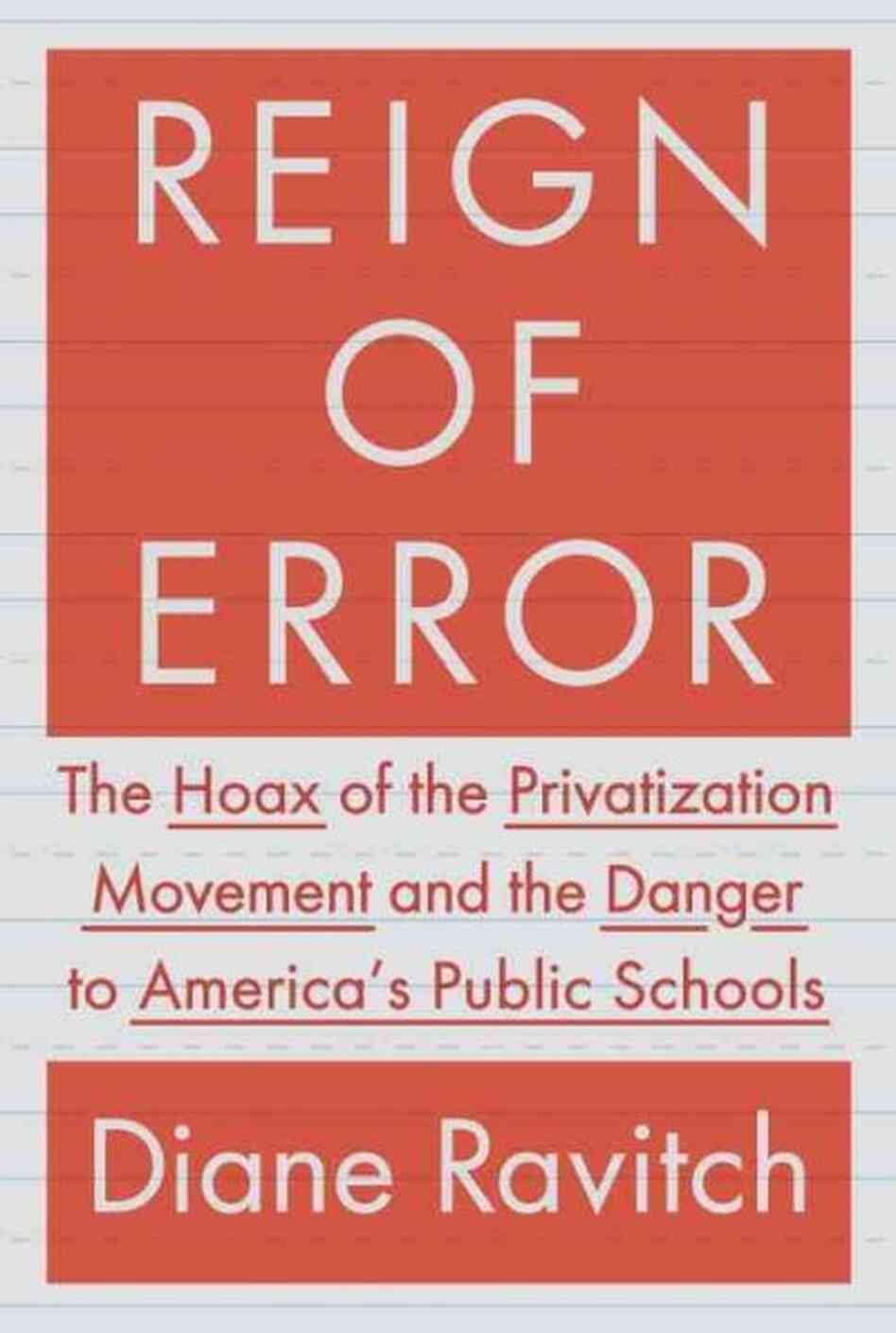
I could be over-reacting. I could be skewing or skewering certain professors' and organizations' sense of themselves. If so, my apologies. Certainly I do not mean to slander MLA or this K16 committee. But if there is even a sliver of truth in what I fear, that the MLA could -- wittingly or unwittingly -- become a pro-CCSS organization, can those of us who know better afford to let its considerable membership and sway contribute to the reign of error dominating contemporary K12 school reforms like the CCSS?

Friday, January 07, 2011

MLA Launches Discussioin Group on Comics and Graphic Novels

And check out all that comics-related programming at this year's MLA! Maybe I'll get me some o' dat one day....

Thursday, October 14, 2010

Wednesday, January 13, 2010

MLA Rectifies Situation, Offers Apologies

I've always thought it is important to acknowledge when people "done good" as well as when they make mistakes. I just received an e-mail from a high-level MLA member (not sure they get any higher in the organization, actually) offering apologies for the mishandling of sending out contributor copies of Teaching the Graphic Novel.

I was impressed with the attention given to my sorry little complaint. It came from someone who certainly did not have to take responsibility for the snafu or even acknowledge that there was one.

Long story short, the attention given to the matter made me proud to be a member of the organization and happy with its upper-level leadership, and my copy is being sent via expedited mail. My hope is that similar treatment is being afforded to any other contributors who did not receive their copies when they should have as well.

Tuesday, January 12, 2010

MLA is Messing with My Money and My Emotions

Is Laurie N. Taylor's chapter in MLA's recent publication Teaching the Graphic Novel going to help solidify her as a major presence in comics studies? Has Charles Hatfield started quoting from actual education and literacy professors' works to make his points about comics and education/literacy? Are many humanities professors in the edited collection doing the same, or simply using the "I said it, so that makes it so" mantra regarding pedagogy that so many in the humanities seem to accept as valid? How does my own piddly little chapter on teaching Watchmen stack up with the other chapters in this edited collection?

I'd love to tell you, but I can't.

Why? Because MLA decided not to complete its obligations to its contributors to this text right away, as is customary and considered professionally polite. Instead, MLA sent some contributors their copies of this text, as per contract obligations, but not others. There was such a back-order for the book, the organization decided to go with the money over their integrity, sending all available copies to those who paid for it BEFORE honoring their contracts to contributors.

This, in the academic world, is poor form. Contributors should get their copies BEFORE anyone else, or at least have their copies sent at the same time as orders begin being filled.
How did they choose who would get the copies and who would have to wait? Was it based alphabetically? By rank? By trying to decide who would balk at the notion least or who wouldn't have the balls to complain (see my previous post) at such an act? I will probably never know those answers, but I have to tell you, it has been a banner 18 months or so regarding me feeling disappointed in many of my professional organizations:

NCTE cancelled a contract for what would have been my second book. A keynote speaker at a CEE conference called for the removal of all visual aids in the English classroom. I have received peer evaluations from an IRA journal where the reviewers suggested I didn't tell them enough about my identity in the article, even though the journal's guidelines specifically call for removing all instances of one's identity. The same journals have been publishing articles on graphic novels, but my work hasn't been cited in any of them. I've received a vague, standard-issue rejection letter from an NCTE journal that claims to be peer reviewed but offered no specific evidence of being such in the letter I received.

And now this.

What's worse, MLA representatives have NO IDEA of when I will get my copies. Here I am, trying to put together my annual performance review, and I don't even have physical evidence of my chapter's inclusion. I do have a PDF copy of the page proofs and can show the online table of contents for the book, thank goodness. But, what if I was in a department that required physical evidence of the text? My performance review is due next week. I doubt I'll have my copy by then.

Some of you may not realize this, but sometimes professors get raises or merit pay increases based on the prestige and number of their publications per year. So, if I was in a department that needed physical evidence of my chapter's inclusion in the text, there is a strong possibility that I would not be able to get credit for this publication for this past year, the year of its appearance. That could theoretically mean I would not gain as high a merit score and therefor possibly not be rewarded with as high a pay increase as I could have been.

So, MLA could be messing with my money. And when you mess with my money, you mess with my emotions. (Biggie Smalls, right?)

One would think the Modern Language Association, comprised mostly of academics, would take such situations into account, especially since they were the ones who decided on the December 31, 2009 publication date.

I am incensed about their decision not to honor all contributor contracts at the same time. I'm angered that it was even considered as a viable option, that someone in the MLA thought that MLA was big enough that they didn't have to follow professional protocol or that they were powerful enough that members wouldn't dare complain.

(Again, to explain for some readers: Academics pretty much HAVE to be members of professional organizations. Not being involved suggests a lack of responsibility and presence within intellectual communities. Depending on one's field, one needs to be associated with certain organizations. On top of this, there is often the unstated notion that one needs to "be quiet until one is tenured" when it comes to wrongdoings within organizations. After all, the organizations you're a part of will probably host the members who will do your "outside evaluations" as a scholar that will determine if you're tenured.)

Thank goodness for CEE and ALAN, organizations with which I've had no major frustrations since becoming a member.

Before ending this rant, I do want to make it clear that the contributors and editor of Teaching the Graphic Novel were not responsible for this poorly thought-out decision. Further, I am in full control of my faculties and know there's the possibility of professional fall-out from posting something like this. Frankly, if the profession's organizations can't do better, I'm not sure if I need to be involved in them at all. I have my goals: have an impact on my field (check. Education scholars almost have to acknowledge graphic novels now, partly due to my efforts), and help prepare the best future English teachers I possibly can (in progress). But, as a nontenured professor, it doesn't feel like I have much voice in how certain decisions are made -- except through my blog -- for now.

Tuesday, December 01, 2009

12.31.09: MLA Debuts _Teaching the Graphic Novel_

Yep, that's yours truly in the orange highlighter there. (I know, this is a bad scan). This image is from a recent MLA publications booklet. Comics is a growing area of interest within MLA, and I'm very honored to have made it in this collection. I've got an essay on teaching Watchmen in there. Sorry, it was in press before the movie came out. So, if you find yourself with some Christmas cash, feel free to order this beauty. I can't wait to get my copy!