
Stickermule

Custom Stickers, Die Cut Stickers, Bumper Stickers - Sticker Mule

A Public Service Announcement! ;)

A Public Service Announcement! ;)
Showing posts with label advocacy. Show all posts

Wednesday, April 23, 2014

MLA Commons K16 Education Committee Taking Up the Common Core State Standards. Time to Help Them Know Where to Stand


A K16 Education Committee associated with the Modern Language Association (MLA), "Inspired by Michael Holquist’s challenge to the MLA to dialogue about the CCSI, what it means for us, and our relationship to secondary education," has created what they term "a space for discussion of standards, assessment, and our role in this process."

Only a few comments have been posted so far, but one poster seeks to brainstorm ideas about how to help teachers implement CCSS. I pray the comment is not the start of a slippery slope.

Folks, if you are against privatization of K12 education and do not want to see MLA infiltrated by Big $-, Big Business- and Big Politics-CCSS support, like some of our other educational organizations may have been (not to say MLA hasn't been influenced by these forces regarding other topics already. I wouldn't know), I encourage you to contact this committee or speak to whomever you know who is a member of MLA and can get your concerns about the CCSS heard. Especially the ELA CCSS.


Do not assume the MLA membership is as informed on the CCSS like the Network for Public Education might be, or Susan Ohanian, Stephen Krashen, or the Badass Teachers might be.

Further, please note  it is entirely possible many professors of literature and rhetoric & composition look at the ELA CCSS and see a dream come true.

You see, the CCSS's focus on rhetorical modes of writing help reify the "importance" of rhetoric and composition and obscure the different philosophies on K12 student writing found in the larger English Education, Literacy, and Ed Studies communities.

As someone who has seen rhetoric and composition faculty take over English Departments or at least exert unduly influence on English Education matters at two different universities -- I'm looking at you, UTEP and Washington State --  sometimes with the support of the rest of the department and sometimes at the chagrin of it, I've seen how easy it is for folks who are college-level humanities educators -- especially rhetoric and composition professors --  to assume that means they also know best for K12 English teaching and assume what so many others are assuming/politically working to their advantage right now: That K12 teachers aren't smart or capable enough to handle pedagogical and curricular matters on their own anyway.

 The ELA CCSS's call for focus on argumentative modes of expression could be music to the ears of these same folks. Now they're doubly important. The K12 teachers didn't know what they were doing before, and now their specific areas of expertise align to K12 curricula, especially high school English curricula.

As well, there is a rationale to be made that the main exemplar texts suggested by the CCSS ELA documents actually represent a curriculum, one which is very narrow and prescribed. Some proponents and opponents of the CCSS ELA will say that's not the case, that the exemplars are just that: Really good examples of texts teachers might use but not the only ones. Regardless, the ELA CCSS focus on American literature and Shakespeare at the expense of global and multicultural literatures, and, sadly, many college  English Departments are still so conservative they still see the resident Shakespearean as king or queen.

 Do you think Shakespeareans -- especially Shakespeareans who are also department chairs,  the leaders of English Departments -- will look at the CCSS ELA, see their preferred literature is also its preferred literature, and be willing to critique it? Fight against it?

I'm telling you there is a very real possibility that the college-level Literature and Rhetoric & Composition faculties across America are salivating over what the CCSS means to them:

Its language suggests a new level of import and necessity -- a rationale for continued relevance and existence -- for which they've been searching for decades. 


We've seen college exert control over K12 curriculum before, especially at the high school level. Indeed, in 1911 NCTE was founded on the radical belief that K12 teachers understood best what K12 students needed, not the college professors crafting hegemonic reading lists to help secondary teachers make sure some students were "college ready." We can't count on NCTE to be that radical this time, not as an entire organization, anyway, especially not since CCCC is one of its most powerful sub-organizations and its members may stand more to gain from the CCSS than anyone other than corporations and privateers.


 My hope is this MLA committee will thoroughly research the many arguments for and against the CCSS and will look to the history of how they came to be and how undemocratic that process was. My hope is their communal sense of equity and social justice will lead them to join other organizations opposing the Common Core State Standards and what they truly represent.

But I'm jaded. Working under two English Department chairs who ran their departments into forms of receivership will do that, as will seeing the cut-throat tactics of rhetoric and composition faculty who seem exceptionally eager to claim their ground, stake their claims, and expand their empires. (Thanks a lot, dismissive Literature faculty, for all those generations of looking on those r&c folks as second-class citizens. You've created a group of folks who may see opportunities like this as justifications, revenge, retributions, and absolutely acceptable, the proper evolution and changing of the guard). I just don't think we can assume the members of that committee will see what Diane Ravitch sees, what Paul Thomas sees, what thousands of Badass Teachers see regarding the entirety of the CCS, let alone the ELA CCSS.


Unless we help them.

Click the link embedded in this post, and also click on the administrator and member icons for more contact information once you're there. Then get to emailing and tweeting. Take to twitter via tweeting @MLAcommons and sharing the link and your worries so they know how to direct your input. If you're an English Ed or teacher educator, contact the English Department and find a sympathetic MLA member who can pass along your concerns.

But don't stay silent. Assuming I'm right about how the CCSS ELA document can be a boon for certain college-level professors,  and given the might of MLA, it is a necessity to share our knowledge to help them see the CCSS and its backers are banes to our K12 students and teachers.

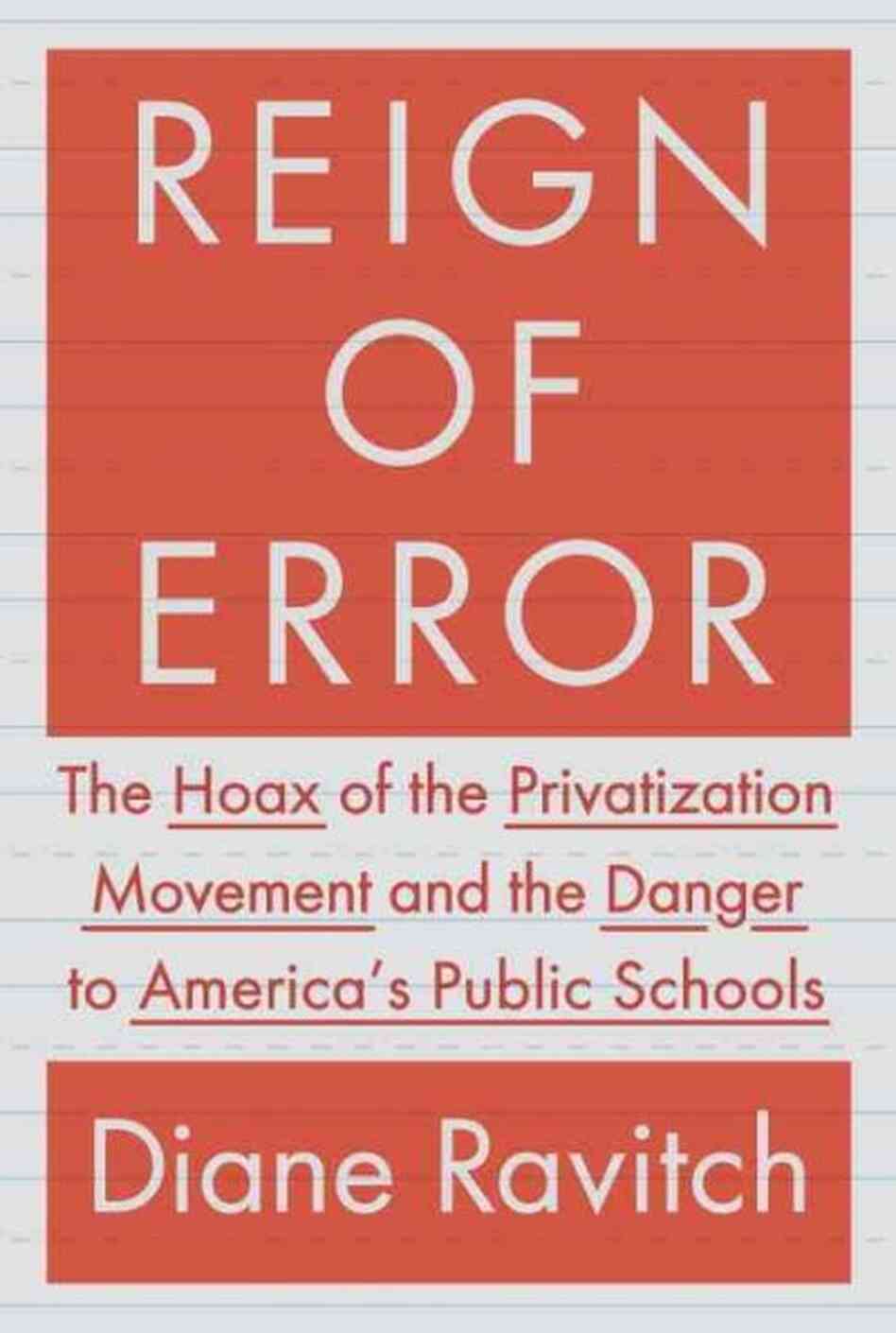
I could be over-reacting. I could be skewing or skewering certain professors' and organizations' sense of themselves. If so, my apologies. Certainly I do not mean to slander MLA or this K16 committee. But if there is even a sliver of truth in what I fear, that the MLA could -- wittingly or unwittingly -- become a pro-CCSS organization, can those of us who know better afford to let its considerable membership and sway contribute to the reign of error dominating contemporary K12 school reforms like the CCSS?

Thursday, April 21, 2011

Meltzer, Gaiman Speak Out for Libraries

The American Library Association has released an image of authors advocating for libraries, and among them are Brad Meltzer and Neil Gaiman, who join Alan Moore as outspoken proponents por las bibliotecas. Click this post's title to see the poster.

Wednesday, February 09, 2011

Feb 12,19, 2011: "Black Comic Book Day"

From the Press Release:


Saturday, February 12, bookstores in Chicago, Atlanta and Detroit will host Black Comic Book Day to celebrate and make more widely available the work of African-American comic book writers and artists. In Chicago, four racks permanently dedicated to African-American comics have been placed at venues around the city, including one in the DuSable Museum. New York holds its Black Comic Book Day on February 19, at the Hue-Man Bookstore and Café in Harlem.


While these inaugural events are being held during Black History month, the display racks are permanent, dedicated additions to the stock offered by the hosting bookstores.


Black Comic Book Day is the brainchild of artists/writers Turtel Onli, father of “The Black Age” comic art movement, and Jerry Craft, creator of the award-winning Mama’s Boyz comic strip, distributed by King Features Syndicate since 1995. The idea developed as the duo brainstormed ideas to promote their work along with that of the many other talented artists and writers in the African-American community.


Onli and Craft believe that these events will have many benefits, such as encouraging reading and providing heroes for young readers to emulate from the African-American community.
“The only reason I, and most of my friends, read regularly was because of comic books,” Craft said. “I still remember the excitement of running to the corner store and seeing the new issue of Spider-Man waiting for me. Reading comics helped build our vocabularies.


The bold is mine, but here's another testimonial to the power of comics in literacy. For more information about events, click here. There are some pretty major names involved!


Tuesday, February 08, 2011

More Alan Moore Advocacy for Libraries

He's the one with the beard! I love that accent, love that voice, and love that message!

Wednesday, January 19, 2011

Alan Moore: Literacy and Library Advocate!

As some British libraries face closing, The Bearded One of Greatness speaks.

From Bleeding Cool and the Northapton Chronicle:

I am absolutely against the closure of any library – particularly in the St James area which has had enough taken away from it already. I joined the library in Abington when I was five and all the books available gave me a broad reading experience – without Northampton’s libraries I would not be the writer I am today. I am very concerned about the kids today which might grow up without this access. I am very against taking literacy away from people. Education must not be a privilege for the well-off.

Please click the Northampton Chronicle link, as it gives a much broader story.

Friday, November 06, 2009

Fightin' Fallacies Again: Mythbusting with Bucky

It's been a while since I posted something on fighting' fallacies associated with comics in education, but I think it may be time to revisit the topic based on certain ideas, trends, and opinions I've noted over the last six months or so.

1. Talk about how graphic novels match up with local/national standards is moot because of the new CORE standards being developed by the National Governors Association and the CCSSO.

I have seen much hubbub about how the CORE standards being developed under the Obama administration are going to obliterate any and all other lists of standards available nationwide, and while the CORE documents will certainly influence state and organizational standards, I think it might be a bit of hyperbole (at least I hope it is) to suggest that states will drop years of work on crafting standards to adopt the CORE standards. Rather, what I think we'll see is that the CORE standards will be suggested as THE BARE MINIMUM, and states will be encouraged to adapt -- not adopt -- them to the standards documents they've already crafted.

As for standards like those for the English Language Arts that have been published by NCTE/IRA, I have it on good authority from a representative at NCTE that these standards are not being updated in response to the CORE standards, not yet anyway.

Several recent and upcoming publications deal with how comics and graphic novels can be used to meet state and national (NCTE/IRA) standards. Brian Kelley recently published a document relating to New Jersey's ELA standards. Michael Bitz's recent book and his upcoming book, as well as a couple of his articles, reveal how using comics as composition meet many of New York's state ELA standards. Katie Monnin will soon publish a book that deals explicitly with NCTE/IRA's standards for ELA. All of these are and will be valuable to teachers and will help make the case for comics' worth in America's school rooms.

I've also heard folks try to make a distinction between having standards and the phenomenon of standardization. The problem is in interpretation. Too often, once standards are set, they become the rationale for standardization of curriculum. This leads to stolid curricula that focus more on the standards than on best practices, and after time, this also forms a sort of indoctrination that state education leaders accept and then feed their teachers. The "cure" for this, of course, is trusting teachers to be intelligent enough to see any set of standards as a bare minimum rather than the "gold standard" and having leadership that finds ways to assist teachers in being critical thinkers and experts in their fields.

2. Graphic novel proponents seek to supplant traditional print-based literature with graphic novels.

I think I can speak for most of my colleagues who advocate for using graphic novels and comics in the classroom when I say we probably all support a supplemental or complimentary approach, one where graphic novels are integrated into the ELA classroom along with traditional-based print texts.

I get it from both ends, it seems. I've read criticism of my edited collection Building Literacy Connections with Graphic Novels that suggested I and my contributors wanted to replace canonical texts with graphic novels. This isn't the case -- not in every possibly exigency, anyway. On the other hand, folks wonder if I and my co-writers aren't suggesting that comics and graphic novels aren't good enough, strong enough, to stand alone and be taught on their own. I think folks need to give comics-in-literacy scholars and teachers the benefit of the doubt (and read their texts more deeply).

I think most of us seek a balanced approach, where comics are used in pre-existing curricula where they fit best and with students who they can best engage (read "all students" on one level or the other) and only replace a text when a teacher was already looking to do so before considering a sequential art narrative as the replacement.

I think most of us do feel that certain graphic novels are good enough to be taught in their own right. I just think most of us are knowledgeable enough as pedagogues to know that teaching any text in isolation is not the most effective means of teaching.

3. The argument has been won. There is no need to continue work that falls under the rubric of "graphic novel advocacy."

There are so many of us using comics in the classroom now, so many blogs, so many books coming out, so much attention from MLA and YALSA and the ALA and NCTE, etc., and so many articles on sequential art in the classroom that it may seem that everyone has gotten the message. Especially for those of us who live and work in progressive environments where all or most of the people we see everyday are the kinds who readily accept comics' place in the classroom, this is dangerous thinking. Your world may not be my world may not be the world of a teacher in rural Wyoming or even in Washington, D.C.

As someone who lives in Texas, as someone who has, since 2000, taught in the states of Tennessee, North Carolina, Mississippi, Virginia, and Texas, and as someone who travels the country talking with teachers about comics' use in secondary education, I can tell you that it is a Manhattan-sized assumption to think that everyone everywhere -- whether "everywhere" pertains to state, k-12 school, college of education or university English department -- is on the same page or at the same level of their development when it comes to graphica. Austin is not El Paso is not Houston is not San Diego or New York.

While I get as frustrated as anyone when newbies try to reinvent the wheel regarding comics terminology, use, and advocacy in the classroom, especially when they do this in print (and especially when that print doesn't cite previous writing that has established a groundwork), I accept that, nationally, we see a range of acceptance of the form, ranging from elective courses on GN's at the high school level and courses focusing on them at colleges like Stanford, MIT, and Yale, to fogies still afraid to accept the form as viable for their sixth graders and considering it a threat to literacy, intelligence, and quality living.

The battles are still being fought in k-12 and university departments near you, whether it seems that way or not. So, there's plenty of room for more advocacy work regarding the sequential art narrative, and any work that deals with it in a positive light, even if it is crafted by those who believe the good fight has been won, might be said to be advocacy literature anyway.

(*draft. I may revisit this for edits later)