EN/SANE World is James Bucky Carter's enclave of English Education (EN) resources as well as a haven for those looking for information on Sequential Art Narratives in Education (SANE).
A Public Service Announcement! ;)
Showing posts with label Washington State University. Show all posts
Friday, May 08, 2015
See My Talk about Batman and Superman for WSU's Global Campus (2013)
Click here to see me talk about the mythoi of Batman and Superman for the Washington State University Global Campus.
Tuesday, May 13, 2014
Eval Has a Name...
As I eagerly await the arrival of my Spring 2014 evals at Washington State University to see if what my students told me in person -- that they enjoyed the classes, felt comfortable with me, etc. -- matches what they put on paper and correlates with quantitative equivalencies, I note a previous employer still has me listed on one of its major faculty info pages.
While I'm a little loathe to post it here since I know I have readers from El Paso check in from time to time, and I sort of like having access to the page and don't want anyone to get it removed, you can see basic eval data for every class I taught there from June 2008 to Spring 2013 by looking for the "Previously Taught Courses" here.
I'm happy to say they illustrate a sincere, reflective educator who learned how to navigate the best and worst of that campus & departmental/program culture. I hope for 3 things from my evals from Spring 2014: 1. They do indeed match up with anecdotal comments from students 2. They show how I quickly navigated that new campus/department culture after a tough, shell-shock of a first semester experience (possibly designed that way, as I reflect) and 3. They have not been unduly influenced or tampered with by outside influences.
Once I have the info and can see which of my hypotheses are correct or wrong, I'll post another reflective statement. I hope it'll be one in which I can detail changes made between Fall 2013 and Spring 2014 which paid quantifiable dividends in my teaching.
In the meantime, you can view some qualitative feedback on my courses via my Google Drive public folder (especially in the "Appendix" document).
While I'm a little loathe to post it here since I know I have readers from El Paso check in from time to time, and I sort of like having access to the page and don't want anyone to get it removed, you can see basic eval data for every class I taught there from June 2008 to Spring 2013 by looking for the "Previously Taught Courses" here.
I'm happy to say they illustrate a sincere, reflective educator who learned how to navigate the best and worst of that campus & departmental/program culture. I hope for 3 things from my evals from Spring 2014: 1. They do indeed match up with anecdotal comments from students 2. They show how I quickly navigated that new campus/department culture after a tough, shell-shock of a first semester experience (possibly designed that way, as I reflect) and 3. They have not been unduly influenced or tampered with by outside influences.
Once I have the info and can see which of my hypotheses are correct or wrong, I'll post another reflective statement. I hope it'll be one in which I can detail changes made between Fall 2013 and Spring 2014 which paid quantifiable dividends in my teaching.
In the meantime, you can view some qualitative feedback on my courses via my Google Drive public folder (especially in the "Appendix" document).
Wednesday, April 23, 2014
MLA Commons K16 Education Committee Taking Up the Common Core State Standards. Time to Help Them Know Where to Stand
A K16 Education Committee associated with the Modern Language Association (MLA), "Inspired by Michael Holquist’s challenge to the MLA to dialogue about the CCSI, what it means for us, and our relationship to secondary education," has created what they term "a space for discussion of standards, assessment, and our role in this process."
Only a few comments have been posted so far, but one poster seeks to brainstorm ideas about how to help teachers implement CCSS. I pray the comment is not the start of a slippery slope.
Folks, if you are against privatization of K12 education and do not want to see MLA infiltrated by Big $-, Big Business- and Big Politics-CCSS support, like some of our other educational organizations may have been (not to say MLA hasn't been influenced by these forces regarding other topics already. I wouldn't know), I encourage you to contact this committee or speak to whomever you know who is a member of MLA and can get your concerns about the CCSS heard. Especially the ELA CCSS.
Do not assume the MLA membership is as informed on the CCSS like the Network for Public Education might be, or Susan Ohanian, Stephen Krashen, or the Badass Teachers might be.
Further, please note it is entirely possible many professors of literature and rhetoric & composition look at the ELA CCSS and see a dream come true.
You see, the CCSS's focus on rhetorical modes of writing help reify the "importance" of rhetoric and composition and obscure the different philosophies on K12 student writing found in the larger English Education, Literacy, and Ed Studies communities.
As someone who has seen rhetoric and composition faculty take over English Departments or at least exert unduly influence on English Education matters at two different universities -- I'm looking at you, UTEP and Washington State -- sometimes with the support of the rest of the department and sometimes at the chagrin of it, I've seen how easy it is for folks who are college-level humanities educators -- especially rhetoric and composition professors -- to assume that means they also know best for K12 English teaching and assume what so many others are assuming/politically working to their advantage right now: That K12 teachers aren't smart or capable enough to handle pedagogical and curricular matters on their own anyway.
The ELA CCSS's call for focus on argumentative modes of expression could be music to the ears of these same folks. Now they're doubly important. The K12 teachers didn't know what they were doing before, and now their specific areas of expertise align to K12 curricula, especially high school English curricula.
As well, there is a rationale to be made that the main exemplar texts suggested by the CCSS ELA documents actually represent a curriculum, one which is very narrow and prescribed. Some proponents and opponents of the CCSS ELA will say that's not the case, that the exemplars are just that: Really good examples of texts teachers might use but not the only ones. Regardless, the ELA CCSS focus on American literature and Shakespeare at the expense of global and multicultural literatures, and, sadly, many college English Departments are still so conservative they still see the resident Shakespearean as king or queen.
Do you think Shakespeareans -- especially Shakespeareans who are also department chairs, the leaders of English Departments -- will look at the CCSS ELA, see their preferred literature is also its preferred literature, and be willing to critique it? Fight against it?
I'm telling you there is a very real possibility that the college-level Literature and Rhetoric & Composition faculties across America are salivating over what the CCSS means to them:
Its language suggests a new level of import and necessity -- a rationale for continued relevance and existence -- for which they've been searching for decades.
We've seen college exert control over K12 curriculum before, especially at the high school level. Indeed, in 1911 NCTE was founded on the radical belief that K12 teachers understood best what K12 students needed, not the college professors crafting hegemonic reading lists to help secondary teachers make sure some students were "college ready." We can't count on NCTE to be that radical this time, not as an entire organization, anyway, especially not since CCCC is one of its most powerful sub-organizations and its members may stand more to gain from the CCSS than anyone other than corporations and privateers.
But I'm jaded. Working under two English Department chairs who ran their departments into forms of receivership will do that, as will seeing the cut-throat tactics of rhetoric and composition faculty who seem exceptionally eager to claim their ground, stake their claims, and expand their empires. (Thanks a lot, dismissive Literature faculty, for all those generations of looking on those r&c folks as second-class citizens. You've created a group of folks who may see opportunities like this as justifications, revenge, retributions, and absolutely acceptable, the proper evolution and changing of the guard). I just don't think we can assume the members of that committee will see what Diane Ravitch sees, what Paul Thomas sees, what thousands of Badass Teachers see regarding the entirety of the CCS, let alone the ELA CCSS.
Unless we help them.
Click the link embedded in this post, and also click on the administrator and member icons for more contact information once you're there. Then get to emailing and tweeting. Take to twitter via tweeting @MLAcommons and sharing the link and your worries so they know how to direct your input. If you're an English Ed or teacher educator, contact the English Department and find a sympathetic MLA member who can pass along your concerns.
But don't stay silent. Assuming I'm right about how the CCSS ELA document can be a boon for certain college-level professors, and given the might of MLA, it is a necessity to share our knowledge to help them see the CCSS and its backers are banes to our K12 students and teachers.
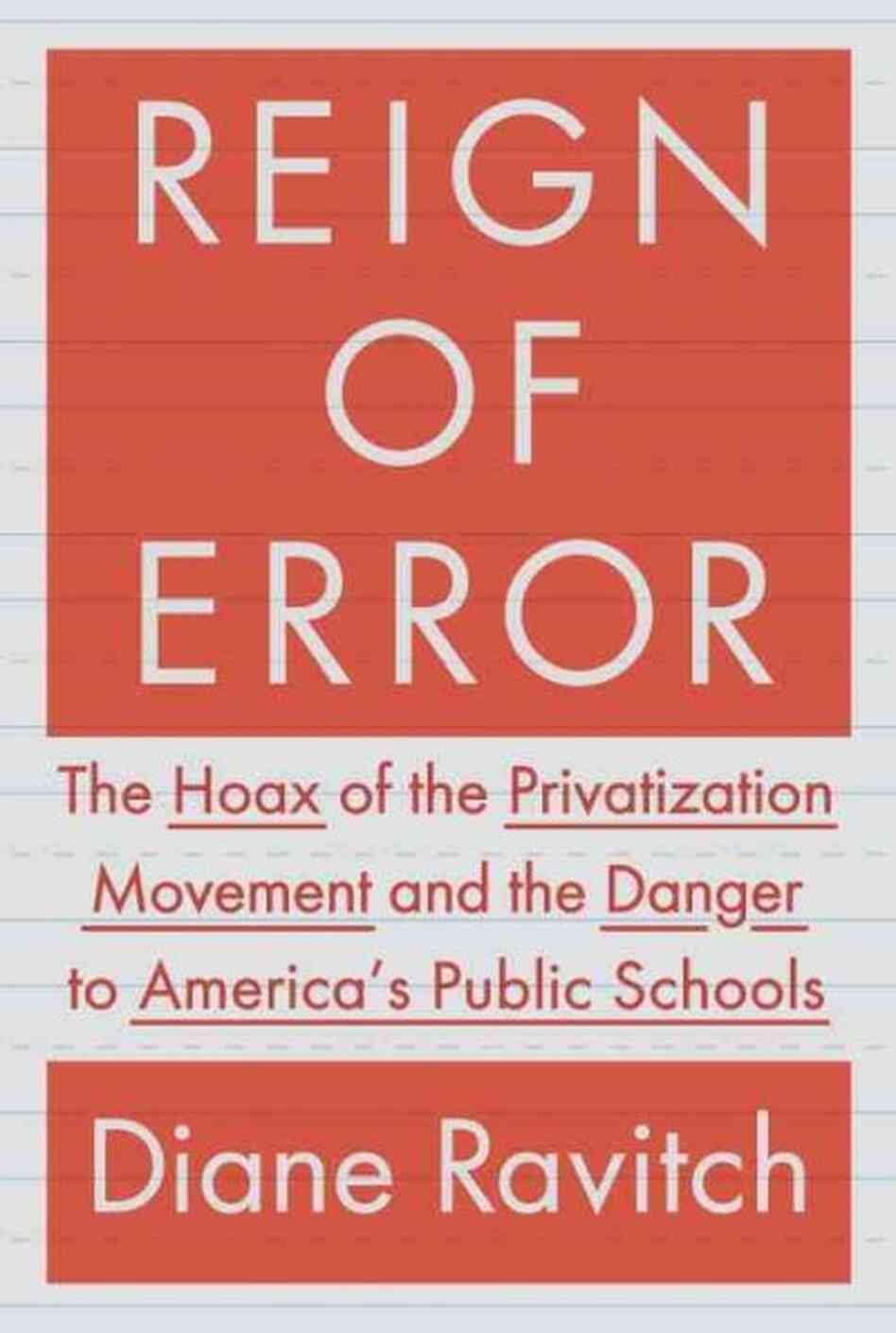
I could be over-reacting. I could be skewing or skewering certain professors' and organizations' sense of themselves. If so, my apologies. Certainly I do not mean to slander MLA or this K16 committee. But if there is even a sliver of truth in what I fear, that the MLA could -- wittingly or unwittingly -- become a pro-CCSS organization, can those of us who know better afford to let its considerable membership and sway contribute to the reign of error dominating contemporary K12 school reforms like the CCSS?
Tuesday, April 22, 2014
Live Twittercast on YA Novel *The Fault in Our Stars* Later Today.
Students from my YA lit class at Washington State University will be twitter-casting thoughts on the first 18 chapters of John Green's masterpiece The Fault in Our Stars today (4.22.14) starting around 4:15 Pacific.
Ellie and Emily will facilitate the discussion, and you can join them via #FIOSCoogs. I think those two see the text much differently than do I, so I expect an intriguing discussion. I've even invited the author himself, so who knows who might show up!
At the very least, I expect the twittering to be....
Thanks to Teri Lesesne for putting the bug in my ear about twitter-casting. I know I'm late to the game regarding using twitter in education settings, but there has to be a first time for everything. The discussion is scheduled to run around an hour.
Ellie and Emily will facilitate the discussion, and you can join them via #FIOSCoogs. I think those two see the text much differently than do I, so I expect an intriguing discussion. I've even invited the author himself, so who knows who might show up!
At the very least, I expect the twittering to be....
Thanks to Teri Lesesne for putting the bug in my ear about twitter-casting. I know I'm late to the game regarding using twitter in education settings, but there has to be a first time for everything. The discussion is scheduled to run around an hour.
Wednesday, March 12, 2014
See Some of the Documents That Didn't Get Me Hired at Washington State University
I'm sharing the versions of the cover letter/teaching statement, vita, and Appendix I used to apply to the English Education position at WSU. See my previous post for how well that worked out. Click this link to access my Google Drive public folder. The items are PDF's and are labeled clear enough for you to find them. And if you have to dig through my other, non-application-related documents, well, I put them there for sharing, didn't I?
The Appendix shares letters of recommendation from students and colleagues, sample syllabi, and student evals. I wanted to upload my writing sample as well, but since it will be published in a few months, I decided against it. Further, the five or six confidential references sent along to the search committee are not included. But I can tell you three women and two men wrote on my behalf, for what it's worth.
Marvel at my ineptitude! Point out any and all spelling errors! Sentence fragments too. Care to brazenly point out split infinitives? Be my guest. Ask yourself, "What the f**k are these people looking for if not someone like Bucky?" Tut-tut as you see how my blatantly-activist, anti-corporate reform stance may have been my undoing! Consider how your opinions of this change when you realize the search committee consisted of absolutely zero people with terminal degrees in English Education! "But some of them had public school teaching experience," you say? I've taught Shakespeare to students from middle school on up. Think that'd qualify me to be on the search committee for a British Literature professor?
Live it up.
The Appendix shares letters of recommendation from students and colleagues, sample syllabi, and student evals. I wanted to upload my writing sample as well, but since it will be published in a few months, I decided against it. Further, the five or six confidential references sent along to the search committee are not included. But I can tell you three women and two men wrote on my behalf, for what it's worth.
Marvel at my ineptitude! Point out any and all spelling errors! Sentence fragments too. Care to brazenly point out split infinitives? Be my guest. Ask yourself, "What the f**k are these people looking for if not someone like Bucky?" Tut-tut as you see how my blatantly-activist, anti-corporate reform stance may have been my undoing! Consider how your opinions of this change when you realize the search committee consisted of absolutely zero people with terminal degrees in English Education! "But some of them had public school teaching experience," you say? I've taught Shakespeare to students from middle school on up. Think that'd qualify me to be on the search committee for a British Literature professor?
Live it up.
Tuesday, March 11, 2014
A Hell of a Way to Know; A Hell of a Way to Go
Many of you may know I took a Visiting Assistant Professor position at Washington State University over the summer and started that job this year. This Spring, WSU advertised for a tenure track position in my field, and I applied, the only caveat being that I asked the Department Chair and Search Chair to inform me the moment I was considered a candidate no longer.
They didn't follow through. Instead, today I learned that Skype interviews have been scheduled.
I was not asked for an interview.
Thank you, Academic Jobs Wiki.
A phone call to the Search Chair beginning with "Are you familiar with Academic Jobs Wiki?" soon lead to a confession and a quick end to the phone call.
I'll keep you informed of what happens next, how much agency I had in the actions taken, and whatever the fallout for me may be. In the meantime, I have to go stock up on rice and beans, I guess.
They didn't follow through. Instead, today I learned that Skype interviews have been scheduled.
I was not asked for an interview.
Thank you, Academic Jobs Wiki.
A phone call to the Search Chair beginning with "Are you familiar with Academic Jobs Wiki?" soon lead to a confession and a quick end to the phone call.
I'll keep you informed of what happens next, how much agency I had in the actions taken, and whatever the fallout for me may be. In the meantime, I have to go stock up on rice and beans, I guess.
Subscribe to:
Posts (Atom)