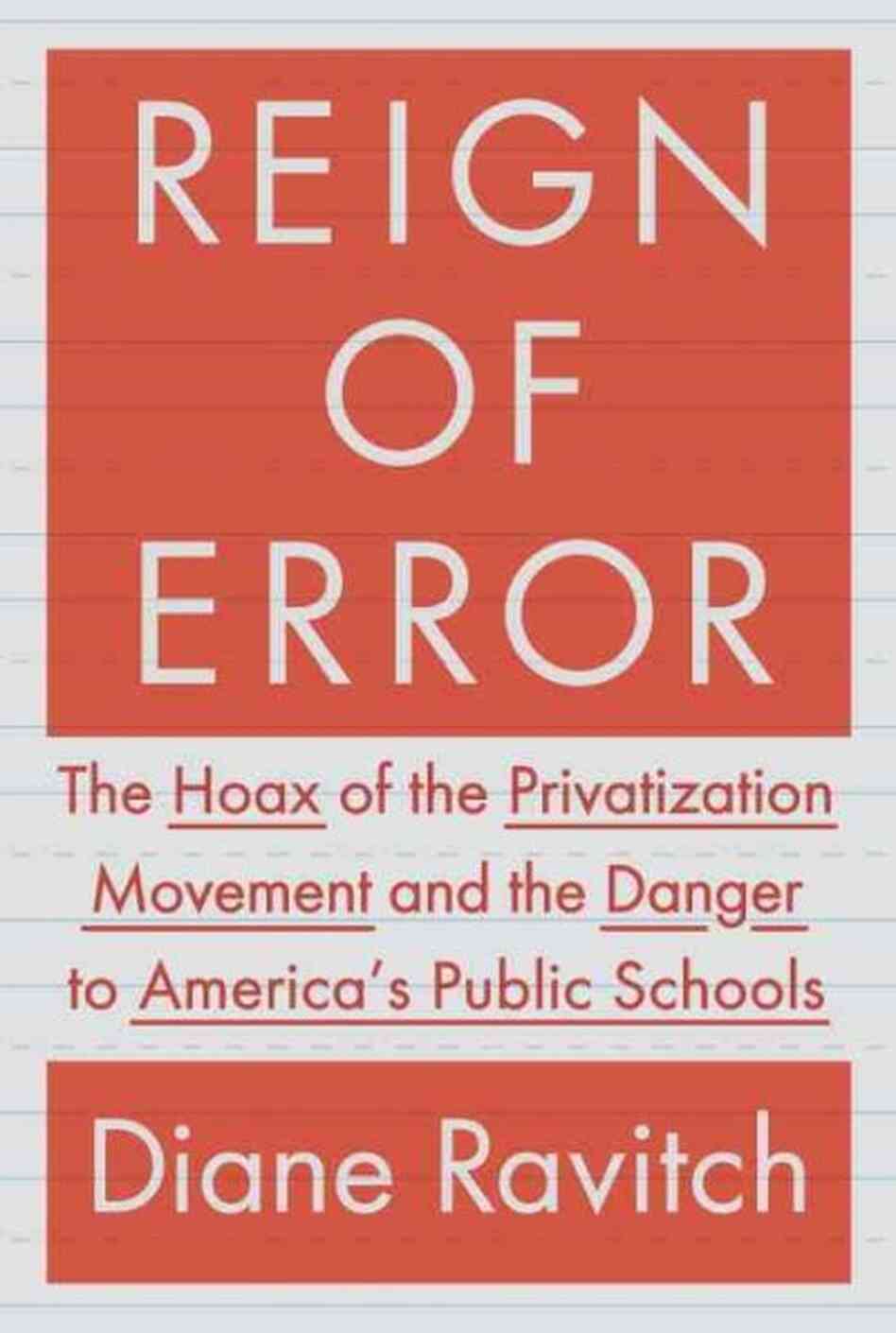
Diane Ravitch has a post giving us the most-accurate list yet of who actually may have crafted the CCSS. Click here to get the link to the list, but please read some of the comments on the page before the jump.
English teachers and teacher educators -- especially those of us not behind the curtain -- might gain valuable information from Bob Shepherd and Yvonne Siu-Runyan especially, who discuss naming, authorship, NCTE, IRA, and how some education scholars and "experts" get paid more for their reputation than for their actual work.
EN/SANE World is James Bucky Carter's enclave of English Education (EN) resources as well as a haven for those looking for information on Sequential Art Narratives in Education (SANE).
A Public Service Announcement! ;)
Showing posts with label NCTE. Show all posts
Wednesday, April 23, 2014
MLA Commons K16 Education Committee Taking Up the Common Core State Standards. Time to Help Them Know Where to Stand
A K16 Education Committee associated with the Modern Language Association (MLA), "Inspired by Michael Holquist’s challenge to the MLA to dialogue about the CCSI, what it means for us, and our relationship to secondary education," has created what they term "a space for discussion of standards, assessment, and our role in this process."
Only a few comments have been posted so far, but one poster seeks to brainstorm ideas about how to help teachers implement CCSS. I pray the comment is not the start of a slippery slope.
Folks, if you are against privatization of K12 education and do not want to see MLA infiltrated by Big $-, Big Business- and Big Politics-CCSS support, like some of our other educational organizations may have been (not to say MLA hasn't been influenced by these forces regarding other topics already. I wouldn't know), I encourage you to contact this committee or speak to whomever you know who is a member of MLA and can get your concerns about the CCSS heard. Especially the ELA CCSS.
Do not assume the MLA membership is as informed on the CCSS like the Network for Public Education might be, or Susan Ohanian, Stephen Krashen, or the Badass Teachers might be.
Further, please note it is entirely possible many professors of literature and rhetoric & composition look at the ELA CCSS and see a dream come true.
You see, the CCSS's focus on rhetorical modes of writing help reify the "importance" of rhetoric and composition and obscure the different philosophies on K12 student writing found in the larger English Education, Literacy, and Ed Studies communities.
As someone who has seen rhetoric and composition faculty take over English Departments or at least exert unduly influence on English Education matters at two different universities -- I'm looking at you, UTEP and Washington State -- sometimes with the support of the rest of the department and sometimes at the chagrin of it, I've seen how easy it is for folks who are college-level humanities educators -- especially rhetoric and composition professors -- to assume that means they also know best for K12 English teaching and assume what so many others are assuming/politically working to their advantage right now: That K12 teachers aren't smart or capable enough to handle pedagogical and curricular matters on their own anyway.
The ELA CCSS's call for focus on argumentative modes of expression could be music to the ears of these same folks. Now they're doubly important. The K12 teachers didn't know what they were doing before, and now their specific areas of expertise align to K12 curricula, especially high school English curricula.
As well, there is a rationale to be made that the main exemplar texts suggested by the CCSS ELA documents actually represent a curriculum, one which is very narrow and prescribed. Some proponents and opponents of the CCSS ELA will say that's not the case, that the exemplars are just that: Really good examples of texts teachers might use but not the only ones. Regardless, the ELA CCSS focus on American literature and Shakespeare at the expense of global and multicultural literatures, and, sadly, many college English Departments are still so conservative they still see the resident Shakespearean as king or queen.
Do you think Shakespeareans -- especially Shakespeareans who are also department chairs, the leaders of English Departments -- will look at the CCSS ELA, see their preferred literature is also its preferred literature, and be willing to critique it? Fight against it?
I'm telling you there is a very real possibility that the college-level Literature and Rhetoric & Composition faculties across America are salivating over what the CCSS means to them:
Its language suggests a new level of import and necessity -- a rationale for continued relevance and existence -- for which they've been searching for decades.
We've seen college exert control over K12 curriculum before, especially at the high school level. Indeed, in 1911 NCTE was founded on the radical belief that K12 teachers understood best what K12 students needed, not the college professors crafting hegemonic reading lists to help secondary teachers make sure some students were "college ready." We can't count on NCTE to be that radical this time, not as an entire organization, anyway, especially not since CCCC is one of its most powerful sub-organizations and its members may stand more to gain from the CCSS than anyone other than corporations and privateers.
But I'm jaded. Working under two English Department chairs who ran their departments into forms of receivership will do that, as will seeing the cut-throat tactics of rhetoric and composition faculty who seem exceptionally eager to claim their ground, stake their claims, and expand their empires. (Thanks a lot, dismissive Literature faculty, for all those generations of looking on those r&c folks as second-class citizens. You've created a group of folks who may see opportunities like this as justifications, revenge, retributions, and absolutely acceptable, the proper evolution and changing of the guard). I just don't think we can assume the members of that committee will see what Diane Ravitch sees, what Paul Thomas sees, what thousands of Badass Teachers see regarding the entirety of the CCS, let alone the ELA CCSS.
Unless we help them.
Click the link embedded in this post, and also click on the administrator and member icons for more contact information once you're there. Then get to emailing and tweeting. Take to twitter via tweeting @MLAcommons and sharing the link and your worries so they know how to direct your input. If you're an English Ed or teacher educator, contact the English Department and find a sympathetic MLA member who can pass along your concerns.
But don't stay silent. Assuming I'm right about how the CCSS ELA document can be a boon for certain college-level professors, and given the might of MLA, it is a necessity to share our knowledge to help them see the CCSS and its backers are banes to our K12 students and teachers.
I could be over-reacting. I could be skewing or skewering certain professors' and organizations' sense of themselves. If so, my apologies. Certainly I do not mean to slander MLA or this K16 committee. But if there is even a sliver of truth in what I fear, that the MLA could -- wittingly or unwittingly -- become a pro-CCSS organization, can those of us who know better afford to let its considerable membership and sway contribute to the reign of error dominating contemporary K12 school reforms like the CCSS?
Friday, November 22, 2013
Just in Case You're in Boston for NCTE and Want Your Facebook Friends to Know Where You Stand...
Feel free to copy this image and use it as you like. Share it with your friends on your Social Network.
Wednesday, May 23, 2012
May 2012 English Journal Boasts *TWO* Articles on GN's
The May 2012 issue of the NCTE publication English Journal features two articles on graphic novels. Mary Rice's "Using Graphic Texts in Secondary Classrooms: A Tale of Endurance" is a bit of a rehash of previously and continuously made points, which is doubly frustrating considering the lack of citations for certain figures' work (including mine). But, everyone's at a different point along the comics-and-literacy spectrum, it seems.
It does seem a little odd for NCTE not to take an opportunity to hock its products, though, and I know my edited collection published with them still sells. To be fair, I read the copies via PDF, so maybe there was mention of it somewhere in the journal. But, I remain frustrated at the political nature of education's "ethos" when it comes to citing previous relevant work.
Paula Wolfe and Danille Kleijwegt's "Interpreting Graphic Version of Shakespearean Plays" is the more intriguing and relevant of the two and features a dose of semiotics and Thierry Groensteen. Folks seem to be getting the picture that Groensteen and Kress match exceptionally well, and that's a good thing. This article would pair well with one I recently published with Theory Into Practice, in which I discuss psycho-social semiotics and comics-across-platforms. It would not have been available for citing in time for publication, so I'm not implying it should have been. But, I do like that others are going in directions I think the area of comics-and-literacy should go.
Labels:
Danielle Kleijwegt,
English Journal,
Mary Rice,
NCTE,
Paula Wolfe
Monday, January 09, 2012
NCTE journal _Language Arts_ Provides Podcast with Jerome C. Harste and Gunther Kress
Labels:
Gunther Kress,
Jerome C. Harste,
Language Arts,
multimodal,
NCTE,
visual literacy
Tuesday, December 06, 2011
Thank You Again, NYSEC!
Today I received a very nice "thank you" letter from the coordinator of this year's NYSEC (New York State English Council) and evaluations from folks who attended my workshop, "Comic Composition Crash Course." All 5's all around, the highest score on the eval sheet.
Below are the very kinds words that I'll be adding to my files very soon. Thanks again to all the great folks in Albany!
Ironically, this news arrived to me on the very same day that I learned my tenure as a Co-sponsored speaker with NCTE has expired and that there seems to be little interest from NCTE in extending my position as a speaker at this time.
Sunday, October 23, 2011
Thank You, NYSEC!
Thanks to all who attended my keynote on comics and character education and to the folks who attended the seminar on comics and composition. Thanks also to the conference organizers. I felt well-treated and well-respected the entire time and hope I was worth the trouble! ;)
Wednesday, August 10, 2011
August 9th NCTE Inbox Full of Comics-and-Literacy Goodness
Something must be afoot....
In addition to reminding folks about my first edited collection, the award-winning and best-selling Building Literacy Connections with Graphic Novels: Page by Page, Panel by Panel, this week's NCTE Inbox has links to 3 articles about comics and literacy:
1."In the Fight for Better Literacy, Comic Books Are Teachers' Secret Weapon" from This Magazine
2."Wondering (Worrying?) about Graphic Novels" from the Tempered Radical blog which features a lot of unfounded idiocy from, where else, my home state of North Carolina? When it comes to North Carolina teachers, I just can't stand stupidity. Guess it comes from having worked in the North Carolina public schools for 3 years. Anyway, I gave a pretty fiery reply to this one....
3."The Literacy of Gaming: What Kids Learn from Playing" from PBS. The James Gee is quoted.
OK, the third is more about video games, but still.
OK, I'm gonna go fume about... wait, what is this?? Tempered Radical's Bill Ferriter has already updated and seems to backtrack a bit, acknowledging that he needs to do some research?? Maybe there is hope for teaching in the Old North State yet!
In the name of fairness, and since I blasted the guy without seeing the new post -- seriously, I actually told him to "read a f------g book!" -- I feel I must share the link to the"Lessons Learned" post about graphic novels as well.
~~~~~~~~~~~~~~~~~~~~~~~~~~~~~~~~~~~~
Wow, that was about 10 minutes of roller coaster for yours truly. I started out excited but curious about NCTE's focus on comics, then furious at the second link they shared, then a little cooled upon noticing the update from the second source.
Anyway, if you want to subscribe to the NCTE Inbox weekly, free newsletter, click here. I guess I'm now living testimony that it will thrill, chill, elate, and anger you.
Labels:
bill ferriter,
NCTE,
North Carolina,
tempered radical,
this magazine
Sunday, January 16, 2011
January's *Language Arts* (88.3) Features TWO Articles on GN's!
Carmen M. Marti´nez-Rolda´n and Sarah Newcomer have another exciting article with a GN connection in the issue as well. Their work in "'Reading Between the Pictures': Immigrant Students' Inteprretation of The Arrival" (The Arrival is S. Tan's excellent wordless graphic novel) is described in abstract as such:
...the authors share findings from a study in which immigrant students responded to the wordless text The Arrival in small-group, bilingual literature discussions. The interpretive processes of two of the children with different ethnic backgrounds, levels of English proficiency, and styles of response are highlighted as exemplary and contrastive case studies. Additionally, the social nature of the students’ interpretive work is illustrated by showing how the students drew upon their experiences of immigration, engaged in inquiry, and incorporated each others’ strategies as they co-constructed their responses and their own version of The Arrival. In a time when students’ language and reading abilities are defined by test scores, the authors propose that the use of wordless books provide an alternative perspective. Children’s ability to read between the pictures and make meaning of visual texts reflects a sophisticated interpretive activity that can offer teachers insight into what their immigrant students can do as readers. Access to high-quality wordless texts that address themes to which they can relate offers immigrant children, who are often also English language learners, the opportunity to enjoy the right to read and talk about books.
This is the second or third essay on GN's and immigrant experiences I've seen debut in the last few months, and I'm glad to see folks exploring these issues. I haven't read this particualr article yet (If anyone has a copy or PDF, please send it to me), but it looks great too!
Good for the progressive editors at Language Arts, and good on these authors for their excellent contributions to the contemporary conversation regarding sequential art narrative's use in schools!
Labels:
bilingual,
ELL,
ESL,
immigrants,
Language Arts,
NCTE,
Peter Gutierrez,
The Arrival
Sunday, September 26, 2010
GNR Synthesizes NCTE 2010's GN-related Programming
Click this post's title to see a brief rundown the graphic novels-related programming taking place at NCTE in Orlando this November.Interesting, that one with the description about graphica's "abstract
promises."
Sometimes the level of "literal want" from teachers can be frustrating, i.e. sometimes some educators seem to think that things that aren't spelled out for them 100% and might require them to use a little bit of their own knowledge and creativity aren't worthwhile.
It's like the system has sucked out so much of their independence and creative thought that they've become programmable robots.
The "I'm busy! I need it all spelled out for me!" argument -- I'm sympathetic to it because I know teachers are asked to be so many things, but I'm angry at it when I see teachers acting like they have the inability to synthesize, evaluate and construct novel ideas based on a set of basic or broad premises. I'm downright heartbroken when I realize some of them probably don't have those abilities, or they had them once but have had them slowly wither like a dying limb on a tree otherwise completely capable of sustaining life and real living.
Anyway, I should point out that I'm pontificating based on a phrase, not actually seeing the presentation that used it, which I'm sure will be awesome.
Please do check out these GN-centric sessions at NCTE!
Monday, August 30, 2010
NCTE Cancels 2012 Annual Convention: Reaction from Out in the West Texas Town of El Paso....
NCTE has moved its 2012 annual convention as a political statement against current immigration policies in Arizona. Originally planned to convene in Phoenix, the national convention of English teachers and literacy educators has been moved to Las Vegas, NV.
And there's the rub.
I'm happy that NCTE made the move as a political statement, but in my mind, we (I'm a member, though I did not try to influence the move away from Phoenix) only went halfway.
If we really wanted to honor our ideas about diversity and stick it to policy-makers who might be targeting Hispanics in burdening ways, why not hold the convention in one of our border cities?
El Paso, Loredo, McAllen, Del Rio, Brownsville -- I'm sure those cities would love the economic boost.
Plus, we'd get to see just how progressive and active is the virtue of the membership. It's one thing to move a convention from county and state lines, it is another thing to show support by bringing yourself to the U.S.-Mexico border.
Honestly, it is probably true none of the cities mentioned above are large enough to accommodate NCTE. San Diego is probably the best choice for a border city that could host the conference.
Still, it'd be pretty neat to see how many folks from the Midwest or South or Northeast would put in proposals for the chance to stay at a hotel overlooking Juarez.
Heck, El Paso had trouble getting Oklahomans to feel comfortable coming to the Sun Bowl to see OU play Stanford this year, and that was for a something really important: a football game! ;)
I'm probably being unfair, but while NCTE most likely did the right thing, I can't help but think it could have been much bolder in its reaction, and why it wasn't or couldn't be might be worth thinking about.
It might not.
It could just be that as someone who lives in remote El Paso, it'd be nice to be able to drive to one of these things without leaving my home city one of these days!!! :)
Friday, August 27, 2010
Come see me at the 2010 Miami Book Fair!
The title to this post is a link to more information on the fair from Graphic Novel Reporter, which itself promises to release more details as they come available.
What I do know is that I'm scheduled to appear on November 18:
Featured Speakers for Thursday:
Prof William Ayers, To Teach: The Journey, in Comics ;Chris Schweizer, Crogan’s Vengeance and Crogan’s March; Professor James “Bucky” Carter, NCTE board member and author;
Professor Adam Johnson, Stanford University’s Graphic Novel Project
Yep, November will be a busy month for the Buckster. I leave Miami to go directly to Orlando to talk about graphic novels at NCTE, and I have at least 3 projects set to debut in the month of Thanksgiving. Maybe I'll see you in Florida in 2010!!
Thursday, May 13, 2010
Forthcoming Articles/ Appearances
It's been a slow week for the type of news I try to cover here, which suits me fine as I'm grading finals and doing averages this week while also attending to some annual medical stuffs.
But, to keep the posts current, here's some news:
This fall I have an article co-authored with Katie Monnin and Brian Kelley appearing in the award-winning journal Inland. Inland serves Washington state and Idaho NCTE chapters. You may recall that I was a speaker at the Idaho Council of Teachers of English a year or so ago. The article considers "visualizing and visually representing," two of the 6 English Language Arts defined by NCTE/IRA and illustrates how the use of comics and graphic novels in the classroom attend to them and to many of the NCTE/IRA standards. Look for the article in Inland some time in September 2010.
Then, in November, see another co-authored article of mine on blogging, American Born Chinese, and special needs students. California English teacher Cheryl Gomes and I teamed up for this one, which is slated to appear in a volume of English Journal which focuses on revisioning disability.
I also have two other big projects underway that I need to tell you about, both of which have been alluded to in this blog as of late, but I'll keep you waiting on these details. :)
Speaking of one of those projects, though, you can learn a little about what it might be by searching the NCTE Annual Convention Program once it is available on line. At the November convention, I'll be joining a group of teachers and teacher educators to talk about censorship issues regarding schools, libraries, and graphica.
Wednesday, November 18, 2009
Get Your "Philly" of Graphic Novels at NCTE 2009!
Having barely squeezed myself onto the programming this year, I'm just about to embark to Philadelphia, PA, for NCTE 2009. I'll be hosting a roundtable and presenting at said roundtable as well. I'll be joined by SUNY-Fredonia Professor Susan Spangler, Fordham University Doctoral student Brian Kelley, University of Windsor Professor Dale Jacobs, Gallaudet Professor and former UVa colleague Sharon Padjka-West, and Hugh Davis, who teaches at an all-girls school in my home state of North Carolina.
We'll be discussing "comics in the contact zone," which relates to Mary Louise Pratt's ideas on teaching and more generally refers to talk about how comics and conflict go hand-in-hand -- and how that isn't a bad thing!
Search NCTE's online program with key word "Graphic Novel" to see the rest of the exciting GN-centric sessions!
Friday, November 06, 2009
Fightin' Fallacies Again: Mythbusting with Bucky
It's been a while since I posted something on fighting' fallacies associated with comics in education, but I think it may be time to revisit the topic based on certain ideas, trends, and opinions I've noted over the last six months or so.
1. Talk about how graphic novels match up with local/national standards is moot because of the new CORE standards being developed by the National Governors Association and the CCSSO.
I have seen much hubbub about how the CORE standards being developed under the Obama administration are going to obliterate any and all other lists of standards available nationwide, and while the CORE documents will certainly influence state and organizational standards, I think it might be a bit of hyperbole (at least I hope it is) to suggest that states will drop years of work on crafting standards to adopt the CORE standards. Rather, what I think we'll see is that the CORE standards will be suggested as THE BARE MINIMUM, and states will be encouraged to adapt -- not adopt -- them to the standards documents they've already crafted.
As for standards like those for the English Language Arts that have been published by NCTE/IRA, I have it on good authority from a representative at NCTE that these standards are not being updated in response to the CORE standards, not yet anyway.
Several recent and upcoming publications deal with how comics and graphic novels can be used to meet state and national (NCTE/IRA) standards. Brian Kelley recently published a document relating to New Jersey's ELA standards. Michael Bitz's recent book and his upcoming book, as well as a couple of his articles, reveal how using comics as composition meet many of New York's state ELA standards. Katie Monnin will soon publish a book that deals explicitly with NCTE/IRA's standards for ELA. All of these are and will be valuable to teachers and will help make the case for comics' worth in America's school rooms.
I've also heard folks try to make a distinction between having standards and the phenomenon of standardization. The problem is in interpretation. Too often, once standards are set, they become the rationale for standardization of curriculum. This leads to stolid curricula that focus more on the standards than on best practices, and after time, this also forms a sort of indoctrination that state education leaders accept and then feed their teachers. The "cure" for this, of course, is trusting teachers to be intelligent enough to see any set of standards as a bare minimum rather than the "gold standard" and having leadership that finds ways to assist teachers in being critical thinkers and experts in their fields.
2. Graphic novel proponents seek to supplant traditional print-based literature with graphic novels.
I think I can speak for most of my colleagues who advocate for using graphic novels and comics in the classroom when I say we probably all support a supplemental or complimentary approach, one where graphic novels are integrated into the ELA classroom along with traditional-based print texts.
I get it from both ends, it seems. I've read criticism of my edited collection Building Literacy Connections with Graphic Novels that suggested I and my contributors wanted to replace canonical texts with graphic novels. This isn't the case -- not in every possibly exigency, anyway. On the other hand, folks wonder if I and my co-writers aren't suggesting that comics and graphic novels aren't good enough, strong enough, to stand alone and be taught on their own. I think folks need to give comics-in-literacy scholars and teachers the benefit of the doubt (and read their texts more deeply).
I think most of us seek a balanced approach, where comics are used in pre-existing curricula where they fit best and with students who they can best engage (read "all students" on one level or the other) and only replace a text when a teacher was already looking to do so before considering a sequential art narrative as the replacement.
I think most of us do feel that certain graphic novels are good enough to be taught in their own right. I just think most of us are knowledgeable enough as pedagogues to know that teaching any text in isolation is not the most effective means of teaching.
3. The argument has been won. There is no need to continue work that falls under the rubric of "graphic novel advocacy."
There are so many of us using comics in the classroom now, so many blogs, so many books coming out, so much attention from MLA and YALSA and the ALA and NCTE, etc., and so many articles on sequential art in the classroom that it may seem that everyone has gotten the message. Especially for those of us who live and work in progressive environments where all or most of the people we see everyday are the kinds who readily accept comics' place in the classroom, this is dangerous thinking. Your world may not be my world may not be the world of a teacher in rural Wyoming or even in Washington, D.C.
As someone who lives in Texas, as someone who has, since 2000, taught in the states of Tennessee, North Carolina, Mississippi, Virginia, and Texas, and as someone who travels the country talking with teachers about comics' use in secondary education, I can tell you that it is a Manhattan-sized assumption to think that everyone everywhere -- whether "everywhere" pertains to state, k-12 school, college of education or university English department -- is on the same page or at the same level of their development when it comes to graphica. Austin is not El Paso is not Houston is not San Diego or New York.
While I get as frustrated as anyone when newbies try to reinvent the wheel regarding comics terminology, use, and advocacy in the classroom, especially when they do this in print (and especially when that print doesn't cite previous writing that has established a groundwork), I accept that, nationally, we see a range of acceptance of the form, ranging from elective courses on GN's at the high school level and courses focusing on them at colleges like Stanford, MIT, and Yale, to fogies still afraid to accept the form as viable for their sixth graders and considering it a threat to literacy, intelligence, and quality living.
The battles are still being fought in k-12 and university departments near you, whether it seems that way or not. So, there's plenty of room for more advocacy work regarding the sequential art narrative, and any work that deals with it in a positive light, even if it is crafted by those who believe the good fight has been won, might be said to be advocacy literature anyway.
(*draft. I may revisit this for edits later)

1. Talk about how graphic novels match up with local/national standards is moot because of the new CORE standards being developed by the National Governors Association and the CCSSO.
I have seen much hubbub about how the CORE standards being developed under the Obama administration are going to obliterate any and all other lists of standards available nationwide, and while the CORE documents will certainly influence state and organizational standards, I think it might be a bit of hyperbole (at least I hope it is) to suggest that states will drop years of work on crafting standards to adopt the CORE standards. Rather, what I think we'll see is that the CORE standards will be suggested as THE BARE MINIMUM, and states will be encouraged to adapt -- not adopt -- them to the standards documents they've already crafted.
As for standards like those for the English Language Arts that have been published by NCTE/IRA, I have it on good authority from a representative at NCTE that these standards are not being updated in response to the CORE standards, not yet anyway.
Several recent and upcoming publications deal with how comics and graphic novels can be used to meet state and national (NCTE/IRA) standards. Brian Kelley recently published a document relating to New Jersey's ELA standards. Michael Bitz's recent book and his upcoming book, as well as a couple of his articles, reveal how using comics as composition meet many of New York's state ELA standards. Katie Monnin will soon publish a book that deals explicitly with NCTE/IRA's standards for ELA. All of these are and will be valuable to teachers and will help make the case for comics' worth in America's school rooms.
I've also heard folks try to make a distinction between having standards and the phenomenon of standardization. The problem is in interpretation. Too often, once standards are set, they become the rationale for standardization of curriculum. This leads to stolid curricula that focus more on the standards than on best practices, and after time, this also forms a sort of indoctrination that state education leaders accept and then feed their teachers. The "cure" for this, of course, is trusting teachers to be intelligent enough to see any set of standards as a bare minimum rather than the "gold standard" and having leadership that finds ways to assist teachers in being critical thinkers and experts in their fields.
2. Graphic novel proponents seek to supplant traditional print-based literature with graphic novels.
I think I can speak for most of my colleagues who advocate for using graphic novels and comics in the classroom when I say we probably all support a supplemental or complimentary approach, one where graphic novels are integrated into the ELA classroom along with traditional-based print texts.
I get it from both ends, it seems. I've read criticism of my edited collection Building Literacy Connections with Graphic Novels that suggested I and my contributors wanted to replace canonical texts with graphic novels. This isn't the case -- not in every possibly exigency, anyway. On the other hand, folks wonder if I and my co-writers aren't suggesting that comics and graphic novels aren't good enough, strong enough, to stand alone and be taught on their own. I think folks need to give comics-in-literacy scholars and teachers the benefit of the doubt (and read their texts more deeply).
I think most of us seek a balanced approach, where comics are used in pre-existing curricula where they fit best and with students who they can best engage (read "all students" on one level or the other) and only replace a text when a teacher was already looking to do so before considering a sequential art narrative as the replacement.
I think most of us do feel that certain graphic novels are good enough to be taught in their own right. I just think most of us are knowledgeable enough as pedagogues to know that teaching any text in isolation is not the most effective means of teaching.
3. The argument has been won. There is no need to continue work that falls under the rubric of "graphic novel advocacy."
There are so many of us using comics in the classroom now, so many blogs, so many books coming out, so much attention from MLA and YALSA and the ALA and NCTE, etc., and so many articles on sequential art in the classroom that it may seem that everyone has gotten the message. Especially for those of us who live and work in progressive environments where all or most of the people we see everyday are the kinds who readily accept comics' place in the classroom, this is dangerous thinking. Your world may not be my world may not be the world of a teacher in rural Wyoming or even in Washington, D.C.
As someone who lives in Texas, as someone who has, since 2000, taught in the states of Tennessee, North Carolina, Mississippi, Virginia, and Texas, and as someone who travels the country talking with teachers about comics' use in secondary education, I can tell you that it is a Manhattan-sized assumption to think that everyone everywhere -- whether "everywhere" pertains to state, k-12 school, college of education or university English department -- is on the same page or at the same level of their development when it comes to graphica. Austin is not El Paso is not Houston is not San Diego or New York.
While I get as frustrated as anyone when newbies try to reinvent the wheel regarding comics terminology, use, and advocacy in the classroom, especially when they do this in print (and especially when that print doesn't cite previous writing that has established a groundwork), I accept that, nationally, we see a range of acceptance of the form, ranging from elective courses on GN's at the high school level and courses focusing on them at colleges like Stanford, MIT, and Yale, to fogies still afraid to accept the form as viable for their sixth graders and considering it a threat to literacy, intelligence, and quality living.
The battles are still being fought in k-12 and university departments near you, whether it seems that way or not. So, there's plenty of room for more advocacy work regarding the sequential art narrative, and any work that deals with it in a positive light, even if it is crafted by those who believe the good fight has been won, might be said to be advocacy literature anyway.
(*draft. I may revisit this for edits later)
Labels:
advocacy,
ALA,
fallacies,
IRA,
mythbusting,
national standards,
NCTE,
YALSA
Subscribe to:
Posts (Atom)