This is bigger news than it should be, in large part because the only two other Americans to earn the honor are Robert Crumb and Will Eisner. Apparently Spiegleman isn't as well-known in Europe beyond Maus, but this well-deserved honor should change that.
Worldwide, it doesn't get any bigger than Angouleme. It almost makes me wish I'd taken French in high school and college instead of Spanish. Funny, at the time I didn't think I'd ever need either......
Stickermule

A Public Service Announcement! ;)

Monday, January 31, 2011


Thursday, January 27, 2011
Webinar on *Super-Powered Word Study* Coming Feb. 5, 2011!
 Please join me and Ryan Goble, host of the Making Curriculum Pop ning for teachers, as we talk about comics, vocabulary acquisition, and literacy on February 5, 2011. We'll begin the webinar at 1 p.m. Eastern and hope to have an informative, interactive experience that will share information about Super-Powered Word Study and the interconnections of comics and learning, focusing specifically on morphology (the study of affixes and roots) and authentic learning and assessment.
Click here to register.
Hope to see you soon!
The International Comics Art Forum (ICAF) Seeks Proposals for 2011 Conference

From the Press Release:
ICAF, the International Comic Arts Forum, invites scholarly paper proposals for its fifteenth anniversary meeting, to be held at the Center for Cartoon Studies in White River Junction, Vermont, from Thursday, September 29, through Saturday, October 1, 2011.The deadline to submit proposals is March 18, 2011. (Scroll down for proposal guidelines and submission information.)
ICAF welcomes original proposals from diverse disciplines and theoretical perspectives on any aspect of comics or cartooning, particularly studies that reflect an international perspective. Studies of aesthetics, production, distribution, reception, and social, ideological, and historical significance are all equally welcome, as are studies that address larger theoretical issues linked to comics or cartooning, for example in image/text studies or new media theory. Proposals that focus on bandes dessinées or manga are encouraged.
In recognition of the fifteenth meeting of ICAF, we are hoping to schedule a special panel on larger issues pertaining to the teaching and study of comics. We are therefore particularly interested in papers that address the study of comics as an academic discipline by itself and within other disciplines. This can be focused either in terms of pedagogy (the challenges and pitfalls of how we bring the study of comics into the classroom) or scholarship (the opportunities for and liabilities of doing research in comics in the modern academy, and the concerns about methodology). There will also be a special panel on the representation of History and Alternative Histories in Comics.
PROPOSAL GUIDELINES: For its refereed presentations, ICAF prefers argumentative, thesis-driven papers that are clearly linked to larger critical, artistic, or cultural issues; we strive to avoid presentations that are merely summative or survey-like in character. We can accept only original papers that have not been presented or accepted for publication elsewhere. Presenters should assume an audience versed in comics and the fundamentals of comics studies. Where possible, papers should be illustrated by relevant images. Presentations must be timed to finish within the strict limit of twenty (20) minutes. Proposals should not exceed 300 words.
REVIEW PROCESS: All proposals will be subject to blind review by the ICAF Executive Committee. The final number of papers accepted will depend on the needs of the conference program. Due to high interest in the conference, in recent years ICAF has typically been able to accept only one third to one half of the proposals it has received.
AUDIOVISUAL EQUIPMENT: ICAF's preferred format for the display of images is MS PowerPoint. Regretfully, we cannot accommodate non-digital media such as transparencies, slides, or VHS tapes. Presenters should bring their PowerPoint or other electronic files on a USB key.
SEND ABSTRACTS (with complete contact information) by March 18, 2011, to C. W. Marshall, ICAF Academic Program Director, via email at: toph@exchange.ubc.ca
Receipt of all proposals will be acknowledged. Applicants should expect to receive confirmation of acceptance or rejection by April 18, 2011.
Wednesday, January 26, 2011
Web Comic on Bed Bugs
Gabrielle Bell's web comic detailing her experience with bed bugs, which the Beat calls "the herpes of furniture," can be found here. It's called "Nocturnal Guests" and is a 4-parter.
This might be a great comic for science class!
This might be a great comic for science class!
Monday, January 24, 2011
Vermont to Name Cartoonist Laureate, First for USA
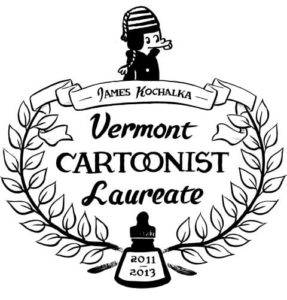
James Kochalka is to be honored after a search conducted by the Center for Cartoon Studies.
BOO-YAH! Fall 2011: ENGL 3327: Jewish American Literature

Sub-topic "The Graphic Novel." FINALLY, I'm teaching a graphic novels course in the English Department here at UTEP. I'm not Jewish, but there is a rich backlog of texts and articles dealing with comics-and-judaica connections. What an exciting challenge to put together a course list and to have to choose from all the great comics and graphic novels out there!
Expect to see -- for sure! -- a lot of Eisner and Sturm, some Spiegelman, Crumb's Genesis, some Superman comics, some Stan Lee, probably some Kominsky-Crumb. Anyone know if Chris Ware is Jewish? Hey, I'm trying here!
Hipster Superheroes
Now I get it: "Hipster" is this generation's term for self-important douchebag. We used to just call those folks douchebags.
Archie Follows Batman, Tells Comics Code Authority to Suck It
Well, not exactly. But, come February 2011, the CCA will be dead and gone, as Archie comics were the last ones using it. It had a good run of censoring and regulating.
Women in Comics Through History Wiki, Resources
There were and are more out there than you might think, even from the Golden Age.
Saturday, January 22, 2011
Friday, January 21, 2011
Review of *Fist Stick Knife Gun*

I hate that I started reading Geoffrey Canada's Fist Stick Knife Gun, left it for a bit, then read The Zabime Sisters, and then returned to it. Both tell stories of young black people struggling with, while simultaneously embracing, cultures of violence. Having both books in my mind took me to some pretty dark places, but when I reminded myself that the texts had other things in common besides black-skinned people fighting for status, I felt more connected to the texts, but still equalling disgusted with myself and much of the social order of my fellow man.
Canada's novel is based on his actual upbringing, while the other is a work of fiction, and not a good one at that, but both do reveal, to me, anyway, that cultures of violence are very often associated with cultures of poverty, regardless of race. Certainly my own life is case-in-point. By the time I was 20, I had encounters with knives and guns, and I'd felt and delivered punches.
It's this connection, the one between poverty and violence, the one stemming from insecurity and the overwhelming stresses of not knowing when or how or for how long one's basic needs will be met, that Canada explores. He tells his own story, but helps us to recognize we need to multiply his own tensions by that of entire neighborhoods.
That being said, Canada strikes a sympathetic tone but not one of acquiescence. While explaining that the phenomenon is what it is, he does not accept that it has to be as it is or always will be.
As he grows from a small boy low on the pecking order until he proves he can fight to a young man seeing his Christian values wrestle with his need for safety on the streets while deciding to make the existential choice to carry a gun or not, Canada learns that some decisions are more powerful than others and that self-awareness often keys those decisions.
He says, "I knew that if I continued to carry the gun I would eventually pull the trigger." I've said similar things myself regarding my sometimes-intense anger: "The only reason I haven't shot anyone is because I don't have a gun." But how many people so focused on basic issues of safety and security have the time or inclination for self-reflection? An empty stomach, an anxious heart, and a always-already "fight or flight" consciousness does not make for an abundance of pacifist philosophers.
The graphic novel portion of the text ends with a call to action, symbolized by the teen Canada throwing away his gun, and in the prose pages that follow, Canada suggests that he remembers a time when there was no violence in his life, when he had to learn it.
I'm not sure I remain as optimistic as he does, though knowing his experience has been much tougher than my own but he remains more positive does give me cause to think better of the human condition. He asks us to take on poverty and to invest in poor neighborhoods. His thesis suggests that only when the anxieties of a life of poverty are removed will the perceived need for violence in poor neighborhood abate. In the meantime, while we do nothing to change the phenomenon, we should not expect the phenomenon to change. That, even if Canada might be seen as a dreamer, seems pretty sound logic to me.
** Fist Stick Knife Gun is a graphic novel version of a print novel by the same name. Jamar Nicholas adapted the story in the comics format, and Random House's catalogue "Language Arts and Social Studoes 2011" features commentary that teachers may find useful when integrating this text into the classroom, where it can certainly have some impact, especially if paired with a text like Yummy, which shows a young person in similar living situations making choices leading him to very different conclusions.
Gallery of Some of Crumb's Underground Comics Covers
Funny animals, thick women, drugs and misogyny: what's not to love? Ahem...
The Beat Calls DC's New Rating System Video Game-Like
DC will no longer use the comics code authority to rate its books as kid-safe, dropping the code in favor of a "multi-layer ratings system."
The system assigns either an E, a T, a T+, or an M to titles to indicate if they are for everyone, teens, teens and whatever "+" means, and mature.
I'm intrigued by the streamlining. Making ratings more consistent across media was part of the reason for the change.
Multimodality, censorship, and ratings just got more interesting.
How long before we see a complaint from a parent or teacher that a trade paperback with comics rated "M" was found in the "T" equivalent of the school library's stacks?
The system assigns either an E, a T, a T+, or an M to titles to indicate if they are for everyone, teens, teens and whatever "+" means, and mature.
I'm intrigued by the streamlining. Making ratings more consistent across media was part of the reason for the change.
Multimodality, censorship, and ratings just got more interesting.
How long before we see a complaint from a parent or teacher that a trade paperback with comics rated "M" was found in the "T" equivalent of the school library's stacks?
Thursday, January 20, 2011
"Super Pets" Writing Contest Ends February 28th!
 More information about this contest for kids is available by clicked the link to The Graphic Classroom blog that is embedded in this post's title!
Inner Creep Says, "They're ALL magical To Me..."
Gina Gagliano of :01 is compiling a list of "magical teenagers" in comics titles. This could be a dissertation-length effort if she exhausts the topic. Thanks for the link, Spurge!
Ninja, Please! : Ruben Bolling's Comic on the Huck Finn Controversy
 Yes, I think the n-word should stay in all editions of Adventures of Huckleberry Finn. Erasing history only helps us to repeat it, and not facing uncomfortable feelings and conversations doesn't do anything to make anything better.
On the other hand, as a ninja, I know how hurtful it can be to hear someone use an n-word in a derogatory manner. And, I know how hurtful it is to have your particular n-word appropriated in the place of another hurtful n-Word. "Ninja, What?" "Where my ninjas at?" "What up, my ninja?" When will the pain cease?
When these kids realize that real ninjas bring real pain, that's when! Hye-yah!
Forgive me for my crass spin on "Ask a Ninja," but do give thanks to Ruben Bolling for offering some comics commentary on this latest flapdoodle and hoo-hah.
Wednesday, January 19, 2011
Alan Moore: Literacy and Library Advocate!
As some British libraries face closing, The Bearded One of Greatness speaks.
From Bleeding Cool and the Northapton Chronicle:
I am absolutely against the closure of any library – particularly in the St James area which has had enough taken away from it already. I joined the library in Abington when I was five and all the books available gave me a broad reading experience – without Northampton’s libraries I would not be the writer I am today. I am very concerned about the kids today which might grow up without this access. I am very against taking literacy away from people. Education must not be a privilege for the well-off.
Please click the Northampton Chronicle link, as it gives a much broader story.
From Bleeding Cool and the Northapton Chronicle:
I am absolutely against the closure of any library – particularly in the St James area which has had enough taken away from it already. I joined the library in Abington when I was five and all the books available gave me a broad reading experience – without Northampton’s libraries I would not be the writer I am today. I am very concerned about the kids today which might grow up without this access. I am very against taking literacy away from people. Education must not be a privilege for the well-off.
Please click the Northampton Chronicle link, as it gives a much broader story.
Best Web Comics of 2010, According to Derik A Badman..
..and linked from Dylan Horracks, so you know there's some quality thinking going on! I don't give web comics near enough attention, but I hope to remedy that a bit in my New and Multimodal Literacies course this semester, and in future courses too..
Tuesday, January 18, 2011
And Now, A Shitty Review...of *The Zabime Sisters*
 Classes start for me tomorrow, and due to a university-wide failure of the webmail system, I am unable to complete the last task I had on today's agenda: sending out virtual copies of my syllabi.
My loss is your... "also loss," however, as this gives me time to write a review of Aristophane's The Zabime Sisters, a book getting high praise from Matt Madden and YALSA/ALA, which listed it as among the best graphic novels for teens this year.
I don't get it, at all. Or, if I do get it, I see it as more evidence that 2010 year was a relatively weak one for graphic novels.
The story is one of three sisters growing up in the jungle town of Guadeloupe. They get bored, get a little drunk, a little flirty, and then go home. The most interesting characters are the boys who fight over them, or for their own reputations, simply because fighting is a way in which the young men of the village earn status and divvy up their self-imposed caste system. There is little growth for the female leads, and while I'm typically a fan of slice-of-life fiction, I like it to go somewhere. The Zabime Sisters doesn't offer much direction for reader or the girls.
What's worse, the dry brush ink technique that has been praised by others seems to me poorly applied. The characters often blend into the thick scrapes of landscape, and while I suppose this could have been intentional, the affect falls as flat as the story for me.
I'm not saying this graphic novel is terrible, but it doesn't strike me as deserving of as much praise as it has garnered. Madden calls it a bit of a departure from Aristophane's other work, which I really do want to check out, a happy consequence of reading this translation. I prefer the term the Frenchman used to describe The Zabime Sisters, himself, though: modest.
Subscribe to:
Posts (Atom)