Stickermule

A Public Service Announcement! ;)

Showing posts with label literacy. Show all posts
Showing posts with label literacy. Show all posts
Friday, May 04, 2012
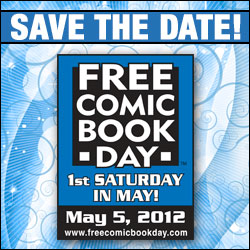
2012: Cinco de Mayo is Free Comic Book Day


Friday, January 13, 2012
Edutopia Spotlights Comics and Education...
....through spotlighting Andrew Miller of the Buck Institute of Education. Buck, eh? Maybe I am in the right field. ;)
So cool that when I was a middle school AIG teacher, we did a lot of problem based learning stuff, which is a focus of the Buck Institute focuses. Gotta love kizmet.
So cool that when I was a middle school AIG teacher, we did a lot of problem based learning stuff, which is a focus of the Buck Institute focuses. Gotta love kizmet.
Tuesday, August 02, 2011
Wednesday, July 06, 2011
Monnin Talks to InsideHigherEd.com about Comics and Literacy
Click the link embedded in this post's title to hear my friend and colleague Katie Monnin, a professor at the University of North Florida, speak on comics and education. InsideHigherEd is a website that explores issues of working and teaching in academe and also hosts job positions announcements, so you can bet it gets some good traffic. So, Katie's words should reach a large audience of hopefully receptive ears and may be the first words some visitors will have heard regarding the connections between comics and learning.
Wednesday, May 18, 2011
Telegraph Article on Boys and "Long Books"
"Teachers are giving up trying to make boys read long books because they cannot get past 100 pages, new research as found."
That's the lead sentence to this article from the British newspaper, anyway. Apparently some research suggests that boys are turned off by long books -- defined in the article as 200+ pages -- simply because they are long.
It's more of the "boys can't sit still" stuff, but there are some good points about motivation and interest that come from the article as well.
The whole things reminds me of that body of "comics as a conduit" research that suggests that comics readers go on to read more and more varied literature than non-readers. The article does mention comics as a means of helping boys develop a love a reading.
That's the lead sentence to this article from the British newspaper, anyway. Apparently some research suggests that boys are turned off by long books -- defined in the article as 200+ pages -- simply because they are long.
It's more of the "boys can't sit still" stuff, but there are some good points about motivation and interest that come from the article as well.
The whole things reminds me of that body of "comics as a conduit" research that suggests that comics readers go on to read more and more varied literature than non-readers. The article does mention comics as a means of helping boys develop a love a reading.
Monday, April 18, 2011
George R.R. Martin Talk Comics and Reading Circa 1981
Another story of an accomplished adult who learned to read through comics! Hotcha!!
Thursday, April 07, 2011
Martha Cornog on "Why comics Make Reading Fun"
This article from the most-recent Graphic Novel Reporter update features tons of advice for parents and those interested in kids' literacy and also offers an overview of topics of import on the comics-and-literacy discussion. Highly-recommended reading.
Monday, February 14, 2011
Wednesday, February 09, 2011
"Comics Reclaimed for Kids by Kids and Educators" Article from Huffington Post
Kate Kelly recaps the scene and reiterates some of the prevailing myths regarding the comics form while altruistically trying to report on the topic and mentioning some new, some old names on the beat.
Saturday, January 22, 2011
Tuesday, November 30, 2010
Peter Gutierrez's Rationale for Teaching Literacy Skills Through GN's
A nice little piece that packs a wallop in its economy and straightforwardness. Sing it, Peter! And thanks for the shout-out too. :)
Monday, September 13, 2010
The Vancouver Sun Reports that Bill Vander Zalm Learned to Read Through Comics
From the article, which also mentions Michael Bitz:
Archie, Donald Duck and Superman opened the doors to a language and a culture the young boy, who emigrated from the Netherlands after the Second World War, knew nothing about.
“Comic books were a way of escaping into another world, like TV,” said Vander Zalm.
“They helped me learn to communicate and to make friends. Those were big things.”
Vander Zalm is a former premier in Canada.
Archie, Donald Duck and Superman opened the doors to a language and a culture the young boy, who emigrated from the Netherlands after the Second World War, knew nothing about.
“Comic books were a way of escaping into another world, like TV,” said Vander Zalm.
“They helped me learn to communicate and to make friends. Those were big things.”
Vander Zalm is a former premier in Canada.
Friday, September 03, 2010
School Library Journal Article Tackles Ways to Make Libraries More Boy-Friendly
Another article mentioning comics as a means of getting boys interested in reading and hanging out in places full of books.
It's interesting to note that there is a "boy crisis" in terms of literacy and libraries that some feel comics can help resolve, whereas in the industry, especially in the comics shop, there is a "girl crisis" regarding how to get female readers to feel comfortable in places full of comic books.
An analysis of the two arguments and their nuances would be highly intriguing and enlightening, in my opinion. That'd make one hell of a thesis or dissertation or article or book.
Partly so, I think, because there would be evidence to suggest "it really has come to this," i.e. the gender perceptions are that high-brow reading and places that support literacy have become girly and female-centric and places considered, even if wrongly, to be bastions of low brow reading have become equated with boys or an adolescent version of masculinity.
What are the ramifications for such gender-intwined notions of reading and literature and literacy?
It's interesting to note that there is a "boy crisis" in terms of literacy and libraries that some feel comics can help resolve, whereas in the industry, especially in the comics shop, there is a "girl crisis" regarding how to get female readers to feel comfortable in places full of comic books.
An analysis of the two arguments and their nuances would be highly intriguing and enlightening, in my opinion. That'd make one hell of a thesis or dissertation or article or book.
Partly so, I think, because there would be evidence to suggest "it really has come to this," i.e. the gender perceptions are that high-brow reading and places that support literacy have become girly and female-centric and places considered, even if wrongly, to be bastions of low brow reading have become equated with boys or an adolescent version of masculinity.
What are the ramifications for such gender-intwined notions of reading and literature and literacy?
Tuesday, August 31, 2010
Harvard Weighs in on "Boy Crisis"/Comics
Here's a great article on the literacy "crisis" facing young boys. Thanks to Mr.M for drawing it to my attention.
It's very thorough and hits all the main points about fiction, nonfiction, curriculum, choice, etc. and how boys respond to them.
Among the points is this gem:
"'Nontraditional materials such as comic books and sports-themed materials can provide an important “hook” to get boys more involved in reading,' [William]Pollack [of Harvard Medical School] says, 'and serve as a helpful bridge to more advanced types of reading later on.'"
So, we get a little but of pro-comics stance. In the next paragraph, though, we get:
"If there are kids out there who are, for whatever reason, really reluctant readers or low-level readers, then anything that gets them hooked into spending time on reading is a good thing,” [Catherine]Snow [of Harvard Graduate School of Education] says. “But the problem is that whereas those can be great places to start, they don’t get you where you need to be to succeed academically. You’ve got to be able to access serious academic texts.”
I'm not sure if Snow is referring directly to comics, since Pollack was the one who mentioned them. If so, we've got another example of folks not realizing that some comics are very sophisticated texts, but I think this might be an example of the writer of the article merging concepts for story flow rather than a blanket statement from Snow, especially since we're talking about two different people's statements here.
But, if a representative from Harvard is acknowledging comics' role in facilitating literacy, I ain't gonna complain.
It's very thorough and hits all the main points about fiction, nonfiction, curriculum, choice, etc. and how boys respond to them.
Among the points is this gem:
"'Nontraditional materials such as comic books and sports-themed materials can provide an important “hook” to get boys more involved in reading,' [William]Pollack [of Harvard Medical School] says, 'and serve as a helpful bridge to more advanced types of reading later on.'"
So, we get a little but of pro-comics stance. In the next paragraph, though, we get:
"If there are kids out there who are, for whatever reason, really reluctant readers or low-level readers, then anything that gets them hooked into spending time on reading is a good thing,” [Catherine]Snow [of Harvard Graduate School of Education] says. “But the problem is that whereas those can be great places to start, they don’t get you where you need to be to succeed academically. You’ve got to be able to access serious academic texts.”
I'm not sure if Snow is referring directly to comics, since Pollack was the one who mentioned them. If so, we've got another example of folks not realizing that some comics are very sophisticated texts, but I think this might be an example of the writer of the article merging concepts for story flow rather than a blanket statement from Snow, especially since we're talking about two different people's statements here.
But, if a representative from Harvard is acknowledging comics' role in facilitating literacy, I ain't gonna complain.
Monday, August 23, 2010
CFP's: Sequential Art, Graphic Novels, and Comics in Education/ Spidey Anthology
CFP: Sequential Art, Graphic Novels, and Comics in Education
Edited by Robert G. Weiner and Carrye Syma of Texas Tech University Library
In recent years the use of graphic novels, comics, and sequential art in education has exploded. This is due not only to the boom in superhero movies that are based on comic book characters, but also to the wide literary range that graphic novels now have. There are now literally hundreds of college and university courses all over the world that are using graphic novels in their curriculum. The days when comics were just seen as children’s trash, with no redeeming literary or educational value, are hopefully behind us.
Contrary to the idea that comics “dumb” down material, it takes both sides of the brain to read and interpret sequential art stories: the right side to interpret the pictures and the left side to understand the narrative text. Our goal with this collection is to provide the educator and scholar with a collection of essays that show how graphic novels and comics are being used in the classroom today, as well as some historical pieces that detail how the educational fields often have and have had a “rocky” relationship with the use of comics in educational settings. We want both theoretical and practical essays showing how sequential art can be and is being used to teach and illustrate concepts and ideas.
We are especially keen on pieces related to higher education, military and government uses of comics to educate, but all aspects of comics and education are under consideration. In addition, we would like to have educators from a wide spectrum of the educational fields from K-12, to undergraduate and graduate educational levels. Those using sequential art in adult education and pre-school are encouraged.
Some possible questions/ideas that could be addressed include:
The Military’s use of comics to teach.
Graphic Novels and comics in library science education.
How relationships can be understood through the use of graphic novels in human science education.
Teaching mathematical concepts using graphic narrative.
Grade school use of comics.
Middle school use of comics.
High school use of sequential art (say something like Maus to teach the Holocaust).
Comics and Film to teach about blockbuster cinema.
Philosophical issues raised by graphic novels (The Watchmen in a philosophy class about ethics).
Biological and scientific concepts using graphic novels.
The use of mainstream superhero stories in the classroom.
Superman, Batman, Spider-Man to further understand the concept of the hero Mythology (i.e., Odysseys, Hercules etc.).
Graphic Novels and history, how effective a tool is the graphic novel in teaching a historical concept?
Sequential art in teaching foreign language or English as a second language.
Comics in literacy and adult education programs.
Graduate courses using graphic novels.
The History of sequential art in education.
Medical education using comics
Please send 200 word abstracts by January 15th 2011 to Rob Weiner Rob.weiner@ttu.eduFinal papers will be due February 28th 2011. No exceptions.
Please note the submission of an essay does NOT necessarily mean publication in the volume.
Essays will be going through a rigorous peer review process and we have asked a number of scholars to serve in this capacity. We are striving to put together as an excellent collection with diverse viewpoints covering all aspects of comics and education. Authors are also expected to follow the editor’s style guide and be willing to have their work edited.
Thank you,
Carry Syma, Texas Tech University Library
Rob Weiner ,Texas Tech University Library
~~~~~~~~~~~~~~~~~
Also, remember the Spidey collection for which Dr. Weiner is currently seeking submissions!
Edited by Robert G. Weiner and Carrye Syma of Texas Tech University Library
In recent years the use of graphic novels, comics, and sequential art in education has exploded. This is due not only to the boom in superhero movies that are based on comic book characters, but also to the wide literary range that graphic novels now have. There are now literally hundreds of college and university courses all over the world that are using graphic novels in their curriculum. The days when comics were just seen as children’s trash, with no redeeming literary or educational value, are hopefully behind us.
Contrary to the idea that comics “dumb” down material, it takes both sides of the brain to read and interpret sequential art stories: the right side to interpret the pictures and the left side to understand the narrative text. Our goal with this collection is to provide the educator and scholar with a collection of essays that show how graphic novels and comics are being used in the classroom today, as well as some historical pieces that detail how the educational fields often have and have had a “rocky” relationship with the use of comics in educational settings. We want both theoretical and practical essays showing how sequential art can be and is being used to teach and illustrate concepts and ideas.
We are especially keen on pieces related to higher education, military and government uses of comics to educate, but all aspects of comics and education are under consideration. In addition, we would like to have educators from a wide spectrum of the educational fields from K-12, to undergraduate and graduate educational levels. Those using sequential art in adult education and pre-school are encouraged.
Some possible questions/ideas that could be addressed include:
The Military’s use of comics to teach.
Graphic Novels and comics in library science education.
How relationships can be understood through the use of graphic novels in human science education.
Teaching mathematical concepts using graphic narrative.
Grade school use of comics.
Middle school use of comics.
High school use of sequential art (say something like Maus to teach the Holocaust).
Comics and Film to teach about blockbuster cinema.
Philosophical issues raised by graphic novels (The Watchmen in a philosophy class about ethics).
Biological and scientific concepts using graphic novels.
The use of mainstream superhero stories in the classroom.
Superman, Batman, Spider-Man to further understand the concept of the hero Mythology (i.e., Odysseys, Hercules etc.).
Graphic Novels and history, how effective a tool is the graphic novel in teaching a historical concept?
Sequential art in teaching foreign language or English as a second language.
Comics in literacy and adult education programs.
Graduate courses using graphic novels.
The History of sequential art in education.
Medical education using comics
Please send 200 word abstracts by January 15th 2011 to Rob Weiner Rob.weiner@ttu.eduFinal papers will be due February 28th 2011. No exceptions.
Please note the submission of an essay does NOT necessarily mean publication in the volume.
Essays will be going through a rigorous peer review process and we have asked a number of scholars to serve in this capacity. We are striving to put together as an excellent collection with diverse viewpoints covering all aspects of comics and education. Authors are also expected to follow the editor’s style guide and be willing to have their work edited.
Thank you,
Carry Syma, Texas Tech University Library
Rob Weiner ,Texas Tech University Library
~~~~~~~~~~~~~~~~~
Also, remember the Spidey collection for which Dr. Weiner is currently seeking submissions!
Thursday, August 19, 2010
Alexander Simmons Pushes for Literacy/Creativity through Comics, Could Use a Hand to Expand to AFRICA!!!
Press release:
NYC-BASED KIDS COMIC CON INVITED TO SENEGAL, AFRICA FINANCIAL SUPER-HEROES NEEDED
If you found out about a great program that has helped kids in three regions of the U.S. expand their literacy and self-esteem, would you help it keep growing? For almost five years now, Alex Simmons and his Kids Comics Con have brought kid-friendly comics and their creators together with New York City kids who otherwise might never see them. Doing so has encouraged a love of reading, improved literacy, and, most importantly, given kids license to imagine, to think, and to create.
After four years of growing success, Simmons was asked in 2009 to take his KCC show on the road, and that’s what he did, bringing the “KCC Road Show” to the snowy hills of Buffalo, New York and blazing beaches of Miami, Florida. Both events were great successes.
Now the Kids Comic Con has been asked to bring the KCC Road Show to over 700 students, their families and the community of the Senegalese American Bilingual School in Senegal, Africa on December 1st, 2010. The American Cultural Center in Senegal wants to send him to additional cities there, potentially expanding the impact this project could have.
Simmons wants to deliver to Africa what he’s done for American kids, but he has been forced to confront the Dr. Doom of today’s economy: financing. To make this positive experience happen, Simmons has setup an online fundraiser on a web site called Kickstarter.com. Simmons reports this project will be funded, but only if he and his team can raise at least $19,616 by 11 a.m. on Thursday, Sept. 16. “Like one of those comic book death traps of old, the clock is ticking, and the rope holding the deadly blade above this project’s head is starting to fray,” Simmons said.
So the Kids Comic Con is calling all financial super-heroes to assemble, ride to the rescue, swing in at the nick of time, and otherwise save the day by helping to fund a worthwhile international exchange of ideas.
To make a pledge go to the KCC web site at: http://www.kidscomiccon.com/, and click on the Kickstarter link on their home page. Or go to http://www.kickstarter.com/ and type “Kids color” in the SEARCH PROJECTS box. You can also find links on the Kids’ Comic Con Facebook Page.
And for additional information please contact Alex Simmons at: Alex@KidsComicCon.com.
~~~~~~~~~~~~~~~~~
Alexander Simmons, who you may know from his great work on Archie comics, has been promoting literacy and creativity through comics for several years now and is one of the true good guys in the biz. If you can offer some support, please do. I know I will!
NYC-BASED KIDS COMIC CON INVITED TO SENEGAL, AFRICA FINANCIAL SUPER-HEROES NEEDED
If you found out about a great program that has helped kids in three regions of the U.S. expand their literacy and self-esteem, would you help it keep growing? For almost five years now, Alex Simmons and his Kids Comics Con have brought kid-friendly comics and their creators together with New York City kids who otherwise might never see them. Doing so has encouraged a love of reading, improved literacy, and, most importantly, given kids license to imagine, to think, and to create.
After four years of growing success, Simmons was asked in 2009 to take his KCC show on the road, and that’s what he did, bringing the “KCC Road Show” to the snowy hills of Buffalo, New York and blazing beaches of Miami, Florida. Both events were great successes.
Now the Kids Comic Con has been asked to bring the KCC Road Show to over 700 students, their families and the community of the Senegalese American Bilingual School in Senegal, Africa on December 1st, 2010. The American Cultural Center in Senegal wants to send him to additional cities there, potentially expanding the impact this project could have.
Simmons wants to deliver to Africa what he’s done for American kids, but he has been forced to confront the Dr. Doom of today’s economy: financing. To make this positive experience happen, Simmons has setup an online fundraiser on a web site called Kickstarter.com. Simmons reports this project will be funded, but only if he and his team can raise at least $19,616 by 11 a.m. on Thursday, Sept. 16. “Like one of those comic book death traps of old, the clock is ticking, and the rope holding the deadly blade above this project’s head is starting to fray,” Simmons said.
So the Kids Comic Con is calling all financial super-heroes to assemble, ride to the rescue, swing in at the nick of time, and otherwise save the day by helping to fund a worthwhile international exchange of ideas.
To make a pledge go to the KCC web site at: http://www.kidscomiccon.com/, and click on the Kickstarter link on their home page. Or go to http://www.kickstarter.com/ and type “Kids color” in the SEARCH PROJECTS box. You can also find links on the Kids’ Comic Con Facebook Page.
And for additional information please contact Alex Simmons at: Alex@KidsComicCon.com.
~~~~~~~~~~~~~~~~~
Alexander Simmons, who you may know from his great work on Archie comics, has been promoting literacy and creativity through comics for several years now and is one of the true good guys in the biz. If you can offer some support, please do. I know I will!
Wednesday, August 18, 2010
Ben Bova, You Ignorant Slut
Ben Bova's words on graphic novels, graphica adaptations of print works, and the "decline" of literacy are making the Interweb rounds. And, believe it or not, he's being called out for his shortsightedness and lack of evidence supporting his assertions (my favorite comment to his words so far inspired the title to this post)by folks who aren't teachers or teacher educators. Perhaps we have truly turned the corner, folks......
Tuesday, August 10, 2010
The Comic Book Project Turns 10 Years Old!

It seems hard to believe that Michael Bitz's creation has been around for a decade, but it has. And thank goodness, as the work of those involved has offered qualitative data that creating comics is a complex and very worthwhile educational endeavor.
For those interested, the theme of this year's nation-wide project is "History Goes Graphic!" A press release informs that,"Students will plan, write, and design original comic books that demonstrate a deep understanding of past events and people. Going beyond the names and dates, students use their creativity to make history come alive in the form of a comic book."
Here's a link if you want to participate.
The press release also draws attention to a comic created in Imperial County, California. Entitled I am Migrant, the comic "chronicles the life experiences of migrant youth and their families." That's pretty important stuff around these parts!
Friday, August 06, 2010
Article on Comics and Literacy from From the Mixed Up Files blog
...features our good friend Chris Wilson, among other goodies.
Monday, July 26, 2010
Oh, Canada (Council of Learning)!
Another paper has picked up the CCL report on comics and male literacy. This article from Epoch Times follows an article from the Vancouver Star that made the rounds a few days ago.
Subscribe to:
Posts (Atom)