
Stickermule

Custom Stickers, Die Cut Stickers, Bumper Stickers - Sticker Mule

A Public Service Announcement! ;)

A Public Service Announcement! ;)

Friday, July 30, 2010

Review of _Brain Camp_


Brain Camp is a collaborative effort from Susan Kim, Laurence Klavan and Faith Erin Hicks. It reads like a watered-down tweener version of Black Hole, as if the three wanted to tell a Charles Burns story of adolescence but couldn't really get into the nitty-gritty. The narrative has its moments but lacks development and depth -- perhaps underestimating its tween-teen audience -- and often feels as if it were composed as a series of compromises. Had the storytellers not compressed, and had they dug deeper into the darkness they try to reveal -- the book would have been a much more interesting, mature narrative.

Both Brain Camp and Black Hole deal with young people making strange changes. In Brian Camp, apparently average kids at a camp designed to make them smarter, faster, and homogeneous are becoming like-minded geniuses while also becoming hosts for bird-like aliens. Two 13 year old underachievers, Jenna and Lucas, figure out the plot while getting the pseudo-hots for one another (their teenybopper desires what makes them special among their similarly-aged peers. Yeah, it's a bit of a stretch). They foil plans to turn an entire group of summer campers into hosts, but they seem to lose the war when the big man in charge is named secretary of education.

A Kirkus Reviews blurb distributed from publisher :01 says the book offers "sly social commentary with a fizzy dash of stomach-lurching horror." There is some sort of commentary going on. As a former middle school Gifted Specialist, I appreciated how the authors seem to suggest that we're too quick to label kids or want all children to be "exceptional" based on a very narrow definition of that word. I can even see the text as one that gifted students would appreciate because of how often they feel pressure upon earning or having the label of "gifted" bestowed upon them. But, only using the text with students labeled as gifted would miss the point. Further, the theme might be of interest to some readers, but the lack of depth, which comes off as tailored towards a certain perception of young readers and shackles the narrative, will most likely turn off many. This might be a graphic novel that young folks read once, but I can't see it as one to which many will want to return.



Thursday, July 29, 2010

Wednesday, July 28, 2010

Too Good to Last: Friends of Lulu Shutting Down in Less than a Month

Like Billy Budd or The great Haysoos, things too good for this world have limited time on it. The all-things-women-in-comics Friends of Lulu is closing its online doors.

Tuesday, July 27, 2010

Reflections on Kazu Kibuishi's _Copper_: "I Treat the Letters Like Images"

Copper represents my first serious, sit-down experience with the work of talented Kazu Kibuishi. I've thumbed through his Flight volumes enough to put them on my wish lists, but I've not yet devoured them as is my hope for future days.

That said, Copper is a delightful introduction to his talents. The stories, mostly one-pagers with a few recurring vignettes across the collected shorts which were originally published on the web, are reminiscent of Winsor McKay's Little Nemo in Slumberland, as most of them are adventures based in the imaginations of Copper and his dog pal Fred.

The beautiful and flashy page layouts and proclivity for some of the capers to be dreams in disguise also pair the text with McCay's classic. Indeed, if there is one web comic turned collection that I'd love to see reprinted at the gigantic size of some of the Sunday supplements, it'd be Copper.


To understand the two main characters, consider folks from another classic series, Peanuts. Copper, described as curious, and Fred, mentioned as fearful, are really two sides of the same coin, which makes their time together that much more enjoyable for readers as the duo play off of one another with ease. Think about what you'd get if Charlie Brown kept his neuroses but gained Snoopy's activity (agency?) and sense of adventure, while Snoopy added to his own anxieties by taking on some of Chuck's (angst?) from time to time.


A stickler for thoughts about process as well as product, I was thrilled to see Kibuishi share his "making of" process for Copper after the collection ended. Regarding lettering, he said something that I've heard other comics artists say before but that I feel is important to consider:


"I prefer to hand letter my pages because I like to have control over the composition of every image in the drawing stage.....I treat the letters like images." Letters as just other images to be considered in the overall composition. Yes, yes, yes! Graphein in the 21st century, folks!!

In comics, the difference between the written word and the drawn image, or, shall we say, the written image and the drawn word, can be negligible. And, perhaps that's the best way to see them at all times.


Imagetext is in the text is the image is the text is the textual, afterall!
I've got a revew copy of Kibuishi's Amulet in my office. After having so much fun with Copper, I may have to move it to the top of my pile.

SDCC numbers expected at 125K

Monday, July 26, 2010

Graphic Novel Course at Missouri State

Syllabus for Comics Course (Honors-Level) at University of Maryland

San Diego Librarian Extolling Comics and Literacy Links

Deborah Ford advocates for comics in the library and in the classroom -- and San Deigo Comic Con just happens to be right in her back yard every year!

Oh, Canada (Council of Learning)!

Another paper has picked up the CCL report on comics and male literacy. This article from Epoch Times follows an article from the Vancouver Star that made the rounds a few days ago.

Saturday, July 24, 2010

2010 Eisner Award Winners Announced...

...last night at SDCC. Congrats to the winners, especially Tom Spurgeon, whose Comics Reporter is one of the top 3 comics news websites to which I link.

Thursday, July 22, 2010

_Super-Powered Word Study_ Cover!


Featuring 15 weeks worth of word sorts revolving around a different pair of affixes or roots each week, creative writing-based assessments, extension activities, and exciting comics stories to help students learn and use words in context, Super-Powered Word Study will be available to schools, teachers, and kids across the nation in a few short months from Maupin House. Here's the amazing front cover.

Librarian Recommends GN's for Book Club Selections

See why Bonnie Brzozoski of the Austin Public Library (TX) says they're so good for'em!

_Lunch Lady_ series Writer Offers Advice for Teaching Comics

Graphic Novels Rock ALA 2010

I gotta get on the inside of this ALA stuff. I love GN's; they love GN's. I just don't have an interest in most other librarian interests.... But, this certainly seems to be a place to be.

Read SFSU Students' Thesis on Comics in the Composition Classroom

Ellen Hua Ma's work is posted at The Graphic Classroom via Scribd. She's joined the inimitable Chris Wilson as a writer there, so I hope you'll check in to see even more of her work.

Hofstra U Offering GN Course Focusing on Writing This Summer

...joins universities like Florida, Stanford, Yale, Virginia, Houston, MIT, Syracuse, etc., etc., as campuses teaching comics classes. And to think, it might be another year before I can teach a course specifically on comics. I'd rather get back in that game sooner than later, as you can imagine. :)

Wednesday, July 21, 2010

Thank You, Canada!

...and thanks to Frank W. Baker for drawing my attention to this study about comics, literacy, and their potential intersections among male readers.

Amazon Reports E-Books Outselling Hardcovers 143 to 100.

ICV2 reports that Amazon has been selling 143 E-books to every 100 hardcover for the last three months.

Is this a sign that things are finally changing? Is the new generation of readers going to constitute a Throwaway Culture with their lack of desire for keeping hard copies? Will the more traditional readers constitute dying Hoarder Culture?

And will it matter? Will one be better than the other? As the saying goes, you can lead a hoarder culture, but you can't make it think....

I'm intrigued by the article but don't see it as a harbinger. Show me some numbers comparing E-book sales to paperbacks, and then I'll I know better where things stand.

Monday, July 19, 2010

A Campfire Classic vs. A Campfire Mythology

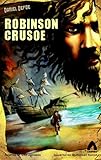
Campfire has sent me a slew of review copies, and I keep being generally impressed. Tonight, I'm going to compare and contrast a book from their Campfire Classic line, Robinson Crusoe (adapted by Dan Johnson, illustrated by Naresh Kumar, colors by Anil C.K.) with a book from their Campfire Mythology line, Ryan Foley's Legend: The Labors of Heracles (illustrated by Sankha Banerjee, colors by Ajo Kurian).


It's not an unnatural pairing considering the religious overtones in both. Crusoe is sort of a 18th century Jesus, and in the early days of Christianity, it wasn't rare for Greeks and Romans to confuse Jesus with the gods in their pantheon. There's more than a little Christ in Hercules.


Regarding the Robinson Crusoe adaptation, Christianity rules the day. Those looking for the critique of government and economy will have to squint a bit, but those who like to read the text as a Christian allegory or Christian coming of age story will be most pleased. Indeed, I can see the text having much utility in Christan schools or Sunday school classrooms.


The coloring in both texts continues the Campfire tradition of offering an intriguing palette. At their best, the images seem to be painted and vibrantly give the pages a warm, active glow. This is especially true for the Heracles book. In contrast, the colors in Robinson Crusoe sometimes live up to Campfire's standards but other times look more like an overdone oil pastel, muddy and ragged. To the artists' credit though, a haggard, rough, jagged line is appropriate when illustrating the trials and tribulations of a mere mortal. Heracles, a man-god, is better suited for beauty.


While the adaptation of Robinson Crusoe sheds a lot of nuance from the original text, Ryan Foley more skillfully parses elements of Hercules' mythos. While I wonder about the historical accuracy of having a young Greek boy paired with a female mentor, Foley frames the narrative such as lovely Lady Demiarties tells the story to young Prenditus, who asks questions at times that Lady D simply says must be answered another day.


Foley also does an excellent job of making sure the more... adulterated elements of Hercules' labors are depicted in a family-friendly manner while also inserting a bit of humor into the text. Perhaps its the extra centuries of lore, or the inherent nebulous nature of myths vs a rather finite core from a source text like a novel, but Foley just seems capable of squeezing more out of his text that Johnson does with his.


For example, in a wonderful example of superimposing, an ovoid panel featuring the face of Eurystheus is placed in a horizontal, rectangular panel in which Heracles shovels poop from his stables. The oval fits neatly "in" the pile of poop, a perfect place for the shithead king.
Then there's the undeniable bit of tastiness that is Heracles petting Cerberus: "Who's a good dog? Huh? Who's a good dog? You are. Cerberus is a good dog."


Both books offer extra information at the end. Johnson offers history of other famous shipwrecks rather than explore the nixed sub-themes of Defoe's masterpiece, and Foley offers the history of several other key Greco-Roman deities to help readers keep the hulking half-god heroes of antiquity distinct.
I enjoyed reading both. I love Daniel Defoe's Robinson Crusoe, so much that I actually explored the theme of middle spaces in my application for doctoral programs, but not necessarily for the same reasons that Johnson's adaptation will bring to the fore. Still, it's an impressive book that will absolutely serve its best purpose as a text exploring Christian themes. Folley's Legend: The Labors of Heracles is an absolute blast, however, a ten out of ten to Robinson Crusoe's worthy 8.

Again, to sum it: It's not that Campfire's Robinson Crusoe isn't strong, it's just not as strong as Hercules.

Marvel's _Runaways_ Getting Film Treatment


Even with the X-Men First Class movie getting so much press, I have to say I'm more excited to see Runaways getting the film treatment. Runaways is the late 20th/21st century teen team in comics, in my opinion. Like the Teen Titans were to the 80s. Sorry, Young Avengers. As I and some of my students have pointed out, Runaways is like Hinton's Outsiders, with super-powers: poignant, engaging, and capturing a certain zeitgeist of youth culture.