 I just ordered my copy of this book, available in May. It's a 4-year longitudinal, qualitative study about how teens consume, create, and identify with Manga and comics. I know Dr. Bitz and his work, and I am very excited about this release! Order your copy now. Really, click the link to Harvard Education Publications Group, call'em up, and order a paperback copy for less than $30.
 A Public Service Announcement! ;)

Saturday, March 28, 2009
Coming Soon from Michael Bitz of the Comic Book Project
I just ordered my copy of this book, available in May. It's a 4-year longitudinal, qualitative study about how teens consume, create, and identify with Manga and comics. I know Dr. Bitz and his work, and I am very excited about this release! Order your copy now. Really, click the link to Harvard Education Publications Group, call'em up, and order a paperback copy for less than $30. 

Friday, March 27, 2009
Thursday, March 26, 2009
National Writing Project article: "Digital comics Spur Students' Interest in Writing"
Thanks to MH for sending this along.
Article summary info from NWP:
By: Grant Faulkner
Date: January 29, 2009
Summary: Fourth grade teacher Glen Bledsoe has his students create comic strips together, which engages their creativity and teaches them writing, critical thinking, and other skills.
And the article has a nice sidebar of "Related Resources" too, if I do say so myself. :)
Article summary info from NWP:
By: Grant Faulkner
Date: January 29, 2009
Summary: Fourth grade teacher Glen Bledsoe has his students create comic strips together, which engages their creativity and teaches them writing, critical thinking, and other skills.
And the article has a nice sidebar of "Related Resources" too, if I do say so myself. :)
Tuesday, March 24, 2009
Quick-Thinking Fake Spider-Man Saves Real Boy's Life
 My wife is a special education teacher, so I've heard of autistic students with the same sort of fascination with Spidey or Superman or Batman as the child in this must-read article. Mostly it's Spider-Man, though. Since autistic children often have trouble reading facial expressions, I wonder if Spider-Man's colorful costume but rather emotionally neutral (and therefore nonthreatening?) mask is a draw?
Thanks to Orion for drawing my attention to this moving piece of journalism from the BBC.
This is what the accountability/standardized tests push has Wrought
Congrats proponents of standardized tests-heavy public education, you've finally done it. You've created an atmosphere so averse to learning, made a test so anxiety-inducing, you've made elementary students cry.
This is truly a proud day in contemporary education.
You know, when I was ninish, I cried when Gwen Stacey died, but it was because I was overwhelmed with pathos and good storytelling. Marking A,B, C, or D was nothing compared to reading Spider-man trying to save the love of his life from a fall, only to snap her neck when his web reached her, saving her from hitting bottom, but with too much force for her to live through his rescue.
Some days, especially when I read stories like the one linked to in this post's title, I, like Spidey, just want to put my costume in the trash and call it quits on trying to save the world....
This is truly a proud day in contemporary education.
You know, when I was ninish, I cried when Gwen Stacey died, but it was because I was overwhelmed with pathos and good storytelling. Marking A,B, C, or D was nothing compared to reading Spider-man trying to save the love of his life from a fall, only to snap her neck when his web reached her, saving her from hitting bottom, but with too much force for her to live through his rescue.
Some days, especially when I read stories like the one linked to in this post's title, I, like Spidey, just want to put my costume in the trash and call it quits on trying to save the world....
Alissa Torres talks about Influences for American Widow
Students in my "Teaching the Graphic Novel" graduate course recently read Alissa Torres' gripping memoir of her post 9/11 days riding the tensions between gratitude and frustration, helplessness and self-advocacy. I don't want to say too much more about American Widow because one of my awesome students will be posting a review in the next few weeks, but I do want to draw attention to this great article at Graphic Novel Reporter in which Torres talks a little about her work.
And check back in the coming weeks for my student's thought on this new and poignant debut graphic novel.
And check back in the coming weeks for my student's thought on this new and poignant debut graphic novel.
Underground Comix Show at UW-Madison
Want to learn about what some hesitant to incorporate comics in their classrooms might think of when they hear the word "comics?" Not all think super-heroes and funnies; some remember the Underground movement of the late 60s and 70s and think comics = sex, drugs, explicit nudity, sexism, racism, etc. The Underground comics creators had a "nothing is off limits" attitude and created some work that is worthy of study but that probably has skewed some opinions of the overall form and content of comics generally.
This show at Wisconsin (go Bucky Badgers!) will reveal to you what people mean when they talk about comics as "subversive." Of course, the problem is that many still see comics and comics reading as a subversive activity, and to some degree they can be, but it's not anything like it used to be when R. Crumb and his companions were throwin' it down in their primes.
I wish I could go to the show! If you do, post a reply and tell me how it went...
This show at Wisconsin (go Bucky Badgers!) will reveal to you what people mean when they talk about comics as "subversive." Of course, the problem is that many still see comics and comics reading as a subversive activity, and to some degree they can be, but it's not anything like it used to be when R. Crumb and his companions were throwin' it down in their primes.
I wish I could go to the show! If you do, post a reply and tell me how it went...
Monday, March 23, 2009
Comics, Power and Society
Professors Arthur Nishimura and Louis Schubert talk about a comics course they teach at the City College of San Francisco. See how Scrooge McDuck and Will Eisner coexist in such a class as Comics, Power and Society.
2009 Hugo Awards Include Graphic Texts for First Time
Once limp-formed award trophy very excited about the news (*giggle*):
Friday, March 13, 2009
Quotes on Comics
Introducing a blog/site that is exactly what its name implies: quotes on comics. Very cool stuff.
Jews and American Comics
Thanks to MH for informing me about the book Jews and American Comics, which is reviewed at Graphic Novel Reporter. It is hard to overestimate the impact Jewish Americans have had on the American comics industry.
Wednesday, March 11, 2009
#20,265
That's the current Amazon.com sales a rank for a little ol' book you may have heard of: The King James version of The Bible. Watchmen? Still #1. Jesus retains a huge edge in overall sales, though.
If all things are through God, Watchmen really has turned out to be one heck of a collaboration.
Shaggy-haired bearded men unite!


If all things are through God, Watchmen really has turned out to be one heck of a collaboration.
Shaggy-haired bearded men unite!


Tuesday, March 10, 2009
High School Teacher Talks about Teaching Watchmen
I've heard rumors of high school teachers using Watchmen. I even got close to meeting one fellow who discussed it in Charlottesville, Va, at my comic shop while I was engrossed in taking thick description notes of the place for a qualitative research class. Now, Graphic Novel Reporter has some testimony from a high school teacher who is teaching the GN for all to see! Yay!!!
Monday, March 09, 2009
Historic Day!
Publisher's Weekly reports that for sometime today, Watchmen was the #1 seller on Amazon.com. I heard Teri Lesense talk about some of her upcoming research that suggests that seeing a movie before reading the book actually helps students' motivations to do the reading. Looks like there might be a little bit of that going on here?
A graphic novel selling better than any other book on Amazon. And it is my favorite graphic novel, to boot. It might be time to dance naked in the streets, faithful readers. Maybe I'll suggest that to my "Teaching the Graphic Novel" class tonight, as we conclude our study of Watchmen, lol....
A graphic novel selling better than any other book on Amazon. And it is my favorite graphic novel, to boot. It might be time to dance naked in the streets, faithful readers. Maybe I'll suggest that to my "Teaching the Graphic Novel" class tonight, as we conclude our study of Watchmen, lol....
Sunday, March 08, 2009
Yeah, I saw it: Watchmen Movie Talk
An admirable but flawed attempt at bringing the classic graphic novel to the big screen, Zack Snyder's Watchmen shows the director was probably right to repeatedly tell sources that if anyone got the chance to screw up the source material, he wanted it to be him.
The film is not terrible. It won't be mentioned in the same breath as The Spirit, I don't think. The first hour is pretty atrocious, but once the action gears up, and once Dan and Laurie are thick into their budding relationship, things get good.
The fight scenes are great. Blake's struggle for survival against Veidt is probably the singular element that supersedes the comic. We see a fighter going out in warrior fashion, yet his beatdown is still brutal enough for one to have sympathy for him. The multiple images of Sally Jupiter in his apartment also help the audience form some sympathy for the otherwise difficult-to-love Comedian (assuming they know the backstory, that is). The moments where one feels he got what he deserved don't come until later in the film.
And Night Owl finally looked like a bad-ass, maybe too much so. He and Laurie don't just immobilize, they apparently kill many of their attackers, even before they put on the capes and cowls again.
Even the final confrontation with Ozymandias is adrenalin-pumping fun. Veidt's superior strength and speed are made obvious. And I enjoyed the moment where Adrian "embraced" a final barrage of punches from Dan in a moment that was clearly changed such that the "everyman" could make the endpoint, regain some street cred, and give the audience some sense of power.
The love story between Dan and Laurie is what sells the film. But it is in what the film does not adapt concerning this story, paired with too much exposition from Laurie to explain Dr. Manhattan's powers and history, that weakens the movie.
"Do that thing you do," a perfect example of Laurie preempting the godhead of the graphic novel for the sake of advancing story, may become the "jump the shark, Fonzie!" plot faux pas of super-hero movies.
There were many moments where the violence was more excessive than it needed to be; Dr. Manhattan should have been given more weight/authority, or at least the ability to speak for himself more often, and Rorschach needn't have handled that cleaver the way he did (thanks Saw films!).
As for the acting, it was adequate. Dan and the Edward were probably best acted, then Rorschach and Manhattan. Laurie was great to look at, and the chemistry between her and Dan was probably enough to excuse otherwise deadpan delivery. Laurie's best-acted scenes were her most "emotional" ones, I guess I'll say, to be modest.
Having read the book multiple times, enjoyed the motion comic, and viewed the film, I'm happy to say that the source material hasn't been touched in terms of quality. I am worried,though, that the film will become the default accepted interpretation of the book's many subtleties and tensions, which would be a tremendous error of judgement.
Some critics like to score films with stars or thumbs. I think the symbol for Watchmen sums this one up pretty well: One smiley face, stained.
The film is not terrible. It won't be mentioned in the same breath as The Spirit, I don't think. The first hour is pretty atrocious, but once the action gears up, and once Dan and Laurie are thick into their budding relationship, things get good.
The fight scenes are great. Blake's struggle for survival against Veidt is probably the singular element that supersedes the comic. We see a fighter going out in warrior fashion, yet his beatdown is still brutal enough for one to have sympathy for him. The multiple images of Sally Jupiter in his apartment also help the audience form some sympathy for the otherwise difficult-to-love Comedian (assuming they know the backstory, that is). The moments where one feels he got what he deserved don't come until later in the film.
And Night Owl finally looked like a bad-ass, maybe too much so. He and Laurie don't just immobilize, they apparently kill many of their attackers, even before they put on the capes and cowls again.
Even the final confrontation with Ozymandias is adrenalin-pumping fun. Veidt's superior strength and speed are made obvious. And I enjoyed the moment where Adrian "embraced" a final barrage of punches from Dan in a moment that was clearly changed such that the "everyman" could make the endpoint, regain some street cred, and give the audience some sense of power.
The love story between Dan and Laurie is what sells the film. But it is in what the film does not adapt concerning this story, paired with too much exposition from Laurie to explain Dr. Manhattan's powers and history, that weakens the movie.
"Do that thing you do," a perfect example of Laurie preempting the godhead of the graphic novel for the sake of advancing story, may become the "jump the shark, Fonzie!" plot faux pas of super-hero movies.
There were many moments where the violence was more excessive than it needed to be; Dr. Manhattan should have been given more weight/authority, or at least the ability to speak for himself more often, and Rorschach needn't have handled that cleaver the way he did (thanks Saw films!).
As for the acting, it was adequate. Dan and the Edward were probably best acted, then Rorschach and Manhattan. Laurie was great to look at, and the chemistry between her and Dan was probably enough to excuse otherwise deadpan delivery. Laurie's best-acted scenes were her most "emotional" ones, I guess I'll say, to be modest.
Having read the book multiple times, enjoyed the motion comic, and viewed the film, I'm happy to say that the source material hasn't been touched in terms of quality. I am worried,though, that the film will become the default accepted interpretation of the book's many subtleties and tensions, which would be a tremendous error of judgement.
Some critics like to score films with stars or thumbs. I think the symbol for Watchmen sums this one up pretty well: One smiley face, stained.
Friday, March 06, 2009
More Press from El Paso times
Some of the students in my graduate-level "Teaching the Graphic Novel" course are quoted in this article on Watchmen the movie. Both the local paper and The New york Daily News interviewed me about the film. It's a fun time to be a Watchmen scholar. :)
Stanford Graphic Novel Project Enters Year 2
Now, if students at Stanford are learning that crafting and composing in the sequential art form is challenging and rewarding and certainly rigorous, it's gotta be a good idea for the rest of us, right?
From a Graphic Novel Reports article on this exciting project:
This is the second year of the Stanford Graphic Novel Project, an endeavor to teach narrative through graphic storytelling. Our goal is to treat the graphic novel as a collective, collaborative project and as a team create a book during the winter term of each year. With co-instructor Tom Kealey, our 2008 class wrote, storyboarded, illustrated, designed, and published a 224-page graphic novel called Shake Girl. Fifteen students drew the 700 illustrations for Shake Girl in six weeks. This year, our students are currently at work on a 256-page graphic novel set in the Democratic Republic of Congo.
Visit the link to Graphic Novel Reporter to get the full story. And remember, the next time an administrator, teacher, or parent questions who you are trying to use comics to teach writing and composing, tell them the uber-intelligent students at Stanford are actually leading the way. Go Cardinal!
The truth of the matter is that creating sequential art is no easy task. It is fun, engaging, exhausting, and intellectually stimulating, but it is no cake walk. My graduate students in "Teaching the Graphic Novel" turn in an 8-pager mini-comic for their midterms in a few weeks, along with a process paper. I'm excited to see if they'll admit the amount of thought that went into their projects while also allowing themselves to admit that they earned a new respect for the form. As I tell teachers, the best way to understand the comics-making process is to try it yourself.
From a Graphic Novel Reports article on this exciting project:
This is the second year of the Stanford Graphic Novel Project, an endeavor to teach narrative through graphic storytelling. Our goal is to treat the graphic novel as a collective, collaborative project and as a team create a book during the winter term of each year. With co-instructor Tom Kealey, our 2008 class wrote, storyboarded, illustrated, designed, and published a 224-page graphic novel called Shake Girl. Fifteen students drew the 700 illustrations for Shake Girl in six weeks. This year, our students are currently at work on a 256-page graphic novel set in the Democratic Republic of Congo.
Visit the link to Graphic Novel Reporter to get the full story. And remember, the next time an administrator, teacher, or parent questions who you are trying to use comics to teach writing and composing, tell them the uber-intelligent students at Stanford are actually leading the way. Go Cardinal!
The truth of the matter is that creating sequential art is no easy task. It is fun, engaging, exhausting, and intellectually stimulating, but it is no cake walk. My graduate students in "Teaching the Graphic Novel" turn in an 8-pager mini-comic for their midterms in a few weeks, along with a process paper. I'm excited to see if they'll admit the amount of thought that went into their projects while also allowing themselves to admit that they earned a new respect for the form. As I tell teachers, the best way to understand the comics-making process is to try it yourself.
Thursday, March 05, 2009

The New York Times Graphic Novels Best Sellers List?
Hard to ignore the medium when a major source like this is giving it such attention.
Wednesday, March 04, 2009
21st Century Skills Backlash?
According to Education Week, there may be a backlash against notions of 21st century literacies and those, like me, who promote them.
How soon before some high-fallooting Ph.d.-waving asshole stands up and says, "Now we got folks tryin' to teach em' comics in school instead o' Shagspert!"? The countdown is on....
As the Stephen Sawchuck penned article "Backers of '21st-Century Skills' Take Flak" suggests, though, the backlash is not really a backlash, it is just continued resistance that Education Week and Cultural Literacy purists are drawing more attention to. As is stated by a very wise Linda Darling-Hammond, the curriculum debates inherent in new vs. traditional literacies, etc. have been going on for at least the entirety of the 20th century.
There is a good analogue here to comics and literacy scholarship. Even though my work and the recent work of others has folks thinking about comics and graphic novels, many other scholars and teachers have been writing on the subject for as long as there have been comic strips and comic books in America. Think late 1930s as a starting point. There's a reason I quote Dewey and Vygostsky in the intro to Building Literacy Connections with Graphic Novels....
As well, the analogue also extends to notions of "either/or." It shouldn't be "instead of" but "in conjunction with." We can't have critical literacy-based curricula because we need to focus on functional literacy skills? Cultural literacy needs to trump all literacy? Only Shakespeare plays and no Shakespeare podcasts or Manga to supplement them?
It's not an either/or proposition. Literacy is a continuum. That's why I am so keen on focusing on how comics can help students develop functional literacies, cultural literacies, critical literacies, and certainly New/Multimodal/21st century literacies. Getting at one literacy skill doesn't and shouldn't mean ignoring others.
We all want all students to read (functional literacy). We all agree that factual knowledge provides (cultural literacy) a good base for being considered educated. Why can't we all agree that considerations of power, justice, and point of view (critical literacy) as they relate to factual knowledge help students develop greater understandings and also help them develop inquiring, curious minds? Well, some might not want others to have those types of minds, of course.
And that's the tension between those who seem to have a beef with new literacies and those who want to focus on other types at the exclusion of critical literacies: The functional/cultural camp is afraid that the critical camp is trying to subversively overthrow American values -- and there may be some truth to that -- and the critical camp is afraid the functional/cultural camp is sneakily, subversively trying to keep underprivileged populations "in their proper place" -- and there may be some truth to that too.
But we are living in the 21st century -- even here in Texas -- so the term "21st century skills" generally applies to the skills students will need to live well in the world they'll inherent for the next 91 years. Knowing how to read print is a necessity. Knowing how to read non-print is a necessity. Knowing history and basic math, science, and language arts skills is essential. Knowing how to think critically about who makes decisions in the world and how they get formed is important. Knowing how to navigate new spaces while understanding their precedents -- important, important, important. 21st century skills are all -literacy skills.
So, if Spider-Man helps an ESL student gain functional literacy, while a Manga Shakespeare helps build the comprehension of a 10th grader while he reads it along with a viewing or reading of the play, and examining Joe Sacco's Palestine helps a World History class understand the tensions in Israel, while American Born Chinese helps a class understand identity and ethnicity and a group of senoirs are deconstructing Watchmen as an example of 1980s nuclear hysteria/pre-millinium hysterics in relation, let it be.
Our kids live in the 21st century. Any skill they need from school, whether they get it there or not, is a 21st century skill.
How soon before some high-fallooting Ph.d.-waving asshole stands up and says, "Now we got folks tryin' to teach em' comics in school instead o' Shagspert!"? The countdown is on....
As the Stephen Sawchuck penned article "Backers of '21st-Century Skills' Take Flak" suggests, though, the backlash is not really a backlash, it is just continued resistance that Education Week and Cultural Literacy purists are drawing more attention to. As is stated by a very wise Linda Darling-Hammond, the curriculum debates inherent in new vs. traditional literacies, etc. have been going on for at least the entirety of the 20th century.
There is a good analogue here to comics and literacy scholarship. Even though my work and the recent work of others has folks thinking about comics and graphic novels, many other scholars and teachers have been writing on the subject for as long as there have been comic strips and comic books in America. Think late 1930s as a starting point. There's a reason I quote Dewey and Vygostsky in the intro to Building Literacy Connections with Graphic Novels....
As well, the analogue also extends to notions of "either/or." It shouldn't be "instead of" but "in conjunction with." We can't have critical literacy-based curricula because we need to focus on functional literacy skills? Cultural literacy needs to trump all literacy? Only Shakespeare plays and no Shakespeare podcasts or Manga to supplement them?
It's not an either/or proposition. Literacy is a continuum. That's why I am so keen on focusing on how comics can help students develop functional literacies, cultural literacies, critical literacies, and certainly New/Multimodal/21st century literacies. Getting at one literacy skill doesn't and shouldn't mean ignoring others.
We all want all students to read (functional literacy). We all agree that factual knowledge provides (cultural literacy) a good base for being considered educated. Why can't we all agree that considerations of power, justice, and point of view (critical literacy) as they relate to factual knowledge help students develop greater understandings and also help them develop inquiring, curious minds? Well, some might not want others to have those types of minds, of course.
And that's the tension between those who seem to have a beef with new literacies and those who want to focus on other types at the exclusion of critical literacies: The functional/cultural camp is afraid that the critical camp is trying to subversively overthrow American values -- and there may be some truth to that -- and the critical camp is afraid the functional/cultural camp is sneakily, subversively trying to keep underprivileged populations "in their proper place" -- and there may be some truth to that too.
But we are living in the 21st century -- even here in Texas -- so the term "21st century skills" generally applies to the skills students will need to live well in the world they'll inherent for the next 91 years. Knowing how to read print is a necessity. Knowing how to read non-print is a necessity. Knowing history and basic math, science, and language arts skills is essential. Knowing how to think critically about who makes decisions in the world and how they get formed is important. Knowing how to navigate new spaces while understanding their precedents -- important, important, important. 21st century skills are all -literacy skills.
So, if Spider-Man helps an ESL student gain functional literacy, while a Manga Shakespeare helps build the comprehension of a 10th grader while he reads it along with a viewing or reading of the play, and examining Joe Sacco's Palestine helps a World History class understand the tensions in Israel, while American Born Chinese helps a class understand identity and ethnicity and a group of senoirs are deconstructing Watchmen as an example of 1980s nuclear hysteria/pre-millinium hysterics in relation, let it be.
Our kids live in the 21st century. Any skill they need from school, whether they get it there or not, is a 21st century skill.
Smithsonian Webcomic on Forensic Anthropology
"Written in Bone" follows some scientists through a dig and find in Maryland. A fun attempt to make sifting through dirt seem interesting, it is an admirable effort, if not a little dry. Not bone dry, mind you, but not earth-shattering.
Still, I love it when something with as much clout as the Smithsonian Institute uses comic art to educate!
Still, I love it when something with as much clout as the Smithsonian Institute uses comic art to educate!
Tuesday, March 03, 2009
Watchmen Motion Comic DVD Coming Soon
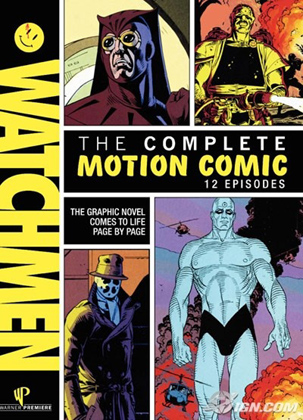 ICV2 reports that the motion comic version of Watchmen, sort of a comic book on tape, with video reminiscent of those 1960s Spider-Man cartoons, is set for DVD release soon.
I have the motion comics downloaded to my ipod and find them fascinating. They're well-done, my only criticism is that there is one narrator for all parts, even the women, but the guy is good.
However, they don't stand up to the original text. I had the opportunity to compare some scenes from the book to their equivalents in the motion comic with students in my "Teaching the Graphic Novel" course, and it was clear this format can't capture the intricate intertextuality of the source material.
An excellent example of this comes in Chapter I, after Dan leaves Hollis. The "Obsolete Models" sign gets a lot of attention as a signifier in the comic, but even though it sways back and forth in the wind in the motion comic, one can't read the entirety of its text, meaning that unless one has already read the graphic novel, one is probably not going to catch on to this layer of meaning.
Also, none of the print sections at the end of each chapter are reproduced in the motion comic, so those nuances are lost as well.
The dissonance between these two texts has me a little more anxious about the movie, of course. But, I'm very happy to have these multiple textual iterations of Watchmen coming available soon. I do not know if I'll buy the motion comics DVD, since I've already got them, but I will get the DVD of the film so I can compare and contrast the various forms on my own and with my students.
Praise and award Nod for YA GN _Swallow Me Whole_
 The Beat reports that Swallow Me Whole, a graphic novel by Nate Powell, is the first GN since Maus to be honored for the LA Times Book Prize.
From a quoted source: "The book follows two teenage stepsiblings, Ruth and Perry, through the ups and downs of school, family, and suburban restlessness — all complicated by the insect armies, swirling visions, and haunting voices that no one else can perceive..."
For the full story, click the title to this post.
As for me, looks like I got a book to add to my reading list!
Monday, March 02, 2009
Quoted on Watchmen Movie in New York Daily News
Another one of those instances where a 30 minute conversation comes down to one line, but it's cool to be mentioned in the New York Daily News, especially about a text that I love sooooo much! For the record, I did express to the reporter that I think the Watchmen movie will rock.
Saturday, February 28, 2009
Almost Back from Write to Learn
So the snow caught up with me in Camdenton, MO, and I had to reschedule my flight, but I did enjoy my time at the nearby Tan-Tar-A Resort for the Write to Learn Conference. I had a small but typical crowd as far as personalities go, and I especially liked meeting Nick from Mizzou who was doing another comics-related seminar later in the day (sorry I didn't make it to yours, Nick, I got the "crud" and ended up sleeping most of the afternoon) and plans on doing his dissertation work on sequential art. Maybe I'll eventually convince him to use "panels" instead of "frames" for his terminology (what are you, studying Iser or something? ;) ), but I wish him the best in his studies!
Tuesday, February 24, 2009
Job Posting: Want to Write Educational Comics?
Thanks to Beth D. for sharing this posting from H-Net.org. Looks like the educational comics field continues to expand!
EZ COMICS - AP History Teacher- Content Writer for Second World War covered in AP US History and AP World History
Location: Rhode Island, United States
Institution Type: Other Position Type: Temporary
Submitted: Friday, February 13th, 2009
Main Category: U.S. History
Secondary Categories:
World History
INTRODUCTION :EZ Comics ( www.ezcomics.com) , is a Rhode Island based learning and education company with the focus on making fun and creative comics for students with History as the subject. The firm has three comic books so far based on different events and important figures and personalities from the US History.
SCOPE :EZ Comics invites applications for AP US and AP World History teacher /researcher in the field of US History to produce a specification document that includes any or all objective and subjective based questions for the topic 'Second World War' that is covered in the both the above mentioned exams.We seek candidates whose research and teaching interests may focus on�but are not limited to�the following areas as per the curriculum outline in the AP US History and AP World History Exam. From AP US History:21. The Second World Wara.The rise of fascism and militarism in Japan, Italy, and Germanyb. Prelude to war: policy of neutralityc.The attack on Pearl Harbor and United States declaration of ward. Fighting a multifront ware.Diplomacy, war aims, and wartime conferencesf. The United States as a global power in the Atomic AgeFrom AP World History:E. 1914 CE to present4. Compare the effects of the World War II on areas outside of Europe.
PURPOSE :This specification document will be used to used to create content for the comic book based on 'Second World War' , keeping in mind the objective of the AP curriculum, that can specifically address the exam questions in the document and in return help students prepare for the AP Exams.
DELIVERABLES:
Deliverable No. 1
INPUT
Candidates should be able to find all the relevant resources pertaining to the Second World War with its scope to the AP US History and AP World History Exam in order to produce the document. The resources will include text books, exam books , sample exams and other such material available.
For example :
a. Cracking the AP World History Exam, 2009 Edition, Princeton Review Chapter 10 :Recent Stuff- Around 1914 to the Present , Pg 243-252
b. Cracking the AP US History Exam, 2009 Edition,Princeton ReviewChapter 13: The Early Twentieth Century, Pg 159-165
Deliverable No. 2
OUTPUT
The document will include all the types of questions tested on the exam such as MCQs, DBQs, Free Response questions that cover the Second World War on both the AP US History and AP World History.The document should include as many questions as it may require to fully cover the wider scope of the exam topic mentioned and that will help a student take the AP Exam. At the minimum the document should includeMCQS : 1000DBQS: 200Free Response Questions: 200
Some examples of questions tested in the AP exam on the Second World War are......
[I don't want to step on H-Net's toes by coping the entire post. Follow the link in the blog post title for complete info]
......Contact Info: Mehul MaldeEmail: mehulmalde@gmail.com
Website: http://www.ezcomics.com
EZ COMICS - AP History Teacher- Content Writer for Second World War covered in AP US History and AP World History
Location: Rhode Island, United States
Institution Type: Other Position Type: Temporary
Submitted: Friday, February 13th, 2009
Main Category: U.S. History
Secondary Categories:
World History
INTRODUCTION :EZ Comics ( www.ezcomics.com) , is a Rhode Island based learning and education company with the focus on making fun and creative comics for students with History as the subject. The firm has three comic books so far based on different events and important figures and personalities from the US History.
SCOPE :EZ Comics invites applications for AP US and AP World History teacher /researcher in the field of US History to produce a specification document that includes any or all objective and subjective based questions for the topic 'Second World War' that is covered in the both the above mentioned exams.We seek candidates whose research and teaching interests may focus on�but are not limited to�the following areas as per the curriculum outline in the AP US History and AP World History Exam. From AP US History:21. The Second World Wara.The rise of fascism and militarism in Japan, Italy, and Germanyb. Prelude to war: policy of neutralityc.The attack on Pearl Harbor and United States declaration of ward. Fighting a multifront ware.Diplomacy, war aims, and wartime conferencesf. The United States as a global power in the Atomic AgeFrom AP World History:E. 1914 CE to present4. Compare the effects of the World War II on areas outside of Europe.
PURPOSE :This specification document will be used to used to create content for the comic book based on 'Second World War' , keeping in mind the objective of the AP curriculum, that can specifically address the exam questions in the document and in return help students prepare for the AP Exams.
DELIVERABLES:
Deliverable No. 1
INPUT
Candidates should be able to find all the relevant resources pertaining to the Second World War with its scope to the AP US History and AP World History Exam in order to produce the document. The resources will include text books, exam books , sample exams and other such material available.
For example :
a. Cracking the AP World History Exam, 2009 Edition, Princeton Review Chapter 10 :Recent Stuff- Around 1914 to the Present , Pg 243-252
b. Cracking the AP US History Exam, 2009 Edition,Princeton ReviewChapter 13: The Early Twentieth Century, Pg 159-165
Deliverable No. 2
OUTPUT
The document will include all the types of questions tested on the exam such as MCQs, DBQs, Free Response questions that cover the Second World War on both the AP US History and AP World History.The document should include as many questions as it may require to fully cover the wider scope of the exam topic mentioned and that will help a student take the AP Exam. At the minimum the document should includeMCQS : 1000DBQS: 200Free Response Questions: 200
Some examples of questions tested in the AP exam on the Second World War are......
[I don't want to step on H-Net's toes by coping the entire post. Follow the link in the blog post title for complete info]
......Contact Info: Mehul MaldeEmail: mehulmalde@gmail.com
Website: http://www.ezcomics.com
Monday, February 23, 2009
Make some Comics at MakeBeliefsComix.com
Along with applications like pixton and toondoo, MakeBeliefsComix lets students become cartoonists instantly via panel layout, character, and balloon selection. It's a fun site, and it is absolutely free with no strings attached. Definitely worth looking into for making your own cartoons or for getting your kids composing!
Recently, Google and UNESCO selected the site as one of the world's most innovative in encouraging reading and literacy. Educators who teach literacy and ESL students are using it in 180 countries. In addition to English, the site accepts text in Spanish, French, Italian, German, Portuguese and Latin. Join in on the fun, why don't ya?!?
Recently, Google and UNESCO selected the site as one of the world's most innovative in encouraging reading and literacy. Educators who teach literacy and ESL students are using it in 180 countries. In addition to English, the site accepts text in Spanish, French, Italian, German, Portuguese and Latin. Join in on the fun, why don't ya?!?
Review of _Luke on the Loose_
 Harry Bliss' first comic book is the tale of a rambunctious young boy who escapes his father's grasp at the park and then seemingly involves half of New York in his pursuit of pigeons through the boroughs. Apparently lighter than air and easily able to give chase, Luke is eventually rescued by city firemen after he falls asleep on a water tower atop one of Ne York's many brownstones. The ultimate result for Luke is that he becomes one of those leashed children the next time he goes to the park with his father, who doesn't change his own chatty behavior that led to him losing his son in the first place. Luke is his father's son, as he too tries to continue his chase from the day before. It's not there, but it is easy to visualize foam gathering at the corner of his mouth as he attempts to restart his antics.
The book is entertaining. Kids will enjoy seeing Luke cause tons of disruptions as he maintains his singularity of mind. Parents may want to discuss how lucky Luke is not to get hurt in his story. Fun but not fabulous, this Toon Books text should make for interesting reading and good discussion between small children and parents nonetheless.
Grown readers may see a little bit of Linus, Little Nemo and Curious George, even Barnaby, in the story, but whereas this text might remind one of those classic characters and storylines, Luke on the Loose does not rise to their level. Luke is going to need several more well-formed adventures with clearly developed beginnings, middles, and ends before he can think of being elevated to classic status.
Review of _Benny and Penny in The Big No-No_
 Geoffrey Hayes' latest Benny and Penny book features the two cuddly mice siblings trying to discern the identity and nature of the new kid next door. After some misplaced notions of ownership and threat are worked out, the three become fast friends. And there's a mud fight thrown in too!
Cute, sweet, and true to the capricious nature of very young children, the Toon Books release is charming and prettily rendered. This is the type of book parents and children should enjoy together in a rocking chair and is a great text for practicing say-back comprehension after several readings.
Article in Educational Leadership 66(6)
Check out my article in the March 09 edition of Educational Leadership. Sure, they put the graphic novel article in an issue with 3 sixes associated with it, but it is not a bad read. I finally got some things off my chest about how some perceive GN's, and I tried to move us beyond the "define then give examples" stage, though I still had to do some of that too.
The article was retitled "Going Graphic: Understanding what graphic novels are -- and aren't -- can help teachers make the best use of this literary form." The phrase "going graphic" is one of many graphic novel article title cliches, unfortunately, but besides that, I was happy with the tightness of the copy editing, etc. And they added pictures, which really made it pop.
It's pretty cool to be in a journal with James Gee, Howard Gardner, Michael Levine, etc. And this publication focuses on principal types, which represent a powerful but less-frequently targeted audience when it comes to getting educators thinking about sequential art in the classroom.
The article was retitled "Going Graphic: Understanding what graphic novels are -- and aren't -- can help teachers make the best use of this literary form." The phrase "going graphic" is one of many graphic novel article title cliches, unfortunately, but besides that, I was happy with the tightness of the copy editing, etc. And they added pictures, which really made it pop.
It's pretty cool to be in a journal with James Gee, Howard Gardner, Michael Levine, etc. And this publication focuses on principal types, which represent a powerful but less-frequently targeted audience when it comes to getting educators thinking about sequential art in the classroom.
Thursday, February 19, 2009
Best Thing Ever or Sign of the End Times?
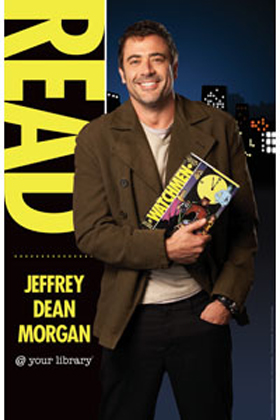 ICV2 Reports:
The American Library Association is offering a Watchmen-themed “Read” poster featuring Jeffrey Dean Morgan (The Comedian in the Watchmen film), Watchmen-style graphic design, and the cover of the book. It’s selling the 22” x 34” poster for $16.00. This is one more indication of the breadth of the Watchmen phenomenon and its uses in promoting graphic novels.
ALA has in the past partnered with manga producers (see “ALA Poster Features Manga”), Marvel, and DC for posters.
This is truly something I never thought I would see. I'm proud and also sort of amused in a sort of "best thing ever sort of way." I'm happy to know that this poster will probably make it into high schools across the country. I know some folks have been teaching Watchmen at the high school level. Hopefully, more will now.
On the other hand, they chose the actor who plays one of the more despicable characters from the book. J.D. Morgan here plays the amoral Comedian, a rapist, chauvinist, and cold-blooded murderer. "Hey kids, meet me in the stacks at your local library!" See how one can read this as more an April Fool's Day joke than a legitimate story? But, it appears to be reality, adding an even more wonderful but somehow disconcerting element to it.
Inside reference to those who have read Watchmen: Question: Would you actually ever meet the Comedian in the stacks of your local library? Answer: "Only once."
Tuesday, February 17, 2009
Phew! What a Night! Lawler, Portillo, Nitz, ETC Rock the House!
Thanks to my guests and to the great crowd for tonight's "El Paso in the Comics" event. Hopefully we can do more events like it in the future. I collected many business cards and samples and will look over each one in due time. I want to give a special thanks to those who had to do some border crossing to get there and who were very kind not to correct my Spanish when I said "Gracias para su ayuda" when I should have said "Gracias para su trabaja" or something that more directly translated into "thank you for your work."
I'm tuckered out, so I'll write more on it later. If you see Lawler, Portillo, and nitz at the bar tonight, buy'em a drink! Nitz'll take a vodka and redbull.
I'm tuckered out, so I'll write more on it later. If you see Lawler, Portillo, and nitz at the bar tonight, buy'em a drink! Nitz'll take a vodka and redbull.
Monday, February 16, 2009
Hangin' With Jai Nitz
Jai Nitz, award-winning comics writer and scribe of series like El Diablo and Blue Beetle, is in town and ready to take El Paso by storm! His first official capacity will be speaking with my "Teaching the Graphic Novel" graduate class tonight before visiting a local high school tomorrow and giving his big talk later in the evening. Jai is smart, gregarious, and broad-minded, so I predict a huge success between now and his return to his hometown! :)
Updates as things develop!
Updates as things develop!
Sunday, February 15, 2009
Revelation on Tedious Topic Related to Teaching GN's
Today I was mulling over the "research" questions people always ask me about teaching graphic novels. I find myself saying many of the same things over again when I talk to people about comics in the classroom -- "graphic novel" is a fine term to use; "sequential art narrative" is even better; there's nothing wrong with calling them "comics;" they're a form or medium, not a genre; Will Eisner did not actually coin the term "graphic novel" in 1977 -- and when they ask about the research, I often inform folks that people have been studying comic strips and comic books in terms of education and literacy since at least the 1930s*.
I have my sources I quote, etc., but now I'm thinking I need to take a different strategy.
"Question: What does the research say about how effective using comics in the classroom is?"
"Answer: What does the research say about how effective using poetry/American Literature/Shakespeare/etc is?"
See, we don't have much quantifiable evidence that teaching Othello or The Bluest Eye or Of Mice and Men or The Catcher in the Rye or Beowulf improves students' literacy skills. If we focus solely on these texts or their larger forms or genres, we're essentially in the same boat as we are with graphic novels: we have tons of anecdotal evidence and personal experience from practicing teachers that show literacy and ELA skills and critical thinking skills can be engaged and seemingly improved via interaction with these texts. But, when it comes to NCLB quantitative data, not so much.
What we do have is data on how effective different teaching strategies can be. So, I'm thinking maybe we've been asking the wrong questions, and I've been giving the wrong answers.
It's a crapshoot whether texts teach independently, since in that case everything is completely dependent on reader variables. But when a well-trained and informed teacher utilizes good strategies to teach students a text, things can change. I am absolutely sure this holds true with any text. Don't believe me? Look at what Michael Bitz has done with The Comic Book Project, or what Nancy Frey and Doug Fisher have done with their students, or what I've talked about upon working with mine.
So, I'm thinking that the more important thing to tell teachers is not just to look at what the research says specifically on teaching comics, but to think about the gaps in evidence we have for the effectiveness of every text in our curriculum, and to think about what makes learning happen: it isn't the book or work itself so much, but the way the teacher and students interact with the texts and with one another. Whether we're dealing with ol' Shagstaff or Craig Thompson, the ans wer has always been in the how, not necessarily the what.
* This longevity is evidence to me that though the popularity of considering comics int he classroom may eventually lessen, as education does seem to be a field of trends -- it will never completely dissolve. Fads don't last 70+ years.
**The more I consider research vs. practical experience, the more frustrated I become. I certainly understand the need for solid qualitative and quantitative work related to teaching, but we can't dismiss auto/ethnographic stories of experience. As I learn more about the competitive world and fissures of educational and professional philosophies, the more I seem to think that the problem with anecdotal evidence is that it comes from the individual.
Think on it: I can tell my story about how comics influenced my reading development and how they seemed to engage my students, and so can scores others, but there are still many who will say that personal anecdotes aren't strong enough evidence. However, if we all tell our stories to a researcher, and they write up our stories and triangulate the data, it gains more respect. It is vetted. Now, if someone can somehow quantify the triangulated variables and run ANCOVA's or ANOVA's or whatever on it, those results are even more impressive.
All research is flawed, regardless of methodology. Useful, but flawed. But when it comes to anecdotal evidence, I wish we'd just cut the crap and say, "The reason it isn't compelling is because your story coming from you doesn't help me get tenured/published." As for practicing teachers, knowing the charades associated with academic careerism, ideological alignment's place in academic careerism, and the inherent falliblilities of each type of research may be just as important as focusing on research-based practices.
I have my sources I quote, etc., but now I'm thinking I need to take a different strategy.
"Question: What does the research say about how effective using comics in the classroom is?"
"Answer: What does the research say about how effective using poetry/American Literature/Shakespeare/etc is?"
See, we don't have much quantifiable evidence that teaching Othello or The Bluest Eye or Of Mice and Men or The Catcher in the Rye or Beowulf improves students' literacy skills. If we focus solely on these texts or their larger forms or genres, we're essentially in the same boat as we are with graphic novels: we have tons of anecdotal evidence and personal experience from practicing teachers that show literacy and ELA skills and critical thinking skills can be engaged and seemingly improved via interaction with these texts. But, when it comes to NCLB quantitative data, not so much.
What we do have is data on how effective different teaching strategies can be. So, I'm thinking maybe we've been asking the wrong questions, and I've been giving the wrong answers.
It's a crapshoot whether texts teach independently, since in that case everything is completely dependent on reader variables. But when a well-trained and informed teacher utilizes good strategies to teach students a text, things can change. I am absolutely sure this holds true with any text. Don't believe me? Look at what Michael Bitz has done with The Comic Book Project, or what Nancy Frey and Doug Fisher have done with their students, or what I've talked about upon working with mine.
So, I'm thinking that the more important thing to tell teachers is not just to look at what the research says specifically on teaching comics, but to think about the gaps in evidence we have for the effectiveness of every text in our curriculum, and to think about what makes learning happen: it isn't the book or work itself so much, but the way the teacher and students interact with the texts and with one another. Whether we're dealing with ol' Shagstaff or Craig Thompson, the ans wer has always been in the how, not necessarily the what.
* This longevity is evidence to me that though the popularity of considering comics int he classroom may eventually lessen, as education does seem to be a field of trends -- it will never completely dissolve. Fads don't last 70+ years.
**The more I consider research vs. practical experience, the more frustrated I become. I certainly understand the need for solid qualitative and quantitative work related to teaching, but we can't dismiss auto/ethnographic stories of experience. As I learn more about the competitive world and fissures of educational and professional philosophies, the more I seem to think that the problem with anecdotal evidence is that it comes from the individual.
Think on it: I can tell my story about how comics influenced my reading development and how they seemed to engage my students, and so can scores others, but there are still many who will say that personal anecdotes aren't strong enough evidence. However, if we all tell our stories to a researcher, and they write up our stories and triangulate the data, it gains more respect. It is vetted. Now, if someone can somehow quantify the triangulated variables and run ANCOVA's or ANOVA's or whatever on it, those results are even more impressive.
All research is flawed, regardless of methodology. Useful, but flawed. But when it comes to anecdotal evidence, I wish we'd just cut the crap and say, "The reason it isn't compelling is because your story coming from you doesn't help me get tenured/published." As for practicing teachers, knowing the charades associated with academic careerism, ideological alignment's place in academic careerism, and the inherent falliblilities of each type of research may be just as important as focusing on research-based practices.
Tuesday, February 10, 2009
Full Text of Education Week Article on Comics and Literacy
Thanks to AE for helping me find this link!
Coverage "El Paso in the Comics" in the El Paso Times
Thanks to Doug Pullen and the El Paso Times for giving us some coverage of our speaker series even scheduled for Tuesday February 17 at the UTEP library!
Sunday, February 08, 2009
New Column on Comics and Academia

Comixology has Karen Green, Columbia University Classics Librarian and Graphic Novel selector, doing a column on graphic novels in academia, which apparently means k-16 for her. It's a decent column.
Friday, February 06, 2009

Thursday, February 05, 2009
I Can't Wait for This to Come out! Bring on the _Deluge_!!!
Press Release from Pantheon:
AMAZING EARLY BUZZ FOR A.D.!
Josh Neufeld's debut A.D.: New Orleans After the Deluge (Pantheon Books, August 18, 2009) will be front and center at New York Comic Con Tomorrow: "Comics and New Media" a panel discussion featuring Josh Neufeld (author), Jeff Newelt (senior editor of Smith Magazine, Kate Lee (agent at ICM) and Pantheon's very own Lisa Weinert Friday, February 6 3:30 PM to 4:30 PM Jacob Javits Center (644 West 34th Street).
Anyone with a badge can swing by. If you're unable to attend the convention, worry not! We'll be taping the panel and sending you the links to it here.
Looking for more of Josh and A.D.: New Orleans After the Deluge? Check out these great online resources:
Watch a feature on the making of A.D.
Read Josh Neufeld's blog
See A.D. on Smith Magazine
Watch a feature on the making of A.D.

Read Josh Neufeld's blog
See A.D. on Smith Magazine
I soooooo want this book now!!
Scool Library Journal Covers the Recent NYC Graphica Conference
 Here's Marshall George, Ph.D. offering me the first Excellence in Graphica in Education Award. The photo is from the School Library Journal's online coverage of the event, which is very positive and clearly illustrates the energy that was at Fordham on that cold but clear and sunny day in NYC.
The article mentions me quoting from information found in Stephen Krashen's The Power of Reading, 2nd edition, which has a section on comics research that is must-read material for anyone interested in comics and literacy.
I don't look half-bad for someone whose dry cleaners gave him pants that were two sizes too small but who didn't realize it until the day of the conference! And under that open collar? A Superman t-shirt.
If You're in El Paso 2/16-2/18, Check it Out!
Sponsored by the UTEP English Department and English Education Committee:
Not only is there an underground comic book scene in El Paso, but the Sun City has its very own super-hero!
On Tuesday, February 17, The UTEP English Department will host “El Paso in the Comics,” a presentation featuring two local comics writers and keynoted by Jai Nitz, DC Comics writer and writer of the All-Spanish issue of the super-hero series Blue Beetle, which is set in El Paso. The event will be in the Blumberg Auditorium from 6:30-8:30. Admission is free.
James Bucky Carter, Assistant Professor of English Education and comics scholar, will moderate the event. He and Nitz will be joined by Jaime Portillo and Julian Lawler, local comics creators who will speak about how the Border Region is influencing their current and upcoming comics projects.
“Proximics is an interesting thing to study in comics,” says Carter, who is writing the Blue Beetle entry for an upcoming revision of an encyclopedia on comic books. “In super-hero comics, and in DC comics in particular, it is common for heroes to work on macro levels and be based in cities that are stand-ins for actual metropolitan areas. Think Gotham for Batman or Metropolis for Superman. Both are stand-ins for New York. Often, the less populace the home base for the hero, the less serious he or she is taken as a major player on the hero scene. For a DC series to feature a prominent hero in a named city like El Paso says some interesting and exciting things about our region and how it may be viewed in comics and to the comics industry.”
Jaime Reyes is the teenage alter-ego of the most recent Blue Beetle. He is of Hispanic origin and attends El Paso High. The series has dealt with issues such as immigration, border patrol, and border trafficking.
Nitz will speak about writing Blue Beetle #26. Portillo will discuss his recent mature-readers graphic novel Gabriel, in which a vampire is responsible for many of the murders in Juarez, and Lawler will discuss an upcoming project that deals with the issues of voicelessness and violence in the Border Region.
Nitz will also speak to several classes at UTEP and to area high school students during his stay in El Paso. He will also do a signing at Dave’s comics and Paintball on February 18 from 11:00-1:00.
Bios:
Jai Nitz is a Hispanic comic book writer from Lawrence, Kansas. He won the Xeric grant for self-publishing in 2003 for his pulp-inspired anthology, Paper Museum. He won the prestigious Stoker Award for best writer of illustrated narrative in 2004 for Heaven’s Devils from Image Comics. Most recently Nitz wrote Blue Beetle #26, the first all-Spanish comic from DC Comics, showing the adventures of El Paso’s native superhero. Nitz is currently writing the Southwest-set El Diablo for DC. Nitz has written for DC, Marvel, and Image comics, working on characters from Batman to the Fantastic Four to Hellboy.
Jaime “Jimmy” Portillo was born and raised in El Paso, TX. He began his college education at EPCC and continued on at UTEP, where he received a B.A. in History (2002) and Chicano Studies (2005). Jaime released his first book in 2008 titled, GABRIEL, a vampire graphic novel that takes place in El Paso and Juarez. This story received the prestigious Xeric Foundation grant. GABRIEL has gone on to become a highly critically acclaimed book. He is currently collaborating with Arturo Delgado Molina and Dany Morales of Juarez, Mexico’s, DEATH MOON COMICS. He is thankful for the support he has received from his fiancée Maribel Cisneros, his parents, Enrique and Estela, family, and friends.
Julian Lawler is an El Paso native, born and raised in the desert southwest. He received his B.A with a double major in American Literature and Anthropology from the University of Texas at El Paso in 2008. He has been editor-in-chief of Broken Tree Publications since 1999. He has published numerous comic books including Industriacide, Prophet of Dreams, Zodiac, and the underground comic book Triangle Man. Industriacide #1 was critically proclaimed as "Certified Cool," and labeled breakthrough in the field of comic books. Prophet of Dreams #3 received a "Spotlight On" distinction, which is a recommendation for readers to take a look. He plans to release a new comic book series titled Superheroes, Inc. in 2009, a book that focuses on the El Paso/Juarez area. Julian Lawler has also had several poems published in the Crysalis and the Rio Grand Review. He has published literary criticisms on Bewilderingstories.com as well as a pair of fantasy novels, Prophet of Dreams and Nightland.
Not only is there an underground comic book scene in El Paso, but the Sun City has its very own super-hero!
On Tuesday, February 17, The UTEP English Department will host “El Paso in the Comics,” a presentation featuring two local comics writers and keynoted by Jai Nitz, DC Comics writer and writer of the All-Spanish issue of the super-hero series Blue Beetle, which is set in El Paso. The event will be in the Blumberg Auditorium from 6:30-8:30. Admission is free.
James Bucky Carter, Assistant Professor of English Education and comics scholar, will moderate the event. He and Nitz will be joined by Jaime Portillo and Julian Lawler, local comics creators who will speak about how the Border Region is influencing their current and upcoming comics projects.
“Proximics is an interesting thing to study in comics,” says Carter, who is writing the Blue Beetle entry for an upcoming revision of an encyclopedia on comic books. “In super-hero comics, and in DC comics in particular, it is common for heroes to work on macro levels and be based in cities that are stand-ins for actual metropolitan areas. Think Gotham for Batman or Metropolis for Superman. Both are stand-ins for New York. Often, the less populace the home base for the hero, the less serious he or she is taken as a major player on the hero scene. For a DC series to feature a prominent hero in a named city like El Paso says some interesting and exciting things about our region and how it may be viewed in comics and to the comics industry.”
Jaime Reyes is the teenage alter-ego of the most recent Blue Beetle. He is of Hispanic origin and attends El Paso High. The series has dealt with issues such as immigration, border patrol, and border trafficking.
Nitz will speak about writing Blue Beetle #26. Portillo will discuss his recent mature-readers graphic novel Gabriel, in which a vampire is responsible for many of the murders in Juarez, and Lawler will discuss an upcoming project that deals with the issues of voicelessness and violence in the Border Region.
Nitz will also speak to several classes at UTEP and to area high school students during his stay in El Paso. He will also do a signing at Dave’s comics and Paintball on February 18 from 11:00-1:00.
Bios:
Jai Nitz is a Hispanic comic book writer from Lawrence, Kansas. He won the Xeric grant for self-publishing in 2003 for his pulp-inspired anthology, Paper Museum. He won the prestigious Stoker Award for best writer of illustrated narrative in 2004 for Heaven’s Devils from Image Comics. Most recently Nitz wrote Blue Beetle #26, the first all-Spanish comic from DC Comics, showing the adventures of El Paso’s native superhero. Nitz is currently writing the Southwest-set El Diablo for DC. Nitz has written for DC, Marvel, and Image comics, working on characters from Batman to the Fantastic Four to Hellboy.
Jaime “Jimmy” Portillo was born and raised in El Paso, TX. He began his college education at EPCC and continued on at UTEP, where he received a B.A. in History (2002) and Chicano Studies (2005). Jaime released his first book in 2008 titled, GABRIEL, a vampire graphic novel that takes place in El Paso and Juarez. This story received the prestigious Xeric Foundation grant. GABRIEL has gone on to become a highly critically acclaimed book. He is currently collaborating with Arturo Delgado Molina and Dany Morales of Juarez, Mexico’s, DEATH MOON COMICS. He is thankful for the support he has received from his fiancée Maribel Cisneros, his parents, Enrique and Estela, family, and friends.
Julian Lawler is an El Paso native, born and raised in the desert southwest. He received his B.A with a double major in American Literature and Anthropology from the University of Texas at El Paso in 2008. He has been editor-in-chief of Broken Tree Publications since 1999. He has published numerous comic books including Industriacide, Prophet of Dreams, Zodiac, and the underground comic book Triangle Man. Industriacide #1 was critically proclaimed as "Certified Cool," and labeled breakthrough in the field of comic books. Prophet of Dreams #3 received a "Spotlight On" distinction, which is a recommendation for readers to take a look. He plans to release a new comic book series titled Superheroes, Inc. in 2009, a book that focuses on the El Paso/Juarez area. Julian Lawler has also had several poems published in the Crysalis and the Rio Grand Review. He has published literary criticisms on Bewilderingstories.com as well as a pair of fantasy novels, Prophet of Dreams and Nightland.
Tuesday, February 03, 2009
My First Award as a Tenure-Track Scholar!
At the inaugural Graphica in Education conference in NYC this weekend, I was honored to receive the first-ever Fordham GSE Graphica Excellence in Education Award for my work on helping teachers understand how and why comics and graphic novels can be used in the classroom. I've got a nice certificate coming my way and everything!
I appreciate the award, but having my name called while sitting next to Michael Bitz was a little tough, as when the conference organizers told me a few days before the conference that they'd need me to stick around to help with an award, I assumed they wanted my input on who should win it and I actually mentioned Dr. Bitz as the first person who came to mind due to his excellent work with the Comic Book Project. So, in my mind, I'm sharing it with him, with hopes that he'll get his own flashy certificate as the conference grows in future years.
I can't wait to share the news with my colleagues at UTEP, and if I can, I'll post pix and press reviews of the conference as they become available.
I appreciate the award, but having my name called while sitting next to Michael Bitz was a little tough, as when the conference organizers told me a few days before the conference that they'd need me to stick around to help with an award, I assumed they wanted my input on who should win it and I actually mentioned Dr. Bitz as the first person who came to mind due to his excellent work with the Comic Book Project. So, in my mind, I'm sharing it with him, with hopes that he'll get his own flashy certificate as the conference grows in future years.
I can't wait to share the news with my colleagues at UTEP, and if I can, I'll post pix and press reviews of the conference as they become available.
Monday, February 02, 2009
Thanks to NYC for a Great Trip!
Thanks to Fordham University, especially Professor George and soon-to-be Professor Kelley, to Diamond and the other sponsors of the recent Graphica Conference. I enjoyed my time there, was thrillled to give the keynote, learned a lot of neat things from presenters, the crowd, and the speakers, and was overwhelmed to have been presented with an award at the end of the day.
It was also nice to meet many folks for the first time and to reconnect with others. If you're reading, I'll be following up on our conversations in the coming days and weeks! I hesitate to say "it was especially an honor to meet" because I was honored to meet everyone who stopped by to say hello or who had a part in the conference. Here's hoping the conference becomes known as much for building connections among teachers and scholars and publishers as it does for being a major "first."
It was also nice to meet many folks for the first time and to reconnect with others. If you're reading, I'll be following up on our conversations in the coming days and weeks! I hesitate to say "it was especially an honor to meet" because I was honored to meet everyone who stopped by to say hello or who had a part in the conference. Here's hoping the conference becomes known as much for building connections among teachers and scholars and publishers as it does for being a major "first."
Wednesday, January 28, 2009
How Long Did it Take the Media to Exploit Obama's Comics Fandom?
Not long. Fun fake story, though. I'd like to think I would have gotten the comics reference, but I was never a big Conan reader.
Survey: Help Pubs See We need Quality
From ICV2, NYCC, and BEA:
ICv2, New York Comic Con, and Book Expo America are conducting a survey of retailers, librarians, and educators on graphic novels. Your answers will help publishers and others in the business support graphic novels in ways that serve you better. The survey will only take a few minutes to complete. Thanks much for your help!
Click the embedded link in the title to this post to take the survey.
ICv2, New York Comic Con, and Book Expo America are conducting a survey of retailers, librarians, and educators on graphic novels. Your answers will help publishers and others in the business support graphic novels in ways that serve you better. The survey will only take a few minutes to complete. Thanks much for your help!
Click the embedded link in the title to this post to take the survey.
Sunday, January 25, 2009
January 31: 1st Ever Graphica Conference!


Join me, Jessica Abel, Michael Bitz, Jon Scieszka and many others as we discuss comics and graphic novels in education at the first-annual Graphica in Education Conference. Held in conjunction with Fordham University and Diamond Comics, the all-day event is being held in NYC at Lowenstein Center, Lincoln Center Campus, 113 W. 60th St.
I'll be talking about how comics have influenced my life as a literate person and how I first began  using comics in my own classes back when I was a public school tea
 cher in North Carolina. I'll wrap some research around the points I'll make and also suggest where comics in education might go from where we are now. I'm very excited to be joining so many good folks, and early reports suggest we're going to have a great crowd. I hope to see you there!
 using comics in my own classes back when I was a public school tea
 cher in North Carolina. I'll wrap some research around the points I'll make and also suggest where comics in education might go from where we are now. I'm very excited to be joining so many good folks, and early reports suggest we're going to have a great crowd. I hope to see you there!
Friday, January 23, 2009
Jeff Smith does one for Toon Books
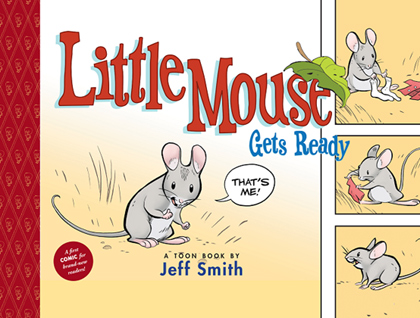 I'd love a review copy of this text, Little Mouse Gets Ready. With an author like Jeff Smith and support from Art Spiegelman (whom you might think would be tired of mice), and his wife, it seems like it would be a quality tale.
I'd also like to see if what I've heard about Toon Books using lexile scores to lure in teachers and parents is true or not. I hope it's not.
I know, I know. If you're an informed educator you're asking yourself "How the hell ---?" Me too.
Thursday, January 22, 2009
Not Sure What to Make of This Conference
"ICv2 has announced that in light of the unique market conditions, it is convening a special panel to discuss the future of the graphic novel industry at the ICv2 Graphic Novel Conference at New York Comic Con. "
I have no idea what that means. There seems to be an undercurrent of doom running through many folks' minds about whether comics can sustain themselves given the current economic climate. But, that conversation has really been going on for the last 20 years, at least.
I'm more interested in what info comes out of this get-together than that it is being held. Will we see industry leaders finally decide that albums/trade paperbacks (titled collected in graphic novel form) are the way to go for most mainstream titles? That'd be a good idea.
Will anyone lament the growing trend of marketing more graphic novels to teachers without regard to quality content or the types of cogent, relevant stories graphic novelists want to tell? Will Art Spiegelman talk about that in his "What the !@##*! Happened to Comics?!" keynote, or will it be more of the same "super-heroes killed the medium" stuff that comics intellectuals often spout? Will digital comics/ web comics be discussed?
In other words, will anything new come out of this conference? If so, will it be smart news? Or, will this just be a more organized conversation about a "crisis" that is ongoing, with its ongoing status being perhaps the best evidence that the crisis is not as destructive to the entire medium of comic art as some think?
My thought to those in the industry is this: the medium will survive whether you do or not. I understand you want to make money and feed your families, of course, but don't miss the forest for the trees by defining the crisis as one that could destroy the form.
I have no idea what that means. There seems to be an undercurrent of doom running through many folks' minds about whether comics can sustain themselves given the current economic climate. But, that conversation has really been going on for the last 20 years, at least.
I'm more interested in what info comes out of this get-together than that it is being held. Will we see industry leaders finally decide that albums/trade paperbacks (titled collected in graphic novel form) are the way to go for most mainstream titles? That'd be a good idea.
Will anyone lament the growing trend of marketing more graphic novels to teachers without regard to quality content or the types of cogent, relevant stories graphic novelists want to tell? Will Art Spiegelman talk about that in his "What the !@##*! Happened to Comics?!" keynote, or will it be more of the same "super-heroes killed the medium" stuff that comics intellectuals often spout? Will digital comics/ web comics be discussed?
In other words, will anything new come out of this conference? If so, will it be smart news? Or, will this just be a more organized conversation about a "crisis" that is ongoing, with its ongoing status being perhaps the best evidence that the crisis is not as destructive to the entire medium of comic art as some think?
My thought to those in the industry is this: the medium will survive whether you do or not. I understand you want to make money and feed your families, of course, but don't miss the forest for the trees by defining the crisis as one that could destroy the form.
Spider-Man Musical an Actual "Go"
The rumors are apparently true. There will be a Spider-Man musical debuting in the next few months. Little known fact: There were plans for a Captain America musical in the late 80s or early 90s. Commentary: There has already been a Spidey musical. It was a feature film entitled Spider-Man 3.
Tales of Vanity and Vengeance! Oscar Wilde Gets the Graphic Novel Treatment
Press Release:  Eureka Productions is pleased to announce the publication of GRAPHIC CLASSICS: OSCAR WILDE, the sixteenth volume in the GRAPHIC CLASSICS series of comics adaptations of great literature.
 Eureka Productions is pleased to announce the publication of GRAPHIC CLASSICS: OSCAR WILDE, the sixteenth volume in the GRAPHIC CLASSICS series of comics adaptations of great literature.
GRAPHIC CLASSICS: OSCAR WILDE features "The Picture of Dorian Gray", Wilde's tale of narcissism and horror, adapted for comics by Alex Burrows and illustrated by Lisa K. Weber. Plus the comic satire "The Canterville Ghost" by Antonella Caputo and Nick Miller, "Lord Arthur Savile's Crime" by Rich Rainey and Rich Tommaso, and an adaptation of Wilde's exotic Biblical play "Salome,"illustrated by Molly Kiely.
GRAPHIC CLASSICS are available in bookstores, comics shops, or direct from the publisher at http://www.graphicclassics.com/.
“These are handsomely-crafted books presenting terrific stories.’”— Tony Isabella, Comics Buyer's Guide
“A splendidly inventive series.” — Malcolm Jones, Newsweek
“In short, every volume is highly recommended.’”— Paul Buhle, Rain Taxi
Wednesday, January 21, 2009
Dale Jacobs' Class Blog
Dale Jacobs is a professor the University of Windsor in Ontario, Canada and a totally awesome comics scholar. He focuses on issues of comics and rhetoric and shares many of my own interests on visual literacy and education. He's teaching a graphic novels-heavy class this semester (as am I) and will have his students guest blog from time to time (as I hope to do as well). He also has many great links, so check out the blog at: http://uwindsorcomics.blogspot.com/
And Dale, if you're reading, maybe we can do some pen-pal blogging between the two classes? :)
And Dale, if you're reading, maybe we can do some pen-pal blogging between the two classes? :)
Best Line Ever!
Now that we've got Obama in the White House, I wanted to take a moment to reflect on my favorite comic over the course of the election. Except, this time it is a comic as in a comedian. Will Forte's Tim Calhoun was a blast and had the best line of the election season:
"My opponents have been using my full name to scare people. Is it my fault that my middle name is 'BOO!'?" CLASSIC!!
"My opponents have been using my full name to scare people. Is it my fault that my middle name is 'BOO!'?" CLASSIC!!
GraphicNovelReporter.com Updates
From editor John Hogan:
.....we are planning our schedule for New York Comic-Con. As always we’re excited about this event, which is a nice distraction from the gray days of winter. Drop me a note and let me know if you plan to attend. We’d love to catch up with our readers there....
It’s no accident that we’re emailing you on Inauguration Day, a day of change, to alert you to the latest updates to our website. There’s lots of new content, including one title of particular interest today: Michael Crowley and Dan Goldman’s retrospective on the tumultuous year of 2008 that is chronicled in their new book, titled quite simply 08. We’ve got an extensive interview with artist Goldman that we’re pretty excited about sharing. My favorite part about the interview wasn’t the political aspect, although that was interesting, but instead Goldman’s views on web comics and independent artistry. Goldman’s done a lot of innovative work in the field, and those looking to explore some of the inner workings of the format will find a lot to learn about here.
This issue we are adding our first content feature for librarians and educators, which also will be enjoyed by new fans of the format. It’s a Glossary of Manga Terms to help the uninitiated get up to speed. If you are already there, share this with a reader you want to convert to the format!
Creator Interviews: Graphic Novel Reporter Talks To...
Dan Goldman is a writer and illustrator best known for the work Shooting War. But now he’s teamed with journalist Michael Crowley to present the story of 08, a year none of us will soon forget. Political jabs, surges in the polls, flubs, gaffes, in-fighting, personal attacks --- the good, the bad, and the ugly are all here. Goldman talks about recreating this potent year, as well as his independent work in the field in a broad-ranging interview.Plus, if you missed them the first time, don’t forget to check out our conversations with these creators:
Art Spiegelman (the award-winning author of Maus and the just-rereleased Breakdowns)
Peter David and Robin Furth (the creative team behind the Dark Tower series)
David Heatley (author of My Brain Is Hanging Upside Down)
Lucy Knisley (author of French Milk)
Jessica Abel and Matt Madden (authors of Drawing Words & Writing Pictures)
Gold (author of Bone)
Click here to see all of our interviews.
Behind the Scenes with Andrew Farago
Each month, Behind the Scenes gives you a look into the mind of someone in the graphic novel field so you can see what motivates them to work in the industry. We recently talked to Andrew Farago, the curator of the Cartoon Art Museum in San Francisco, to talk about comics, art, collecting, and more.
Click here to go behind the scenes with Andrew Farago.
Recent Blog Posts
We share news, updates, tips, personal observations, and more. Keep up-to-date by checking our blog entries.Watchmen: It's Back On!by John Hogan Homeward Boundby John Hogan
Click here to read the GraphicNovelReporter.com blog.
Books Into Movies
We're lucky enough to be living in the age of the graphic novel-inspired movie. We spotlight not just theater releases, but also what’s out on DVD based on graphic works. Mark your calendar accordingly.
Click here to read our Books Into Movies feature.
Fiction Reviews
From great science fiction to compelling drama to aching romance, dozens of reviews of top fiction titles are now online.
Ral & Grad
Loveless
Yozakura Quartet
Hellboy, Volume 1
Black Hole
Click here to see all our fiction reviews.
Nonfiction Reviews
We call the format graphic novels, but that doesn't mean there isn't room for nonfiction. In fact, some of the best books in the field are memoirs from top artists and writers.
Embroideries
The Big Skinny
The 9/11 Report: A Graphic Adaptation
Blankets
Our Cancer Year
See all our nonfiction reviews here.
Reference Reviews
It’s easy to learn more about the graphic novel format, but best of all, it can be entertaining and fun. We’ve got books to suggest that will share the things you need to know without being dry or dull; in fact, they’re riveting! Here are some books to help further your understanding: The Best American Comics 2008, The Ten-Cent Plague, and What It Is.
Click here to read our reference reviews.
Teen Reviews
Teens love graphic novels. We launch with reviews of more than 20 titles.
Honey and Clover
The Arrival
Bleach, Volume 25
Gantz, Volume 1
Legion of Super-Heroes: Enemy Rising
Click here to see all our teen reviews.
Kids Reviews
Hey, kids! We’ve got the books YOU want to read. There's something for everyone.
Gaba Kawa, Volume 1
Emma, Volumes 1–7
The Palette of 12 Secret Colors, Volumes 1 and 2
Rapunzel's Revenge
Laika
Click here to see all the kids' reviews.
Resources
We’re adding new content all the time to better serve our readers. The latest: a glossary of frequently used manga terms. You can admit it: Sometimes it’s hard to keep track of what these words mean. Check here to get up to speed quickly.
Click here to read our roundup of our Best Graphic Novels of 2008.
.....we are planning our schedule for New York Comic-Con. As always we’re excited about this event, which is a nice distraction from the gray days of winter. Drop me a note and let me know if you plan to attend. We’d love to catch up with our readers there....
It’s no accident that we’re emailing you on Inauguration Day, a day of change, to alert you to the latest updates to our website. There’s lots of new content, including one title of particular interest today: Michael Crowley and Dan Goldman’s retrospective on the tumultuous year of 2008 that is chronicled in their new book, titled quite simply 08. We’ve got an extensive interview with artist Goldman that we’re pretty excited about sharing. My favorite part about the interview wasn’t the political aspect, although that was interesting, but instead Goldman’s views on web comics and independent artistry. Goldman’s done a lot of innovative work in the field, and those looking to explore some of the inner workings of the format will find a lot to learn about here.
This issue we are adding our first content feature for librarians and educators, which also will be enjoyed by new fans of the format. It’s a Glossary of Manga Terms to help the uninitiated get up to speed. If you are already there, share this with a reader you want to convert to the format!
Creator Interviews: Graphic Novel Reporter Talks To...
Dan Goldman is a writer and illustrator best known for the work Shooting War. But now he’s teamed with journalist Michael Crowley to present the story of 08, a year none of us will soon forget. Political jabs, surges in the polls, flubs, gaffes, in-fighting, personal attacks --- the good, the bad, and the ugly are all here. Goldman talks about recreating this potent year, as well as his independent work in the field in a broad-ranging interview.Plus, if you missed them the first time, don’t forget to check out our conversations with these creators:
Art Spiegelman (the award-winning author of Maus and the just-rereleased Breakdowns)
Peter David and Robin Furth (the creative team behind the Dark Tower series)
David Heatley (author of My Brain Is Hanging Upside Down)
Lucy Knisley (author of French Milk)
Jessica Abel and Matt Madden (authors of Drawing Words & Writing Pictures)
Gold (author of Bone)
Click here to see all of our interviews.
Behind the Scenes with Andrew Farago
Each month, Behind the Scenes gives you a look into the mind of someone in the graphic novel field so you can see what motivates them to work in the industry. We recently talked to Andrew Farago, the curator of the Cartoon Art Museum in San Francisco, to talk about comics, art, collecting, and more.
Click here to go behind the scenes with Andrew Farago.
Recent Blog Posts
We share news, updates, tips, personal observations, and more. Keep up-to-date by checking our blog entries.Watchmen: It's Back On!by John Hogan Homeward Boundby John Hogan
Click here to read the GraphicNovelReporter.com blog.
Books Into Movies
We're lucky enough to be living in the age of the graphic novel-inspired movie. We spotlight not just theater releases, but also what’s out on DVD based on graphic works. Mark your calendar accordingly.
Click here to read our Books Into Movies feature.
Fiction Reviews
From great science fiction to compelling drama to aching romance, dozens of reviews of top fiction titles are now online.
Ral & Grad
Loveless
Yozakura Quartet
Hellboy, Volume 1
Black Hole
Click here to see all our fiction reviews.
Nonfiction Reviews
We call the format graphic novels, but that doesn't mean there isn't room for nonfiction. In fact, some of the best books in the field are memoirs from top artists and writers.
Embroideries
The Big Skinny
The 9/11 Report: A Graphic Adaptation
Blankets
Our Cancer Year
See all our nonfiction reviews here.
Reference Reviews
It’s easy to learn more about the graphic novel format, but best of all, it can be entertaining and fun. We’ve got books to suggest that will share the things you need to know without being dry or dull; in fact, they’re riveting! Here are some books to help further your understanding: The Best American Comics 2008, The Ten-Cent Plague, and What It Is.
Click here to read our reference reviews.
Teen Reviews
Teens love graphic novels. We launch with reviews of more than 20 titles.
Honey and Clover
The Arrival
Bleach, Volume 25
Gantz, Volume 1
Legion of Super-Heroes: Enemy Rising
Click here to see all our teen reviews.
Kids Reviews
Hey, kids! We’ve got the books YOU want to read. There's something for everyone.
Gaba Kawa, Volume 1
Emma, Volumes 1–7
The Palette of 12 Secret Colors, Volumes 1 and 2
Rapunzel's Revenge
Laika
Click here to see all the kids' reviews.
Resources
We’re adding new content all the time to better serve our readers. The latest: a glossary of frequently used manga terms. You can admit it: Sometimes it’s hard to keep track of what these words mean. Check here to get up to speed quickly.
Click here to read our roundup of our Best Graphic Novels of 2008.
Monday, January 19, 2009
Review of Diary of a Wimpy Kid: The Last Straw
 After seeing all the news stories about the success of Jeff Kinney's series of "novels in cartoons," I decided to try one out. I purchased Diary of a Wimpy Kid: The Last Straw (book three in a soon-to-be 4-book set) this weekend along with some Lil Critter books for my oldest son.
I have to say, they're pretty similar. Both have a penchant for telling part of the story in words, (in the Kinney via diary entries), and the rest, maybe even the "real" story, in pictures. But calling the series hero Gregory a Holden Caulfield, as Kinney has done, is overstating it. Yeah, Greg's self-absorbed and unreliable, but he's much more the every teen/ every tween than I think Holden was ever meant to be. Sure, Caulfield might have helped define a generation of young people, but I'm not sure Greg holds that much substance.
To me, a better comparison for Greg and his wispy ways is Garfield. I absolutely loved Garfield when I was around 8-11, and I think the audience for this series is probably about the same, with some older teens probably liking it too. I laughed at the book's humor, but I think I would have been bowled over in laughter by it when I was younger, same as with Jim Davis' feline. As Greg hides in pile after pile of warm laundry, skooches over a heating vent in his mom's bathrobe for luxurious coziness, finds himself in embarrassing situations and often seems oblivious to anyone's cares but his own, he might as well be the cat without the fat. He has two parents instead of John, an older brother for the bully figures and a little brother for the Nermal role.
Not to judge the series by one book, but this one is cute, fun, and humorous. It's not very deep. I'm not sure scholars will be tracing existentialist themes in the books anytime soon (but I could be wrong), but the power of the series probably comes in Greg being the every-adolescent du jour.
Friday, January 16, 2009
I am so "Yay!"
The Watchmen film controversy appears to be over! That commercial I saw during the NFL playoffs is correct: the movie will debut on March 6th! I've got to get some red paint for my yellow smiley face beachball!!!!!
Wednesday, January 14, 2009
Don't Miss It: Available as a Webcomic Now and Available in Print Soon!

Josh Neufeld's nonfiction account of the lead-up, catastrophe, and aftermath of Hurricane Katrina will be in print soon, but the webcomic is amazing too. This is sure to be an instant classic. As an extra teaser, I know of some good pedagogical work being done with this text right now, and I can't wait till it can be shared with the world!
Tuesday, January 13, 2009
_Diary of a Wimpy Kid_ is a Hit
 Thanks to Heidi at The Beat for bringing this story from USA Today to my attention. Though not exactly a graphic novel -- indeed it describes itself a novel in cartoons (there's a difference) -- the book is close enough to count, and apparently kids love it! Actually, they love the series, as there are now multiple volumes of Jeff Kinney's lovable author-described Caulfieldesque Greg.
Sunday, January 11, 2009
Stone Arch Targets Elementary Readers
Click here and don't skip the last paragraph or you'll miss the essay contest!
Discover Magazine has New Comic Artist on Board!
Comic artist Peter Bagge will bring "A History of Science" to Discover Magazine, according to ICV2. The article also lists a couple other science-related sequential art titles, so check it out and tell the science teacher in your school about it too!
Kirby's ABC's
Funny how things sometimes appear in spurts. Two days after posting on SuperHero ABC, I see this 1998 Kirby's ABC (not by Kirby, but featuring A-Z creations of his, classic characters he helped define, etc.) posted over at the Beat. Click and enjoy! 
Thursday, January 08, 2009
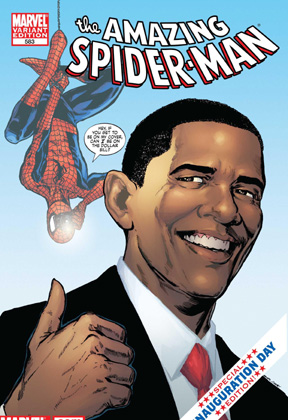

Tuesday, January 06, 2009
SuperHero ABC Reviewed
 As the title implies, this is an alphabet book with each letter represented by a unique super-person, not necessarily anyone we'd know, but the concept is very cool (and similar to something I've been cooking up for a little while now [See my article "Super Heroes and Word Study" in Classroom Notes Plus 25.4 from last summer]). Rebecca Buchanan offers her thoughts on the text.
Kristy Valenti Review 3 Edu-Manga Biographies
More fluid writing and informed opinions from one of Comixology's great columnists, this time focusing on Manga detailing the lives of figures such as Anne Frank, Einstein, and Hellen Keller.
Monday, January 05, 2009
:01 Official Responds to Conjecture About Becoming a Kids Line
Tom Spurgeon, I, and others have recently expressed some concern over a recent business move that transferred :01 to a children's publishing branch of Macmillan. Now, one of the higher-ups has responded to the speculation, saying :01 will continue to publish a range of material. More at the link embedded in this post's title.
Thursday, January 01, 2009
Publishers Weekly Article on Comics in the Classroom
Here's a neat article on how graphic novels and comics are making their way into the classroom. Publishers Weekly necessarily has to focus on market issues and buying/use trends, so I won't be too harsh on the angle taken in the article, but it does represent more evidence of a trend I'm seeing: graphic novels are being marketed more to schools, with issues of quality of the material not necessarily at the top of publishers' priorities.
An argument is made that much of the existing material on teaching graphic novels doesn't really speak to the realities of teachers (the sales numbers for my own book might suggest otherwise), but here's the interesting thing about those who market without putting students' needs first: the market data will inherently be based on the flawed realities of education. Education scholars and many dedicated teachers are actually trying to change the realities of education in America, to move them towards more equitable, justice-oriented contingencies.
Sure, studying the market may yield company profits and maybe even make many teachers happy, but as anyone who studies curriculum in this country knows, too many leaders and teachers are happy to let someone do their "grunt work" for them, and to accept products and product lines and pre-packaged market-driven curricula, but my fear is that graphic novels are going to start being used to further reify the status quo rather than to build real critical literacy.
To that end, I'd like to share some of my own answers when I was interviewed by the article's author (as in the above paragraphs, I've bolded some sections of text).
Do you know of any recent academic studies that have explored comics and their role in the classroom -- particularly on the K-12 level?
Scholars have been studying the connections among literacy and comic art for at least 75 years. George E. Hill published several studies in the 1940s on comics reading. In one, he found a long-standing truism that reading comic strips does not seem to negatively affect vocabulary; if anything, it seems to help. Others over the years have looked at the vocabulary in comics and remarked on their respectable reading level. Shirley Brice Heath, a prominent literacy expert and ethnographer, noted the complexity of vocabulary in the Uncanny X-Men, for example, in a major handbook for teaching the English Language Arts. For a good synthesis of recent comics studies, see Stephen Krashen's The Power of Reading, second edition. In there, you'll find many of the studies that illustrate that reading comics can be a conduit to more and more varied reading. Wertham thought comics were a gateway to delinquency in the 40s and 50s, even though academics were publishing work to discredit his claims (unfortunately they did so in academic journals whereas Wertham was more prone to going to popular magazines, etc. So whose message do you think influenced mainstream America more?). What we also see nowadays is an overwhelming number of studies that suggest we should be making more of visual literacy because we tend to take in and remember more with visual scaffolds, and our eyes process so much more information so much more quickly when viewing than when reading alone. Basically, we're always reading visual clues. So long as we have our eyes open, they're processing bits of data at an amazing rate. I think semiotic theories have also influenced people's notions of reading, but the research on visual comprehension and processing is so compelling, I think folks like myself and others are turning to comics and graphic novels as a means to acknowledge that body of research. So, in some ways, we're applying what researchers are saying about visualization and visual recall to our classrooms and students via graphic novels, though there is more history of comics-and-education-related research than many know.
Although comics seem to have been increasingly embraced by educators in the last several years, how widespread do you believe this acceptance is?
Well, I think it depends on the school, the district, and the state. I have seen many teachers eager to use comics or graphic novels in their classrooms, and when I first started doing so in the late 90s, it was still considered odd in my school. I think the more aware teachers are of growing evidence on how students learn and how visualization helps them do so, the more likely they are to expand their notions of curriculum or even notions of their field. For example, NCTE defines the English Language Arts as reading, writing, listening, speaking, visualizing, and visually representing. So, one could claim that if English teachers aren't teaching things like media literacy, comics, and film, they aren't really teaching the English Language Arts. That is still a hard thing for many veteran or traditionalist teachers to swallow, I think, but more and more teachers, young and old, are waking up to what research tells us about student learning and how comics or graphic novels can be used to tap into students' learning potential. I can tell you that if you look at the NCTE national conference program books, you'll not a marked increase in the number of presentations concerning graphic novels over the last ten years. It's palpable. That is good evidence that there is a "market" of educators out there interested in learning more about how to teach comics in their classrooms.
Are you aware of any quantifiable measure of the degree to which comics and graphic novels have begun to move into classrooms and libraries?
If you look at Michele Gorman's Getting Graphic or start to dig into the masses of the library articles on graphic novels, you'll find that some libraries increased their circulation numbers by 80% once they integrated graphic novels. I currently have a research study underway in which I ask teachers what their attitudes beliefs, practices and background via their methods classes is/was. I think more and more English Education methods classes are integrating some form of exposure to graphic novels into their classrooms, but we may still have a long way to go to get them to be a part of every new English teacher's pedagogical experience. I also think more and more pre-service teachers are coming to their professors and asking how to use these texts -- or if it is OK to do so -- even without the professor's prompting. We're educating future teachers right now who grew up on Zelda, Mario, GTA, instant messaging and web browsing. They're more inclined to accept visual literacy from their students because they live it themselves and may therefore be more interested in using comic art with their students.
What do you think comics publishers who are new to publishing for the educational market could be doing better to reach out to educators and make their materials more accessible? How important is determining readability or Lexile levels for graphic novels on the K-12 level?
Well, what I often see is that a new publisher, a new teacher, a new scholar will sort of "discover" graphic novels and think that they're the first one ever to think about their pedagogical potential. A lot of us are saying the same things or working to the same ends (though some of us with learning as the primary goal, others with making money off the comics they publish as the primary goal) but we aren't all talking to one another as much as we could be. I have a hard time getting review material and press releases sent to my blog, which is specifically dedicated to education-and-comics-related issues. I guess what I'd say is try to see beyond your own realm and always be ready to expand your network. Don't find your "people" and then keep them at the expense of expanding. Publishers contacting scholars, scholars contacting each other, teachers contacting scholars, etc. I'm trying to work on possible solutions to this among education scholars right now, with the help of someone with similar interests whom I just recently met. Indeed, you may want to speak to him. His name is Peter Gutierrez.
As far as the import of determining reading levels for graphic novels, I think it is marginally important. What I see when I see a graphic novel that has been "graded" by the publisher is someone definitely trying to market the book to my kids. I prefer to read graphic novels that are worthy literature in and of themselves, that have authors who do not see themselves as educators per se, but as artists and storytellers. As I once said, it's not Art Spiegelman's job to create a work that will help teachers. His job is to create art/Art. Now, if he chooses to create work with strong pedagogical potential -- and he certainly has, especially with his wife and their Little Lit series and more recent efforts, not to mention the work we all know him for -- that's great. But it is the teacher's job to look at great work, great art and determine how to best use it with his or her students. Let creators create and teachers teach. Good teachers know not to take too much stock in pre-leveled texts anyway, and whats more, they know how to level the texts themselves. That's not to say there aren't many, many educators out there who will go straight to a reading-level or Accelerated Reading mark and make choices based on that alone, but that's not the best way to go about choosing texts for kids. Now, it might be important in that it is a good marketing technique that will appeal to many educators, but it won't do much to attract the brightest ones.
What resources would you recommend for educators who are interested in integrating comics content into their classes -- particularly if there is institutional resistance?
Certainly I would recommend all of my work, both in print and in progress, lol! Seriously, though, I have written and do speak about ways to handle resistance. I mentioned actually knowing the definition of English Language Arts. I often ask teachers to know their NCTE/IRA standards as well to help them make cases for bringing in comics. I suggest writing rationales or contracts for controversial texts. As simple as it sounds, I tell teachers to read the text completely before making a decision. The last thing a teacher needs is to let an image slip by them on one panel of one page and then have it come back to haunt them. Knowing one's community and school is essential as well, of course. But, we also have to remember that there are many ways of bringing comics into the classroom, not just using them as other texts to read.
As far as resources, there are some great librarian-based websites out there. I think of Michael Lavin's site at University of Buffalo, for example. No Flying No Tights is a great web resource as well. As far as print-based works, I would suggest my edited collection, Building Literacy Connections with Graphic Novels: Page by Page, Panel by Panel; Nancy Frey and Douglas Fisher's Teaching Visual Literacy: Using Comic books, Graphic novels, Anime, Cartoons and More to Develop Comprehension and Thinking Skills; Terry Thompson's Adventures in Graphica: Using Comics and Graphic Novels to Teach Comprehension, 2-6; and Stephen Cary's Going Graphic: Comics at Work in the Multilingual Classroom. Articles associated with these writers and the scholars they reference or include in their works are other excellent resources. Knowing that education professors and classroom teachers are already working on these issues and integrating comics into their classrooms might be the best knowledge a teacher can share with resistant leaders, who often want evidence, indeed, have to seek it, that something seems effective.
An argument is made that much of the existing material on teaching graphic novels doesn't really speak to the realities of teachers (the sales numbers for my own book might suggest otherwise), but here's the interesting thing about those who market without putting students' needs first: the market data will inherently be based on the flawed realities of education. Education scholars and many dedicated teachers are actually trying to change the realities of education in America, to move them towards more equitable, justice-oriented contingencies.
Sure, studying the market may yield company profits and maybe even make many teachers happy, but as anyone who studies curriculum in this country knows, too many leaders and teachers are happy to let someone do their "grunt work" for them, and to accept products and product lines and pre-packaged market-driven curricula, but my fear is that graphic novels are going to start being used to further reify the status quo rather than to build real critical literacy.
To that end, I'd like to share some of my own answers when I was interviewed by the article's author (as in the above paragraphs, I've bolded some sections of text).
Do you know of any recent academic studies that have explored comics and their role in the classroom -- particularly on the K-12 level?
Scholars have been studying the connections among literacy and comic art for at least 75 years. George E. Hill published several studies in the 1940s on comics reading. In one, he found a long-standing truism that reading comic strips does not seem to negatively affect vocabulary; if anything, it seems to help. Others over the years have looked at the vocabulary in comics and remarked on their respectable reading level. Shirley Brice Heath, a prominent literacy expert and ethnographer, noted the complexity of vocabulary in the Uncanny X-Men, for example, in a major handbook for teaching the English Language Arts. For a good synthesis of recent comics studies, see Stephen Krashen's The Power of Reading, second edition. In there, you'll find many of the studies that illustrate that reading comics can be a conduit to more and more varied reading. Wertham thought comics were a gateway to delinquency in the 40s and 50s, even though academics were publishing work to discredit his claims (unfortunately they did so in academic journals whereas Wertham was more prone to going to popular magazines, etc. So whose message do you think influenced mainstream America more?). What we also see nowadays is an overwhelming number of studies that suggest we should be making more of visual literacy because we tend to take in and remember more with visual scaffolds, and our eyes process so much more information so much more quickly when viewing than when reading alone. Basically, we're always reading visual clues. So long as we have our eyes open, they're processing bits of data at an amazing rate. I think semiotic theories have also influenced people's notions of reading, but the research on visual comprehension and processing is so compelling, I think folks like myself and others are turning to comics and graphic novels as a means to acknowledge that body of research. So, in some ways, we're applying what researchers are saying about visualization and visual recall to our classrooms and students via graphic novels, though there is more history of comics-and-education-related research than many know.
Although comics seem to have been increasingly embraced by educators in the last several years, how widespread do you believe this acceptance is?
Well, I think it depends on the school, the district, and the state. I have seen many teachers eager to use comics or graphic novels in their classrooms, and when I first started doing so in the late 90s, it was still considered odd in my school. I think the more aware teachers are of growing evidence on how students learn and how visualization helps them do so, the more likely they are to expand their notions of curriculum or even notions of their field. For example, NCTE defines the English Language Arts as reading, writing, listening, speaking, visualizing, and visually representing. So, one could claim that if English teachers aren't teaching things like media literacy, comics, and film, they aren't really teaching the English Language Arts. That is still a hard thing for many veteran or traditionalist teachers to swallow, I think, but more and more teachers, young and old, are waking up to what research tells us about student learning and how comics or graphic novels can be used to tap into students' learning potential. I can tell you that if you look at the NCTE national conference program books, you'll not a marked increase in the number of presentations concerning graphic novels over the last ten years. It's palpable. That is good evidence that there is a "market" of educators out there interested in learning more about how to teach comics in their classrooms.
Are you aware of any quantifiable measure of the degree to which comics and graphic novels have begun to move into classrooms and libraries?
If you look at Michele Gorman's Getting Graphic or start to dig into the masses of the library articles on graphic novels, you'll find that some libraries increased their circulation numbers by 80% once they integrated graphic novels. I currently have a research study underway in which I ask teachers what their attitudes beliefs, practices and background via their methods classes is/was. I think more and more English Education methods classes are integrating some form of exposure to graphic novels into their classrooms, but we may still have a long way to go to get them to be a part of every new English teacher's pedagogical experience. I also think more and more pre-service teachers are coming to their professors and asking how to use these texts -- or if it is OK to do so -- even without the professor's prompting. We're educating future teachers right now who grew up on Zelda, Mario, GTA, instant messaging and web browsing. They're more inclined to accept visual literacy from their students because they live it themselves and may therefore be more interested in using comic art with their students.
What do you think comics publishers who are new to publishing for the educational market could be doing better to reach out to educators and make their materials more accessible? How important is determining readability or Lexile levels for graphic novels on the K-12 level?
Well, what I often see is that a new publisher, a new teacher, a new scholar will sort of "discover" graphic novels and think that they're the first one ever to think about their pedagogical potential. A lot of us are saying the same things or working to the same ends (though some of us with learning as the primary goal, others with making money off the comics they publish as the primary goal) but we aren't all talking to one another as much as we could be. I have a hard time getting review material and press releases sent to my blog, which is specifically dedicated to education-and-comics-related issues. I guess what I'd say is try to see beyond your own realm and always be ready to expand your network. Don't find your "people" and then keep them at the expense of expanding. Publishers contacting scholars, scholars contacting each other, teachers contacting scholars, etc. I'm trying to work on possible solutions to this among education scholars right now, with the help of someone with similar interests whom I just recently met. Indeed, you may want to speak to him. His name is Peter Gutierrez.
As far as the import of determining reading levels for graphic novels, I think it is marginally important. What I see when I see a graphic novel that has been "graded" by the publisher is someone definitely trying to market the book to my kids. I prefer to read graphic novels that are worthy literature in and of themselves, that have authors who do not see themselves as educators per se, but as artists and storytellers. As I once said, it's not Art Spiegelman's job to create a work that will help teachers. His job is to create art/Art. Now, if he chooses to create work with strong pedagogical potential -- and he certainly has, especially with his wife and their Little Lit series and more recent efforts, not to mention the work we all know him for -- that's great. But it is the teacher's job to look at great work, great art and determine how to best use it with his or her students. Let creators create and teachers teach. Good teachers know not to take too much stock in pre-leveled texts anyway, and whats more, they know how to level the texts themselves. That's not to say there aren't many, many educators out there who will go straight to a reading-level or Accelerated Reading mark and make choices based on that alone, but that's not the best way to go about choosing texts for kids. Now, it might be important in that it is a good marketing technique that will appeal to many educators, but it won't do much to attract the brightest ones.
What resources would you recommend for educators who are interested in integrating comics content into their classes -- particularly if there is institutional resistance?
Certainly I would recommend all of my work, both in print and in progress, lol! Seriously, though, I have written and do speak about ways to handle resistance. I mentioned actually knowing the definition of English Language Arts. I often ask teachers to know their NCTE/IRA standards as well to help them make cases for bringing in comics. I suggest writing rationales or contracts for controversial texts. As simple as it sounds, I tell teachers to read the text completely before making a decision. The last thing a teacher needs is to let an image slip by them on one panel of one page and then have it come back to haunt them. Knowing one's community and school is essential as well, of course. But, we also have to remember that there are many ways of bringing comics into the classroom, not just using them as other texts to read.
As far as resources, there are some great librarian-based websites out there. I think of Michael Lavin's site at University of Buffalo, for example. No Flying No Tights is a great web resource as well. As far as print-based works, I would suggest my edited collection, Building Literacy Connections with Graphic Novels: Page by Page, Panel by Panel; Nancy Frey and Douglas Fisher's Teaching Visual Literacy: Using Comic books, Graphic novels, Anime, Cartoons and More to Develop Comprehension and Thinking Skills; Terry Thompson's Adventures in Graphica: Using Comics and Graphic Novels to Teach Comprehension, 2-6; and Stephen Cary's Going Graphic: Comics at Work in the Multilingual Classroom. Articles associated with these writers and the scholars they reference or include in their works are other excellent resources. Knowing that education professors and classroom teachers are already working on these issues and integrating comics into their classrooms might be the best knowledge a teacher can share with resistant leaders, who often want evidence, indeed, have to seek it, that something seems effective.
Subscribe to:
Posts (Atom)